Weed Was Better When It Was Illegal: A Nostalgic Rant
Justin has a confession. He misses his dealer.
Not the parking lot dime bag days. Not the sketchy meet in a dark alley stuff. The dealer you could actually visit. The one who had a personality, a living room full of lizard cages, and a black shiny Python coiled on the floor that Justin spent ten full minutes admiring as a carpet.
This week on Thoughts Off The Stem it’s a full nostalgic rant about what the dealer era was really like — the characters, the camaraderie, the completely unpredictable experiences — and what got lost when weed legalization turned the whole thing into an iPhone store.
There was a dealer named Gary. Gary lived in a basement apartment, he had lizard cages lining every wall of his living room. Gary also had a coiled black Python in the center of his living room floor that was so big and so shiny, when Justin walked in and sat down on the couch, he spent the next ten minutes genuinely admiring what he believed to be a very cool carpet.
He was even planning to ask Gary where he got it.
Then the carpet blinked. Then the carpet raised its head — above the chicken wire fence that was apparently supposed to contain it — and Justin was gone. Out of the apartment. Up the stairs. Outside on the street for 35 minutes while his buddies stayed inside smoking a joint and talking about him.
That was the weird world of weed dealers. And Justin kind of misses it.
The Dealer Who Withheld The Weed
Then there was the dealer around 25 to 30 who had a rule — you had to hang out for at least half an hour before you could leave. In the beginning this was fine. Bust a couple poppers, play video games for three hours, go home. Good times.
Then he got married. And suddenly showing up to buy a gram meant building a tree house first. Helping fix a pond. Gardening for the first hour before anything fun could happen. Helping him move when he moved. Building an entire deck.
Weed is not a gateway drug. Weed is — as Justin puts it — a socially maniacal herb. It makes you want to be friendly to everybody. It lets you get sucked in through empathy to help people out. And if your dealer has the best weed in town you will build whatever he needs built.
What Legal Cannabis Got Wrong
Walking into a dispensary now is like walking into an Apple Store. Forty employees. Forty options. Someone immediately asking what they can help you with. Justin just wants a bag of weed and there’s no good way to say that while standing under fluorescent lighting next to a glass display case.
The experience is gone. The characters are gone. The camaraderie is gone. And the Cannabis Council of Canada just disbanded — leaving the industry without a lobbying voice in government at a time when it probably needs one.
Justin’s theory — and it makes more sense the more you think about it — is that the government should have just licensed the dealers that were already dealing. Keep the garage, basement and backyard shed. Just inspect it for compliance and let the culture stay intact.
Because right now the industry is missing something. Less corporate glow. More mom and pop, or spending time with your favourite hippie. More of what made getting weed an experience rather than a transaction.
Listen Now
Weed Was Better When It Was Illegal: A Nostalgic Rant is available now on Spotify, Apple Podcasts, YouTube, and all major platforms.
New episodes of Thoughts Off The Stem drop every Friday at 4:20 PM.
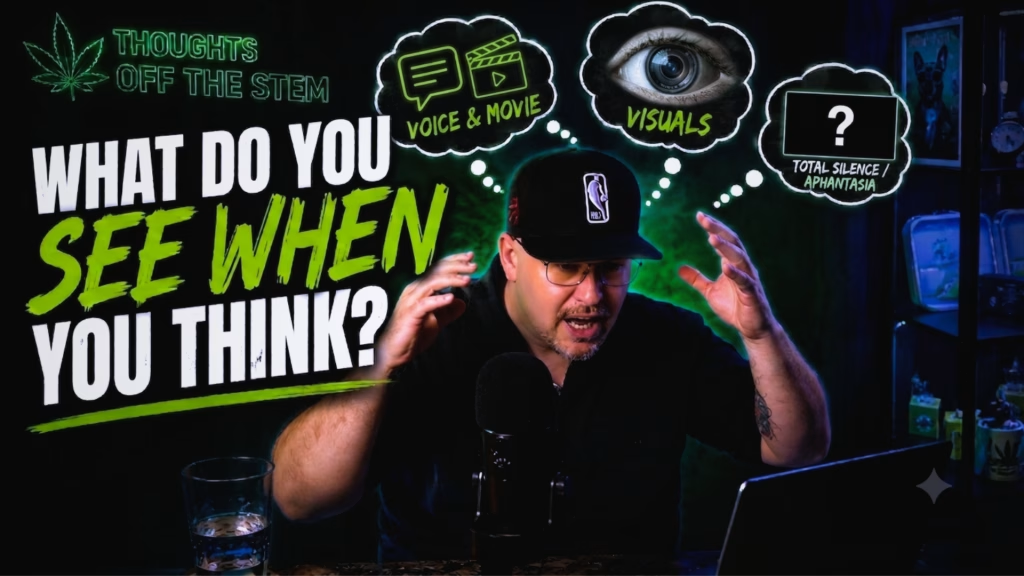
When you think thoughts — what do you actually see? Pictures? Words? A running commentary that won’t shut up? Nothing at all?
It took way too long to figure out that not everyone answers that question the same way. And not just because people have different opinions or different ideas. When people think, they literally experience their thoughts in completely different ways. Some people see vivid pictures and videos, or they see words, and some have an inner monologue that narrates every single thing they do all day long. And some people see absolutely nothing — they just have a thought and react.
This week on Thoughts Off The Stem, Justin Barone goes deep on one of the most fascinating realizations he’s had in a sesh — and it might just change how you see the people around you.
As a kid it seems obvious — we’re all learning the same math problem so we must be solving it the same way, right? We agree on something so we must have thought about it the same way. Makes sense until you actually talk to someone about how they think and realize their brain is doing something completely different from yours.
Justin thinks in pictures, words, videos, shapes and sometimes nothing at all — switching between them depending on what the conversation is about or what he’s feeling. Tell him a story and he’s visualizing every detail. Get him deep in thought and the lights go out completely — blank space, just presence and clarity. Get him emotional and suddenly it’s all words, big feelings turning into sentences in his head.
Not everyone works like that. Some people only have the inner monologue. or see shapes, and some people have no visual experience of thought whatsoever — they just feel it and do it.
Isn’t that fascinating?
The Inner Monologue Drill Sergeant
Here’s the one that gets Justin. The inner monologue that just never stops. The voice that narrates everything — I’m getting up, I’m walking, I’m driving, I’m talking to my boss, I’m going to say this.
Justin’s inner monologue isn’t exactly a helpful life coach. It’s more like an angry drill sergeant who shows up the second you sit down with your coffee to remind you that you thought about vacuuming twenty minutes ago and the clock is ticking. Not friendly. Not encouraging. Just pushy, a little bossy, and honestly a touch aggressive.
But could you imagine having that voice running all day? Every single thing narrated in real time? That’s someone else’s entire experience of being alive. And somehow they’re functioning. Respect.
The Hardware Store Kid
Here’s where it gets really interesting. Justin’s uncle tells him about a kid working at a hardware store who literally cannot hammer a nail into a wall. He holds it up, lets go, and tries to hit it before it falls. Every time. The owner is about to fire him.
Then the till system goes down. And this kid — the one who cannot figure out a hammer and a nail — sits down behind the register and gets the entire point of sale system back up and running from scratch.
Everybody’s got their thing. The way you think shapes what you’re good at. And if you can’t visualize a nail going into wood, maybe you’re seeing something else entirely — something that makes you exceptional at a completely different problem.
Give People A Break
Here’s where the episode lands and it’s worth sitting with. If everyone processes their thoughts differently — if some people are running on a non stop inner monologue, some are seeing nothing but shapes, some are being controlled by an angry internal narrator they didn’t ask for — then maybe we need to give each other a little more grace.
You don’t know what’s going on in someone’s head, how they process things, or what their inner voice sounds like or whether they even have one. So maybe — just maybe — be a little nicer to the next guy. Because you genuinely have no idea what’s happening in there.
Those are the thoughts off the stem this week. 🌿
Listen Now
New episodes of Thoughts Off The Stem drop every Friday at 4:20 PM.
Could you survive prison? Not the Netflix documentary version. Not the podcast where some guy describes it from a studio in Manhattan. The actual yard. Day one. Real prison.
It’s the kind of question that only comes up in a sesh. Someone’s been watching true crime. The conversation goes sideways. And suddenly everyone in the circle is a Navy SEAL with a black belt and an undefeated record.
This week on Thoughts Off The Stem, Justin Barone takes that hypothetical seriously — or as seriously as a cannabis comedy podcast can — and the reality check is both brutal and hilarious.
You know how it goes. Someone asks if they could take Mike Tyson. Someone else wants to know how many guys they could fight at once. Then that one dude in the circle breaks the silence with full confidence — he’d kick Tyson’s ass, destroy a pack of wolves bare handed, go full special forces on anyone who touched his family, and yeah he could probably take five guys at once.
Every group has a Dwane. Shut up Dwane.
It’s a guy thing. We all want to be the ultimate protector. We all like to think that when the moment comes we’ll somehow channel every action movie we’ve ever watched and just handle it. It’s harmless. It’s funny. And it is absolutely not what would actually happen.
The Prison Yard Reality Check
So let’s say you actually end up in there. Day one on the yard. You’ve heard the advice — assert dominance immediately, take out the biggest guy so everyone knows not to mess with you.
Here’s the problem. Yesterday you were mowing the lawn. You had a tea party with a three year old. gave your wife a foot massage and watched something on Netflix and went to bed at a reasonable hour. You are a blue collar dad with a full dad bod, a touch of arthritis, and absolutely zero hand to hand combat training.
And now you’re supposed to walk across that yard and cold cock a gang member like you’re Jason Statham in a Jason Statham movie.
You are not Jason Statham.
The gap between who we think we are and who we actually are, might be one of the weirdest and most honest things about being a guy. This episode goes there completely unfiltered.
Listen Now
New episodes of Thoughts Off The Stem drop every Friday at 4:20 PM.
This week on Thoughts Off The Stem, Justin Barone breaks down a Swiss Chalet dinner that went completely off the rails — and then takes it further with the most stomach churning restaurant horror stories the internet has ever produced.
There are restaurants that try to do everything and fail at most of it. And then there’s Swiss Chalet — a place that built its entire identity around one thing. Chicken. Just the chicken. Cook it properly and everything else more or less takes care of itself.
So how do you serve it raw?
The Swiss Chalet Experience
It started with a simple plan. Justin and his girlfriend head out for the two can dine deal — nothing fancy, just a reliable chicken dinner at a familiar spot. What they got instead was a masterclass in how not to run a restaurant.
The host was nowhere to be found. One exhausted waitress was running the entire floor. The tables were sticky. And when the food finally arrived the chicken looked wrong before it was even cut into. The kind of wrong you notice immediately but convince yourself to ignore — right up until you cut into the middle and find it completely undercooked.
The bright spot? The waitress. Who was somehow still apologizing professionally while clearly holding the entire establishment together on her own.
TheDude For Real: Restaurant Horror Stories
If the Swiss Chalet story wasn’t enough to put you off eating out, the Dude For Real segment finishes the job. Real stories from real people — coleslaw with shrimp tails scraped from other people’s plates, a restaurant mouse that the server knew by name, a bandaid in the taco lettuce, cockroaches in the coleslaw, and things so bad they don’t need to be described twice.
The restaurant industry has some explaining to do.
In the spirit of cooking at home — which after this episode seems like the only reasonable option — this week’s Weed Facts breaks down how to make cannabutter from scratch. Stovetop method, slow cooker method, decarboxylation, straining, and everything you need to turn your flower into an ingredient worth cooking with.
Because at least you know what went into your own food.
Conspiracy theorists have spent years searching for shapeshifters. They’ve been looking in all the wrong places. The real shapeshifters have been right under our noses the whole time — sitting in your living room, eating your food, using your WiFi, and asking you for money.
They’re called kids.
In Episode 228 of Thoughts Off The Stem, Justin delivers one of his most raw and unfiltered rants yet — a full comedic breakdown of the greatest long con in human history: parenthood.
Thoughts Off The Stem | Cannabis Infused Comedy
Conned By Cuteness: Kids Are Shapeshifters, Hear Me Out
Here’s how the con works. They arrive small, soft, and completely helpless. They smell incredible, and when look up at you with those eyes something inside you just switches. You’re done. You’d do anything for this tiny creature.
That’s the trap.
Nobody tells you that the cute is bait. Nobody sits you down and says — listen, enjoy this, because in about thirteen years that adorable baby is going to transform into something that leaves dishes in the sink, asks for forty dollars with zero context, and acts like you personally invented the concept of chores.
Conspiracy theorists have been right about one thing — shapeshifters are real. They just got the location wrong. They’re not hiding in government buildings or Hollywood boardrooms. They’re in your house. Eating your leftovers. Leaving wet towels on the bathroom floor.
Kids are the original shapeshifters. Cute baby. Chaotic toddler. Slightly manageable child. Then teenager — and something in that transition resets everything you thought you knew about the person you raised.
Boys Vs Girls: Both Will Break You Differently
Raising boys and raising girls are two completely different experiences that will test you in completely different ways. Justin breaks it down with the kind of unfiltered commentary that only comes from living it firsthand — three teenagers, one boy and two girls, two different flavors of chaos, and one single dad trying to make sense of all of it.
The Financial Reality Nobody Talks About
There is a version of the parenting conversation that nobody has publicly enough — the actual cost. Not just money, though that alone is staggering. The time. The mental load. The invisible labor of keeping a household running while also trying to be present, patient, and not completely losing your mind.
Teenagers don’t see any of that. And if you’re doing it alone, the gap between what it takes and what gets acknowledged can feel like a canyon.
Episode 228 goes there. Unfiltered.
👇 Listen or watch right now:
This week’s episode — Conned By Cuteness: Kids Are Shapeshifters, Hear Me Out — is available now on Spotify, Apple Podcasts, YouTube, and all major platforms.
New episodes drop every Friday at 4:20PM. Subscribe so the sesh comes straight to you — we’re pushing to 1,000 followers on Spotify and every follow counts.
New tech is cool. I genuinely love it. That is, if you’re willing to give a big F**k you to privacy with gadgets like meta glasses. Don’t get me wrong innovation is amazing and the fact that we live in a world where you can walk around with a computer on your face like you’re in Minority Report swiping through files and checking your messages while you grab a coffee, is pretty cool.
But here’s the question nobody seems to be asking.
Do the people building this stuff actually think about what happens when real humans use it in the real world? And do we — the consumers — think about the potential consequences before we hand over our money and our data and apparently our most private moments?
I’m not so sure we do.
Welcome to Thoughts Off The Stem. I’m Justin Barone and this week we need to talk about Meta glasses, Tesla batteries, wearable tech privacy and the fundamental disconnect between building something cool and thinking it all the way through.
Meta Glasses: Cool Concept, Terrifying Reality
Meta glasses are genuinely impressive technology. Wearable, stylish, functional — the most recent incarnation of a concept that’s been trying to work for years. And now they actually kind of do work which is both exciting and deeply concerning.
Here’s what nobody thought about.
When they’re on, they’re on. And they see everything.
If you’re wearing them while shaving your balls — that’s on file. If you forget to take them off before you head off to handle some personal business — congratulations, you just made POV content and it’s sitting on Meta’s servers right now.
If you’re recording with your face, you’d think — you’d think about that.
Apparently not.
I’ll be honest — when I was a kid I had to wear a heart monitor from time to time as part of my yearly checkups for a heart condition. And even then, as a kid, I was worried about what it would tell the doctors. Like why is your heart rate spiking at 10:30 at night? That’s nobody’s business.
Now imagine that same energy but it’s a camera. On your face. Connected to Meta’s servers. Worn by millions of people who didn’t fully read the terms and conditions.
What Meta Workers Are Actually Seeing
Here’s where it stops being funny and starts being genuinely disturbing.
Meta workers — specifically Kenyan subcontractor employees — have blown the whistle on what they’ve actually seen while reviewing footage captured through users smart glasses. And the Dude For Real segment this week pulled directly from their accounts.
What Meta Workers Reported
The Reality
Users going to the toilet or getting undressed on camera
People wearing the glasses without realizing they’re recording
A man leaving glasses on a bedside table — wife undresses in frame
Accidental recording of private moments without consent
“We see everything — from living rooms to naked bodies”
Meta has this content in its databases right now
Workers told not to question what they see or they’ll be fired
No accountability for what’s being stored or reviewed
Two US citizens filed a lawsuit in San Francisco against Meta
False advertising and disregarding privacy laws
Meta being investigated by multiple governments
The pervert glasses problem is now an international issue
Two US citizens have filed a lawsuit in San Francisco accusing Meta of false advertising and disregarding privacy laws. Multiple governments are now investigating. And somewhere in Meta’s servers there is content that people recorded without having any idea they were recording it.
They’re calling them the pervert glasses now. Which honestly feels about right.
Tesla Batteries and the $25,000 Surprise
Meta glasses aren’t the only example of consumers not thinking things through. Let’s talk about Tesla for a second.
A few years ago first generation Tesla owners started showing up at dealerships and getting hit with a $25,000 repair bill for battery replacement. And a lot of them were genuinely shocked.
Here’s my take — that’s on the consumer.
When I buy a car there are a few things I want to know. What does the service maintenance plan look like? How long will this car last? Should I worry about mechanical issues including the engine?
When you buy a Tesla you are buying an electronic device. A very expensive, very large electronic device. And the most basic question you ask when buying any electronic device is — what happens when the battery dies?
People didn’t ask that question. And then they were blindsided by a bill the size of a used car.
The Disconnect: Developers vs Consumers
Here’s the pattern I keep seeing and it applies to Meta glasses, Tesla batteries, and honestly most technology that causes problems after launch.
What They’re Great At
What They Generally Suck At
Developers
Building cool innovative technology
Thinking about real world human use beyond the tech goal
Consumers
Fixating on new shiny things
Thinking about real world consequences before buying
Developers are brilliant at solving technical problems. They are generally not great at asking “but what happens when a regular person uses this in their bedroom at 11pm without thinking about it?”
Consumers are great at wanting the newest thing first. They are generally not great at asking “but what are the actual long term implications of this purchase?”
The result is Meta glasses on Meta servers and $25,000 battery bills and a lawsuit in San Francisco and a bunch of very uncomfortable Kenyan subcontractors who have seen things they cannot unsee.
Weed Facts: Can Technology Actually Detect Cannabis Impairment?
Since we’re talking about tech this week the Weed Facts segment goes there too — because there’s actually some genuinely impressive new technology being developed specifically to detect cannabis impairment. And it’s more accurate than you might think.
The challenge with cannabis impairment testing has always been that THC doesn’t work like alcohol. The amount of THC in your body is not directly correlated with impairment — THC and its metabolites can stay in your system for an extended period, making it impossible to tell from a blood test whether someone is currently impaired or just consumed cannabis days ago.
Enter Gaize.
The Problem
The Gaize Solution
THC levels in blood don’t indicate current impairment
Eye movement tests detect real time impairment regardless of when cannabis was consumed
Human drug recognition officers are subjective — 60-85% accuracy
Automated VR headset testing removes human error
Traditional tests can’t distinguish past use from current impairment
Pupillary reflex and ocular motion analysis detects active impairment only
No portable rapid testing solution existed
Gaize is rapid, portable and automated
Officers can be wrong
Gaize boasts 98% accuracy
Gaize runs the same eye tests that police officers use — high precision ocular motion and pupillary reflex analysis — through a VR headset using Tobii eye tracking technology. It measures subtle changes in eye movement that indicate impairment with 98% accuracy.
Your eyes tell on you every time. Apparently even when your glasses are recording things they shouldn’t be.
Think Before You Wear It
Here’s the bottom line.
Technology is going to keep advancing faster than our ability to think through all the consequences. That’s not going to change. But the gap between what developers build and what consumers actually do with it in the real world is a gap that’s causing real problems — privacy violations, lawsuits, $25,000 repair bills and a lot of footage on Meta’s servers that nobody consented to share.
Think before you buy. Read the terms and conditions. Ask what happens when the battery dies. And for the love of everything — if you’re going to wear a camera on your face, think about where that camera is pointing.
If you’re recording with your face you’d think — you’d think about that.
Those are my thoughts off the stem. 🍃
Subscribe to our newsletter!
🎙 Listen to the Full Episode
Give A Big F**k You to Privacy with Meta Glasses is out now on Spotify and YouTube.
We go deeper on the Meta privacy lawsuit, the Tesla battery disaster, Gaize impairment technology and the full Dude For Real breakdown of what Meta workers have actually seen through users smart glasses.
New episodes drop every Friday at 4:20PM. Subscribe so the sesh comes straight to you — we’re pushing to 1,000 followers on Spotify and every follow counts.
Meta glasses are cool. Walking through life like you’re in Minority Report is genuinely impressive. But when they’re on, they’re on — and they see everything.
This week on Thoughts Off The Stem Justin Barone breaks down the real world problems that developers and consumers never think about until it’s too late. Meta glasses recording things nobody consented to. Tesla owners blindsided by a $25,000 battery replacement bill. And the fundamental disconnect between building cool technology and actually thinking about how people will use it in the real world.
If you’re recording with your face you’d think — you’d think about that.
Weed Facts this week: The newest cannabis impairment detection technology using VR headsets and eye tracking — boasting 98% accuracy. Your eyes tell on you every time.
Dude For Real this week: Meta workers are blowing the whistle on what they’ve actually seen through users smart glasses. It’s exactly as disturbing as you’d expect.
New episodes every Friday at 4:20PM. Follow the show — we’re pushing to 1,000 followers on Spotify. 🌿
Join the Sesh!
Visit Tots420.com for more episodes and cannabis education.
Meta Glasses: Kiss Privacy Good Bye is out now on Spotify and YouTube.
We go deeper on the Meta privacy lawsuit, the Tesla battery disaster, Gaize impairment technology and the full Dude For Real breakdown of what Meta workers have actually seen through users smart glasses.
View Full Episode Transcript
Give A Big F**k You to Privacy with Meta Glasses Thoughts Off The Stem | Cannabis Infused Comedy
Give A Big F**k You to Privacy with Meta Glasses Thoughts Off The Stem | Cannabis Infused Comedy0:01 New tech is pretty awesome, right? The gadgets. That come from it are pretty cool, but I have a question. Do the developers and the consumers really think about the problems once it’s released into the wild? Because I don’t think that they do dude. I think that consumers are just more concerned about having the latest flashy gadget and developers are more concerned with how that gadget or technology functions. 0:23 Once it’s released, not the real world application. And the problems that come with it. Welcome to Thoughts off the Stem. Thanks for. Joining the sesh with me, Justin. Peroni, I hope that life is being good to you. And if you’re looking to elevate your sesh, visit tots420.com/sesh for my hand picked sesh essentials. 0:41 That’s right, I’m helping you make your sesh. Better baby. And this week we’re talking about the technology like meta glasses, Tesla. Two, you know that that gets released. That we don’t necessarily think about what the problems. Are going to be once it’s out there. 0:59 Let’s take meta glasses for. And for example. Right. Once you have them on and they’re on, they’re on. They see. Everything dude, and as cool as it would be to like. Walk through life like you’re in Minority Report or Free Guy and you just, you know, you can like swipe as you’re walking down the street. 1:16 Check your social media, do an e-mail. Whatever it is, that shit’s pretty cool. I got it. I want it too. But they’re always on, man. So like. If you go to shave your balls and you forget. That you’ve got them on. Guess what? That’s going in the meta database, baby your. 1:34 Balls and your technique are there forever. I remember when I was a kid, because I have a heart condition, I had to use it. Like I had to wear a halter monitor on checkup sometimes and I was. Worried and like from the ages of 14 to 18 that the doctors could tell when I, you know, tried to rub. 1:53 One out like because. Whose heart rate spikes at 10:30 at night when you’re supposed to be sleeping as a 1415 year old? Yeah, that’s right. That’s me. I wasn’t. Boning anybody but I was worried about it so. Think about it. In terms of this, now that technology is wearable, right, Meta glasses are the latest wearable tech, and they’re supposed to like really, you know, move technology forward. 2:20 But if you forget to take one off and you sneak off to go play with your. Pecker for an hour and those you’ve shot your own POV porn basically right? How do we not think that this? Is like it this? Where are you not worried about this? 2:37 People, when they buy stuff like that don’t. Think about it. They don’t think about it at all. It’s like it’s. Like back when Tesla first came out and people started the the first generation owners. Would go in for. A service. And they find out that the battery’s dying like it’s a. 2:53 It’s an electronic. Device and now all of a sudden you have. A25K Bill because you have to replace your engine. Like what are we talking about here? Do people? Need to think man. Like if I go buy a car, I’m asking some questions. I’m asking what the service? 3:08 What the services? Are what the? Cost of repairs are. And whether I should worry about engine, how long it’s going to? Last, the same thing with electronics, don’t you? Generally ask like. Hey, what, how? What is the like? What’s the? The recharge period What? 3:24 Do I need to know for urging this what? How? Long is the. Battery life like. If you buy a Tesla. Which is basically a large piece of electronic. Equipment aren’t isn’t that like one of the first things that you’re going to ask? You think they’re? Just going to give you a. Free engine, like you can’t go to Ford with the OR I mean Ford with a Mustang. 3:41 OK, and and. Go Oh my engine blew. Can you give me a new one? No, you’ve got to buy a new engine. Like nobody asked this, nobody thought about it, nobody. Nobody took. Into account. That this was happening right and now. People aren’t. Taking into account when you. Buy things like. 3:57 Meta glasses, they’re always. Recording man, they record. Everything you do, that’s fucking terrifying. It’s terrifying as as a person that like if I see somebody walking down the street, they’re recording to me, maybe I’m doing something I shouldn’t do. You can. I don’t like the idea that we are in. 4:14 Minority Report, dude, we’re going to start. Getting ping for crimes as people walk down the street. It’s crazy. It’s crazy. It’s crazy dude. You forget about the fact that you you know that these things are all all have components that die and suffer or. 4:38 Components that record. Constantly and then. We, we don’t think about the problem that happens later on once it’s being used on a regular basis. Like for example, you know, you go into Tesla, you can’t figure out why the why the battery died. 4:53 And they thought, well, that’s just the end of the life of the battery. Well, what about? This OK? You wear meta glasses. All of a sudden one day you walk into work and everybody’s staring at you. They’re snickering and they’re. Laughing because you. And your. Partner, we’re having a little bit of amateur bedroom fun time and you forgot to take the glasses off. 5:12 Well, now all of a sudden you have a. You have an. Amateur POV porn video on Pornhub. Great. You got to think about these things and that’s why I say like developers are really good at developing the products. 5:29 They’re good at developing the technology. But they kind of suck at people. Like they don’t really think about all the things that people are going to do and. And how people. Are going to use it and the fact that people forget. That they’re wearing. These things because glasses, if you’re, if you wear glasses or a hat even, like anything, sometimes you don’t. 5:47 You don’t think? About having it on. You forget it becomes natural, becomes. Regular. That you forget that these things are on and recording every. Movement, you know. Dude and consumers don’t think about the the end result long run situation like consumers. 6:05 Get pissed off because like, well this is doing this and I didn’t know it. Would do that if you. Buy a camera. That is. Connected to the Internet, whether it’s on a laptop. Whether it’s whatever, OK, Bluetooth, whatever it is. You can pretty much. Guarantee that. 6:21 In some way, somehow, somebody can get in that and start recording. Whatever that camera sees. So if you buy met a glass of wood, is there just supposed to be like a magical switch within it that goes Oh my God nudity off? I mean, maybe. That’s actually a good idea. But consumers don’t think about that because they want the flashiest thing they want to show off to their friends. 6:38 They want to be. The cool. Dude in the group, you know, it’s kind of fucked up, dude. It’s fucked up that we think about that. We don’t think about those things, even though we should. Because. Even though it’s technology and it’s relatively new. The the the. Standard like questions and practices and purchasing things. 6:56 Purchasing products. Of any kind should still apply, and as a consumer you should still be aware and thinking about it. You shouldn’t just run out. And go, oh, everything’s just going to work peachy there’s. Always like Tesla batteries. Are dying, people didn’t know when. They bought the Tesla that they had to get a new. A new engine, essentially, right? 7:13 And they come in and now they’re all pissed off. Well, like the. The the. Developers and. The and the companies that make these. Things should probably. Put in very large print like we have. Warning labels on. You know, like what? Like ingredients and and whether. 7:30 Things are toxic for you, Maybe we need to start doing that at the top of every. Product like sheet when you’re when you’re buying it, it should be in bold like hey. These are the things that you can do with it, but also remember. Turn it off. 7:47 You know, I just think it’s funny, man. I think it’s funny because consumers, people don’t think about that and then. They get all riled up when it happens and they can’t, they can’t figure out or they don’t understand that, you know, they have kind of, they have responsibility. 8:04 To know these things I also. Think that the companies that produce them also have a responsibility to explain to the to the buyer that hey like this could happen. Right. And I know that not everybody. Is going to read the fine print or read a a contract or anything like that but. 8:19 At the same time there should. Be some level of hey. Just pay attention to this although. You know, if you’re recording something. With your face, you’d think that that would be. A thought that you have in your head that like I shouldn’t keep this on all the time and if my wife is in the bathroom butt ass naked, maybe I take the glasses off and point them out of wall. 8:42 So this week’s weed facts. That’s right, this week we have some weed facts. Are about technology. That helps with hang on here. Let me just see because I forgot what it was. Weed facts. That help with. 8:58 That. It’s the newest tech available to help determine cannabis impairment. That’s right, cannabis consumer attention cannabis consumer. So this week’s Weed Facts. Are from. A site called. Tobywithtwoeyes.com and it’s called the articles called. 9:17 Guarding sober roads and workplaces, basically. What this? Is is new technology in VR? Headset that allows. Police to do better roadside inebriation tests or under the influence. 9:37 Tests basically this. Company Toby makes. A software that. Detects eye movement and and eye function to determine whether or not you’re under the influence. 9:54 At the moment of cannabis. And other substances. So this is what the article said, the effects of THC. Are not easily quantifiable through to, through to. Traditional chemical tests since the amount of THC in the body is not correlated with impairment. 10:13 So basically what that means is you could take you could smoke weed on a Friday and still test positive. On a Sunday. But it doesn’t necessarily. Mean that you’re under the influence at the time. So THC and its. Metabolites can remain. In the body for an extended period, making it impossible to determine if impairment is current, currently being experienced, or if someone has just simply used cannabis previously. 10:37 Officers have tested for impairment using a battery of physical and eye movement tests, while the tests they use have been shown to accurately detect impairment. Human error and. Subject and subjectivity are common arguments. Against their use. The accuracy. 10:53 Of the assessment by drug recognition. Officers is typically around 60 to 80. 5% so you get a lot of, you know, human factor, human error in that. Because like, I mean, realistically you could also. Have people that have a bias and then they just decide because you’re a sketchy individual or you have, you know, ADHD or some shit and you’re not paying attention, that you’re under the influence when you’re not actually under the influence. 11:16 So Gaze is a software company dedicated to accurately assessing impairment for the purpose of SAFE. Driving and working and working enforcement. So not only are they going to use this for like police. Officers and stuff, but it’s also a way. For people that work in industrial, in the industrial industry to, to make sure that the people that drive their heavy equipment and all that fun stuff are not under the influence at work, right or while they’re operating these machines. 11:45 So at the heart of its innovation. Is their impairment testing platform a? Rapid and portable. Automated. Detection Detection system specifically designed to recognize the effects of cannabis, alcohol, opiates, and. Other drug impairment. The gaze solution. 12:00 Runs the same. Eye test that police officers. Do in an automated fashion using AVR headset. With the help of. Toby Eye tracking and Toby Ocumen. These tests include a high precision ocular motion and pupillary reflex analysis measuring subtle changes in eye. 12:18 Movement that indicate. Impairment. See, so you’re going to it’s. Like you’re playing, you know, like. If you’re impaired and you get pulled over and you got to put one of these. VR things on. And it’s scanning your eyes. Dude, I don’t know, it’s going to take some time for the public to like, I feel like even if you’re not high, your eyes may. 12:35 React that way, but maybe not. If you want, you can read the article, it’s on top. 4. 20.com in the weed fact section. So this software, the gaze. Solution stuff it. Boasts a 98% accuracy. 12:51 In detecting that ended in. Detecting the same signs of impairment that law enforcement. Officers look for. So basically it’s obviously. It takes it takes the error away from it. Now obviously we all know that programs can have problems. But people can also have. 13:06 Problems programs tend to have less problems. I think your bigger problem is deleting that thing by accident or having to redo it, but it makes it. I guess it makes. It’s supposed to make the. Officer’s job easier and then? Help with, you know, the actual like court proceedings and stuff like that because it will become admissible as as evidence to prove versus, you know, the officer himself, the individual trying to prove it. 13:34 So, yeah, so that’s the way the technology’s going. And that is one of the ways that at least law enforcement is trying to crack down on impairment. Attaching terrorist consumer. 13:52 If you’re going to get meta glasses, I would say that you should probably read the user. Manual it may. Be the one thing on the planet that you should absolutely read the user manual. Because here’s the thing. OK, not only is it. 14:10 Recording whatever you’re. Doing it’s it’s saving, downloading. And and keeping a. Record on meta services. Of what it sees. So if you and your wife were trying to have or you and your partner, we’re trying to have some happy time, fun time and you. 14:30 Thought you. Were in the privacy of your own home. But you had on your meta glasses. Guess what? Meta. Sees how you do it. There are. Literally people out there looking for. Going through all of the data that comes from these glasses. 14:48 Now this has. Also caused Meta to catch a lawsuit from at least two people in the US and a bunch of countries are now investigating it because. How as a company? That, you know, is supposed to follow privacy laws. 15:06 How are you? Going to now defy. All of those privacy laws. And have have people’s most. Personal Personal moments saved on a. Server like. I don’t want to, you know, make any assumptions about Mark Zuckerberg and Meta AI, but like sounds to me like there may be a little bit of a perv situation going on because why would you want to keep that data? 15:32 Shouldn’t it have? Shouldn’t it have a like set parameter for the type of data that it stores? Not just everything like, oh, my Dick fell out. Look at that like if you’re. At a ball game and you’re wearing meta glasses, right? And you go to the urinal and you go to take a leak. You now have 50 Dicks. 15:48 A video of 50 Dicks on your on your meta. Glasses and Zuckerberg is just like yeah filed out under D for big Dick or BD for big Dicks. Like. You got to be kidding me. So this week’s dude for. Real segment is. All. 16:05 About the revolt, I guess from from employees of Meta and a couple. Of the. Consumers against Meta. Glasses dude. For real. For real, dude. So this week’s dude. 16:20 For Real segment comes from boardpanda.com and. The article’s called Meta Workers reveal some of the disturbing things they’ve. Seen through user smart. Glasses. That’s right, like I told you. They’re recording you always, as if. 16:36 CCTV wasn’t. Enough and being able to look through. Laptops wasn’t enough or whatever, you know. Like now they’re actually giving you a product that essentially spies on you because you forget about it. And you don’t turn it off. And you you don’t do what you should do as a. 16:51 As a as a, you know, educated consumer, that’s right. SO2US citizens have filed a lawsuit. In San Francisco against Meta. Over consumer privacy violations. The lawsuit accuses. Mark Zuckerberg’s company of false. 17:06 Advertising and disregarding privacy laws? No shit. It still gets me bad. Like you’re sitting there watching like I get, OK, So even if let’s say. You didn’t do this accidentally. Let’s say that, you know, some people like to film their own home videos. 17:23 You know what I’m saying? Let’s say you did this on purpose. That video is still on. Like you. There’s no more days of like, Oh my God, I sold the sex tape at a garage sale. There’s Oh my God, Mark Zuckerberg has my sex tape immediately. Like you may as well just be a straight line to that shit, you know? 17:41 So Kenyan subcontractor that that basically reviews. All of the. Data the employees of that company. Blew. The whistle on Meta’s alleged privacy breach. So in some videos, this is what, this is what 1 employee said. 17:56 They’re all anonymous because obviously they’re worried about their jobs. But in some videos you can see someone going to the toilet. Or getting undressed. I don’t think they know because if they knew they wouldn’t be recording, another said. I saw a video where a man puts the glasses on the bedside table and then leaves the room shortly afterwards his wife. 18:15 Comes in and changes her clothes now. Like dude. Come on, there’s got to be like a safety switch, you know, like. I don’t know. There’s got to be a way for it. Like if if there’s got to be like a motion like you can shake your phone. And send a problem. Report to Instagram, right? 18:31 Can you not? Remove your glasses. And send an off report. Like what? Are we talking about here? One data monitor warned. We see. Everything bro. From living rooms to naked bodies. Meta has that type of. 18:46 Content in its. Databases people can record themselves in the wrong way. And not even know what they’re recording. It’ll imagine you’re texting OK and. You text something. That, you know, might be worrisome to like public safety or. 19:03 Committing a crime? It sees that too. Like dude, this is exactly minority Minority report, man. I would be worried. I’m not buying that shit. It’s right up there with. Like Neuralink? Oh my God, you want to have a thing in your head that’s going to record everything you do and see? 19:19 You got to be fucking kidding me. Why? Why? Why? Are we doing this? I get love and tech but it just seems like this. Is all kinds of problems. And terrifying at the same time. Another. Another. Person said you. Understand that it’s someone’s private. 19:34 Life that you’re looking at. But at the same time. You’re just expected to carry out the work. You’re not support. You’re not supposed to. Question it because. You might lose your job, that’s what That’s what these. Like the? Bosses and the supervisor there. You can’t even be like, hey, this is wrong. 19:51 And the Super I like fuck you, then I’ll find someone else that’ll do. It it’s almost. Like, you know, in the military, like you. Maybe you don’t. Want to drop the bomb? Maybe you don’t. Want to be. The remote pilot of a drone that’s going to kill 100,000 people or whatever it is, but there’s another dude that’s just going to take that seat because they need the money. 20:07 It’s the same as this. And even though there’s like this, you know, pretty solid. Data breach privacy issue or not data breach privacy issue right you you’d think that they would you know, kind of flip the script on it a bit and be like let’s. 20:22 Be very careful. Nope, not matter. Matter is like, you get that shit in there and you record it. I don’t care what you see, just watch it like. Jesus Christ, so. Matter is being investigated by the governments of multiple. Countries. And now they’re being dubbed the Pervert Glasses. Yeah, that’s right, dude. 20:39 For real. For real, dude. So the moral of the story for this week? Is pretty simple. Actually be. Educated on the. Technology that you buy. Understand what it does, what its capabilities are, and know what you’re getting into before the before your your freshly shorn nut sack or your adult activities end up on a Meta server that Mark Zuckerberg and his cronies and. 21:10 His buddies. Can look for can like pull up at the drop of a hat, you know, just. Oh, I want to see. Hairy nuts. You know, and then there it is. And he could show all his buddies. So just think about that. Think about when you’re buying a Tesla or any electric car, you’re going to have to replace the battery at some point. 21:30 So you may as well understand what the maintenance costs are. Just think about it the with. The rise of technology and the evolution of of AI and and. All the the cool gadgets that were that are supposed to help us evolve as a as a human. Race, you know. 21:46 We should still be. Concerned and. Worried and think about and, and, and know what we’re getting into because we need to, we need to, we need to keep our privacy private. I know that in this day and age, that’s very hard to do, But I don’t think that, you know, I don’t think that it’s a, it’s a good idea to start implanting or putting on things that record your every move and every action because like, I don’t know, that just seems, that just seems common sense to me. 22:17 That’s what I think and those are my thoughts off the stem for this week. I hope you enjoyed the sesh. I hope you come back next week with me, Justin Peroni on thoughts off the stem. Oh I’ve also I also started a new merch store so check out. Tots 4/20. Dot com. Shop go to TOTS 4. 20.com in the menu you’ll see a shop button. 22:41 Hit the shop button and you can get some official TOTS merch. That’s right. And yeah, until next time as I use my. Electronic device to. Get my weed going. Keep your lids low, baby.
New episodes drop every Friday at 4:20PM. Subscribe so the sesh comes straight to you — we’re pushing to 1,000 followers on Spotify and every follow counts.
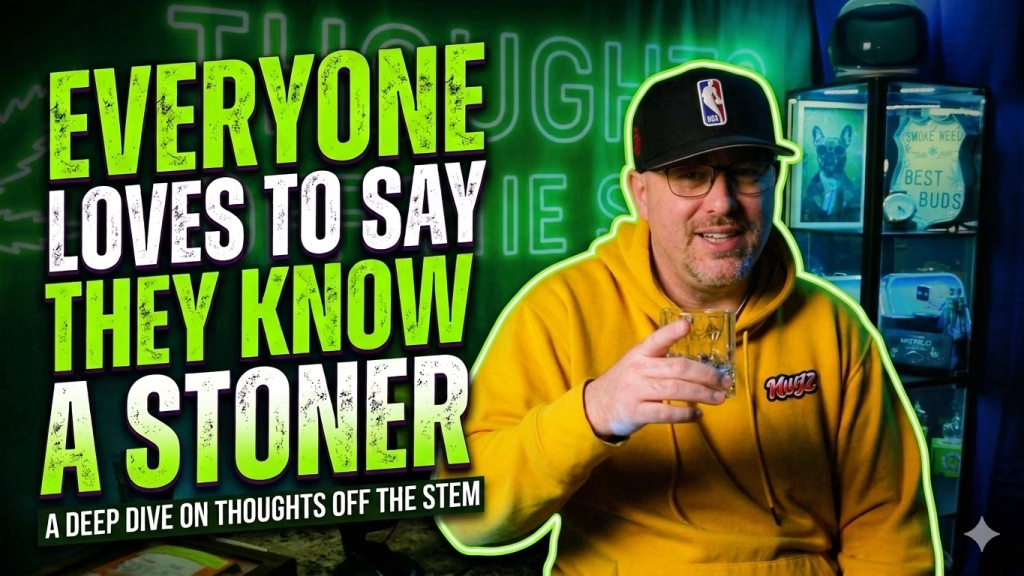
They Love to Say They Know a Stoner: Cannabis Stigma Normalization
Let me paint you a picture.
You’re sitting across from someone in a suit. Nice office. Firm handshake. The kind of person who irons their shirt collar and says “synergy” without irony. You’re there for a job interview, you’re trying your best to look like you definitely did not just hotbox your car in the parking garage, and everything is going fine.
And then it happens.
The interview wraps up, they walk you to the door, and just before you shake hands and part ways — they lean in. They lower their voice. They glance over their shoulder like they’re about to tell you where the bodies are buried.
“You know… I actually know someone who smokes weed.”
And then they look at you. Waiting. Expecting you to react like they just told you they know Jesus.
“Oh my GOD. YOU know a stoner?!”
I have been in more interviews and business meetings than I can count over the last year and I promise you — it happens every single time.
Level up your sesh with our hand picked essentials at Tots420.com/sesh
The Cannabis Stigma Is Alive and Well. Sort Of.
Here’s the thing about cannabis stigma in 2026 — it’s not dead, but it’s definitely on life support and arguing with the doctor about whether it really needs to be there.
Cannabis is legal in Canada. Dispensaries are on every corner. Your coworker, your boss, your accountant and probably your dentist are all quietly passing through those slightly obscured dispensary entrances on a Friday afternoon. And yet somehow the stigma persists — mostly in boardrooms and interview rooms where people who partake feel the need to hide it, and people who don’t partake feel the need to whisper about it like it’s still 1987.
I left the cannabis industry recently after working at a pot shop — genuinely one of my favourite jobs. I love the industry. It’s chaotic and weird and the people are fascinating. But I got my project management certification and spent the last year trying to break into a new field.
Which means suits. A lot of suits.
And every single one of them, at some point, pulled me aside to let me know they know a guy.
The Hushed Tones Confession
I cannot explain to you the energy of the cannabis confession in a professional setting. It is unlike anything else.
They lean in. The voice drops two octaves. The eyes scan the room for witnesses. And then they deliver this information — that they know someone who consumes a legal substance that is sold openly in stores across the country — like it is classified intelligence.
Like they’re giving you access to a secret society.
Here’s what kills me. I’ve walked into interviews and recognized faces — not because I’m great at networking, but because I sold those people weed. The person interviewing me, the receptionist who handed me the visitor badge, the guy I passed in the elevator on the way up — familiar faces everywhere.
Not because the cannabis community is small. Because it isn’t. It’s enormous and it’s everywhere and it always has been.
The suits just haven’t caught up to that reality yet.
Cannabis Normalization: Where We Actually Are
Let’s be real about where cannabis normalization actually stands right now because I think both sides of this debate are getting it wrong.
closing the gap
The Reality
Legal status
Fully legal in Canada, legal in many US states
Social acceptance
Growing rapidly but still stigmatized in professional settings
Workplace policies
Most still treat cannabis differently than alcohol despite similar effects
Public perception
Majority of people either consume or know someone who does
Cannabis is not alcohol. It’s not there yet in terms of social normalization. But it’s making its mark and the gap is closing faster than most people realize — especially the people whispering about it in hallways.
The Part Nobody in the Cannabis Community Wants to Hear
Okay. Here’s where I’m going to say something that might ruffle a few leaves.
We as the cannabis community need to do better too.
We love to declare cannabis as a completely safe alternative to other substances. And in many ways it is. But that doesn’t mean it comes without its own downsides. And right now we are not being honest enough about that.
The reality is that edibles are most likely the safest way to consume cannabis. The moment you introduce any inhalant into your lungs you are introducing foreign substances into your body and your lungs are taking the brunt of that exposure. We don’t have enough long term scientific data to say with confidence that all forms of cannabis consumption are completely safe — because the research simply hasn’t been done yet. The industry, the cultivation methods and the processes are still evolving and some of the long term effects are genuinely unknown.
As a cannabis enthusiast and advocate I believe we need to recognize that. Anything in excess can cause negative health effects. Pretending otherwise doesn’t help our credibility — it undermines it.
Where Both Sides Need to Land
Here’s my take and it’s pretty simple.
The naysayers — the suits, the whisper confessors, the people who treat a legal substance like a dirty secret — need to make a concerted effort toward acceptance and normalization. Cannabis is here. It’s legal. It’s not going anywhere. The stigma serves nobody.
And the cannabis community needs to recognize that progress is actually happening and we don’t need to push as hard as we used to. We’ve won a lot of ground. Celebrating that honestly — including being honest about what we don’t know yet — is how we win the rest of it.
Meet in the middle. Normalize the conversation. Clean your bong.
Those are my thoughts off the stem. 🍃
Join the Sesh and Subscribe
🎙 Listen to the Full Episode
They Love to Say They Know a Stoner is out now — just a straight up sesh, no segments, real talk about cannabis stigma, normalization and why both sides of this debate need to take a breath.
New episodes drop every Friday at 4:20PM. Subscribe so the sesh comes straight to you — we’re pushing to 1,000 followers on Spotify and every follow counts.
I spent the last year in job interviews trying to break into project management after leaving the cannabis industry.
And every single time — without fail — someone in a suit would pull me aside, lean in, and whisper that they know someone who smokes weed. Like it’s a secret. Like I’m supposed to react like they just told me they know Jesus.
Here’s what they don’t realize. I’ve walked into more interviews than I can count and recognized faces — not because I’m a great networker, but because I sold them weed.
This week on Thoughts Off The Stem it’s just a sesh. No segments. Just real talk about cannabis normalization, the stigma that won’t die, and why both sides of the debate need to take a breath.
The naysayers need to ease up. And honestly? We as the cannabis community need to stop pretending everything about weed is completely safe too. Progress is happening. Let’s act like it.
New episodes every Friday at 4:20PM. Follow the show so the sesh comes straight to you. 🌿
View Full Episode Transcript
They Love to Say they Know a Stoner Thoughts Off The Stem | Cannabis Infused Comedy
0:00 One of my favorite jobs was when I worked at the pawn shop. I mean, that was the best. How often do you get to work at a place where you could describe things that are like offside, you know, like, not that I recommend doing this, but you can literally say to somebody, how fucked up do you want to get today? 0:19 And then try to sell them something. It’s amazing. It’s it’s pretty, it’s pretty fun, dude. You can wear whatever you want. You can have, like, questionable, you know, paraphernalia and emblazoned T-shirts. 0:37 You could do things however you kind of want to do them. There’s like no real strict policies. Like you, yeah, you have to talk. You know, you have to be nice. You have to, you know, it’d be inclusive and things like that. But if you’re trying to make a sale or you’re trying to sell something, you can very easily. Like, I don’t know how many times I had, you know, a university kid that I had helped find some really good flower, right? 1:00 And then he’d bring his buddies in and he’d be like, you need to talk to that guy, ’cause it’s Saturday or it’s Friday night and we want to get zooted or whatever the term is, right? So they bring them over to me and the guy, I’d say, well, like, what do you want to do? And they’re like, oh, we’re partying, dude. We’re partying tonight, bro. 1:16 That’s what we’re doing. And so I’d sit down and I’d set them up with, you know, the, the 8:00 PM, the 9:00 PM, ten PM, 111212 PM and or 2:00 AM all the way into the morning. And you could just keep going and everything that I gave you, all of my selections would help move along the evening, you know, without getting you too, too overly pitched. 1:39 No, no face down in the toilet, no zonked out at the corner of a club. No, none of that. That was like one of my favorite job, favorite parts of the job. The other part was being able, because I’m 44, being able to help people find what it is that they’re looking for and really understand what try what, what will help them alleviate the problem that they’re having. 2:00 But aside from that, because now I’ve stepped away from that, I’m trying to get into like project management. I took AI, took a course on it and it, it fell in line with how I was the, my job, my job from the shop, I was an assistant manager. 2:16 So it kind of fell in line with that. I was very, I was responsible for, you know, coaching and helping people move forward. That was my thing. But now moving into project management, I’ve stepped away from the cannabis industry, tried to go a little bit more mainstream. Even though I love, even though I love cannabis, even though I love weed and I like doing my thing. 2:34 And it’s April, and it’s almost that time of year where it’s, you know, the cannabis, the canister is Christmas. Yeah, that’s right. Welcome to THOUGHTS off the STEM. Thanks for joining me. I’m Justin Peroni. Hope life’s being good to you. And today we’re just shooting the shit. We’re going to have a sash, a proper sash. Puff it out some 1964. 2:56 It’s an indica. It’s nice and relaxing. It’s nice and calm. But yeah, so I’ve started to, you know, look into other industries to sort of like, I don’t know, I just, I found that the cannabis industry was just a little bit too chaotic, you know, and I always like to affect the things that I do. 3:15 I want to be able to progress. I want to be able to move forward and I want to, I want to learn. And when you work in a shop, you don’t necessarily have the opportunity to learn the way that I like to learn. Like I like to get hands on with things. I like to get into things. I like to, I like to be able to control some of it if I can, or at least provide prove that I could do a good job so that I get some of that control right and opportunity. 3:40 And within the cannabis industry, if you’re a retail manager, assistant manager, you work at a shop, there’s not a lot of room for movement. If you own a shop, if you own one of these bigger brands, if you’re at the at the top of the hierarchy there, then you do pretty well. But as I’ve moved into the mainstream again, I started to notice because this happened, I, I left about a year ago and I’ve been trying to move into the mainstream. 4:06 And, and even like 6 to 8 months ago, I started to notice that in my job applications to newer companies, I think that my, my, my, my time in the cannabis industry had a negative impression or has a negative or yeah, had a negative impression to new businesses like mainstream business. 4:28 And I feel like a lot of people would still still have had like a stigma to it. Now I’ve noticed in the last probably month or two, maybe 3 months, because I have management qualifications, I’ve done a certification in, in, in project management. 4:44 There’s a little bit more legitimacy to me and maybe I’ve distanced myself enough from it. But I still love weed and I still love, I still love the industry and I still like having my toes in it, you know, dipping my toes in. But I’ve noticed, because I’ve gone on a lot of interviews, I’ve really noticed that everybody, everybody dude likes to, to know or wants to know a Stoner or a pothead or somebody that partakes, you know, because even the soothiest of suits, as has in these interviews, if I tell them I’m in Canada or I worked in cannabis, because it’s right on my resume. 5:24 You know, they kind of have this look on their face at first like, Oh, I don’t know. But then as you explain what you did and as you get into the technical sides of it and and they realize that you’re not just, you know, huffing mass amounts of weed to try and keep your day moving, they kind of go, oh, OK, look, you’re smarter than I thought you were. 5:40 Like, yeah, you know what? Potheads aren’t dumb. Potheads are kind of smart. We do. We’re it it, it fills this void of curiosity, you know, or it, or it helps to it helps to promote curiosity, I guess you could say, because when you smoke a little bit of weed and you get a little bit reflective, the next thing you know, you’re questioning everything. 6:00 And if you see something that you’re interested in, guess what you’re doing, you’re deep diving that shit. So as I’ve, as I’ve interviewed with some of these people and they’re very suit oriented people, you know, like very proper, very, you wouldn’t think that they would partake. And as you have these discussions and, and then as the interview kind of winds down and you start having more of a, a personal discussion rather than a business discussion, and you, you start to note it. 6:25 Like they’ll lean in, they’ll do the whole lean in, right? They’ll, they’ll lean and go, you know, my cousin or my sister or my brother-in-law or, you know, my grandfather or my father or whatever. You know, they, they, they smoke a little bit of cannabis and they have this look on their face like they’re telling you that they just met a rock star. 6:44 You know what I’m saying? And yeah, I found when I think back on those, because I’ve had a few of those moments lately where they kind of like take you to the side and they sidle over. Like you could be in a boardroom full of people and then almost every single person at that table that’s interviewing you or, or in that board setting will find you after and they’ll corner you. 7:03 And then in hushed tones, they’ll just be like, hey, bro, my, my, my wife smokes a little bit of weight. You know what I’m saying? Like they’re trying to get buddy buddy with you, even if they don’t give you the job, even even if they, you know, still have their own connotation or the business has its own connotation towards people that indulge in weed. 7:25 They all got to find this like common ground where it’s like, Hey, I know someone man, I know I do. I don’t do it. I don’t, I personally, personally, I don’t do it. I don’t do it. I don’t, I don’t do it. But you know, I know a couple people that do. That happens every time. And it used to happen more suddenly, I guess, like, you know, 810 years ago when it had first become legal, because a lot of people obviously didn’t want to be associated with it because it still had this stigma to it that it was negative. 7:54 And I and I thought we got past that. Like I thought we got past the whole, you know, mush mouth, glazy eyed, lazy Stoner. Like I thought, I think that at this point where there’s enough people in high power positions or, or or, you know, wealthy intelligent effectors of society that have come out and said, yes, milkweed all the time, dude. 8:18 And that’s how I came up with my processing system, you know, or that’s how I came up with this idea for clean drinking water. You know what I’m saying? Like, I thought we got past this whole stigma thing, but there you could tell still tell you could still tell that there’s a slight stigma to it and there’s a slight stigma to it where people will be like eyebrow, I know you didn’t get this job, but like just want you to know my wife smokes a hell a ton of weed. 8:44 Like what are we talking about, dude? You know, just just admit it. Especially in Canada, it’s it’s legal. You could get it at every fucking corner store. We basically have like coffee shops full of weed. Like, you know, it’s, it’s comparable to Tim horton’s at this point. Tim horton’s is on every goddamn corner. 9:00 And guess what? There’s a pawn shop right next to every single one of them. I remember one time they tried to open a pawn shop in a gas station. Do you understand how how heavy the regulations are on pawn shops? You opening in a gas station’s crazy because you can’t have anybody. You can’t have anybody. 9:16 No one, no one under the age of 19 is allowed to see in or be in there. How the hell are you going to open up a pawn shop at the side of a gas station? Like I don’t know if you go to these on the run places, but on the run you get you can have you get your gas right? And then they’re like a mini convenience store and then they have some kind of like whether it’s Wendy’s or or Tim horton’s or like Subway or something like that right there. 9:38 So you can buy food too. Like the days of the Quickie Mart and having like those rotisserie hot dogs are over though. Now what they have is they have full blown franchises sitting next to the counter, right? So like, I don’t know why we’re not past this stigma, and I don’t know why everybody wants to like, hush it up and be like, dude, I know you smoke weed and I know you didn’t get the job, but guess what? 10:03 My daughter smokes weed. She loves that, like everybody, their weed is for everyone, OK? It’s not a bad thing. It’s actually very beneficial. It’s not always beneficial. I also don’t like the opposite of that. I don’t like the opposite where everybody goes all going home be like, well, weed’s great for you. 10:21 It’s natural breath. You should just take it like rub it all over your body and heal yourself. No, it’s still you’re still putting foreign substances in your lungs. You know, if you’re eating, if you’re eating it, it’s probably the best way to deal with it because we’re the best way to handle it or ingest it because it it’s it’s less likely at this point with what we understand and what we know, it’s less likely to have negative health impacts. 10:47 Whereas if you’re smoking something like even I’m smoking a vape right now, as clean a process as you can make that vape, right? Like the the oils in the vape, it’s still a foreign substance in your body that your body is not really supposed to be inhaling. 11:05 So you could still end up with health issues. So I also don’t like the flip side of I also don’t like the flip side of the discussion where everybody’s too like, it’s good for you, it’s good for you sometimes, OK. But like it’s this, it’s moderation. 11:20 Anything in moderation you have to have in moderation, right? So anything doesn’t matter what it is. And it’s not always healthy for you. Like people, everything reacts to people in different ways, right? Like everybody has a different reaction. So like, you don’t know if somebody ingested something bad is going to happen. 11:40 It’s not going to most likely it’s not going to kill them or hurt them like too bad, but it could still have negative health effects, you know, but that’s not my point. My point is this it is it never fails to make me laugh when you’re talking to somebody that’s very like square straight edge or, you know, the person that you wouldn’t think that would smoke weed, start talking to you about weed. 12:03 Because they all presented in a way where they know somebody and they’re they sort of like give off the like this sly kind of underside impression. Like, yeah, you know, I met Mark Tyson, bro. I met a weed smoker. A weed smoker is my best friend. 12:19 Like that’s how that’s how they do it. They try to, you know, they get their, their, their posture changes. They get this, like, crooked, sly smile of like, I know something, you know, you know, that they think separates them from everyone else. Here’s the thing. Since I worked in a pot shop and I saw hundreds of people a day, let me explain something to people. 12:40 If you run a business, it doesn’t matter what business that is, OK? Whether you’re a cop, a firefighter, A politician, you know, Wall Street dude, high finance, hoity, toity, preppy, whatever, any way you want to classify whatever the business is that they like, the high end, low end, whatever, they’re all in there. 13:01 Dude. I remember when I had a biz like an HR person tell me like, yeah, I know. We really frown on people smoking weed. I went into that business. I knew everybody. I didn’t know them because I’m super friendly. I knew them because I sold them weed and there used to be a time, even when it was first open, like I, I was always the one that went to my kids school to watch like all their sports and like presentations and whatever. 13:26 Like I was that dad, right? So when I would go, everybody would turn, they would turn away. They would turn a blind eye. They’d be like, I don’t know you. They would like I’d wave. Nope. I’d get my hand halfway up to be like, Hey, how’s it going? And they would turn and walk the other way because they didn’t want other people knowing. 13:42 I think at this point we could safely say that everybody knows everybody smokes weed. It it would be like saying I don’t drink. There’s like one in 1000 people that don’t drink. That’s not true. Obviously that’s not a real fact, a real statistic. But my point is this, there’s more people and it’s legal. 13:59 You don’t have to worry about it. It’s OK to smoke weed. It’s you’re, it’s allowed. You’re allowed to have it. A lot of people do a lot harder things that are not supposed to be doing those things or things that they’re not supposed to do. But at for whatever reason, when it comes to weed, people like to they like to hide it. 14:15 They like to keep it secret. They don’t want everybody knowing. And I don’t really understand that because when I smoke, like I’ll take the dog for a walk and I’ll just huff away on my pen as I walk down the road. The only problem is sometimes as you’re huffing your pen when you walk down the road, right, you end up maybe in a convenience store to get a bottle of water and then the lights are bright. 14:39 And then you’re in a new in a new environment. And as soon as you change that environment, guess what happens? Well, your whole body goes, I’m high. This is new. I don’t know anything what’s happening? I don’t know, you know, And then you have to adjust because as soon as you walk into that new place, your whole body goes, they all know I’m high. 14:58 I better not look high. But then you act all rigid and then you talk ways that you don’t talk. Then you forget things. You stare at people, takes you too long to answer things like what are we talking about here? I remember what time my buddy and I got baked. We were on a walk and then we walked into a 711 and we were buying, We needed some more ice for a beer at a cooler at the house. 15:18 And we go and we buy the ice and I give the ice to my buddy thinking he’s going to put it because we’re buying a few things, thinking he’s going to put the ice on the shelf. Like the counter where you pay for the stuff. This motherfucker stands there like an industrial robot holding 2 bags of ice with his, like his arms are like a tray and the 2 bags of ice are on his arms. 15:40 We must have been there for probably like, I don’t know, maybe 10 minutes of him just standing there while we waited in line. I’m like, dude, you want me to take this? Nope, I don’t want to. He was so high he didn’t know what to do with them, right? So everybody’s staring at him. I’m kind of chuckling to myself because I’m like, this motherfucker is going to be like, he’s going to become Mr. Freeze real soon. 15:58 And then we get to the counter and he still holds them. We go outside, he takes the bags and he starts holding them by like the tags so that you can, you know, hang, hold them. And they’re not on your arms. He’s like, dude, my arms are frozen. I’m like, yeah, why didn’t you put the bags down? Like, why did you hang hold it? That’s the type of shit you do with weed. 16:15 You know, you’re not going out, you’re not harming people, you’re not trying to fight people, you’re not trying to do anything crazy. You’re just having a good time, you know, vibing out in your head and all the internal thoughts start rolling around. But everybody wants to know a pothead dude. 16:31 Whether they admit it or not. There’s like this kind of social status, I think that comes with it where if you tell somebody, hey, like I know somebody that smokes weed, all of a sudden you, it seems like they expect you to look at them like, Oh my God, you know, Jesus. 16:50 No, no, that’s not, that’s not really how it goes. Everybody, everybody smokes weed. Trust me, I’ve seen wherever you work. I’ve seen everyone. I know them all. I know them all, maybe not by name, but I know their faces and I know their faces even in the most expensive suits. Because every day after work, guess what? 17:06 Everybody’s got to brush the bullshit off. And when you brush the bullshit off, guess what were you doing? That’s right. You’re either drinking your face off or you’re puffing a little joint, maybe go for a run, but you’re still puffing a joint. Even fit people, dude, you go to the gym, ask next time you go to the gym. If you have buddies that like you only see at the gym, ask them if they smoke before their workout. 17:24 I bet you’d be surprised at how many people actually smoke before a workout. But that’s, that’s what I love. That’s what I love about weed. Dude, when I first started smoking weed, I was, I did, I was 18. A lot of people start way before that, but I started at 18 because I saw everybody that was at parties that smoked weed. 17:46 We’re always laughing and having a good time. And I was like, I want to laugh and have a good time. I love laughing. Like I love stand up comedy. Eddie Murphy was my jam growing up. Like, dude, I must have watched Delirious 100,000 times. Like I could, I used to do an impression of him, an impression of Eddie Murphy doing an impression of a black guy. 18:04 He’s probably racist now, but it wasn’t then because I was just saying the things that he said on his special because I thought they were fucking hilarious. But I like laughing. So I decided to start smoking weed. And then I went and I smoked weed. You just have to be careful because weed is so calming and it gets you so reflective that like in your own head, you’re super productive because you’re having thoughts all the time. 18:27 But at the same time outside you’re not doing anything. You’re just sitting in the couch staring at a wall eating a banana, you know, like or Doritos. But that’s the that’s the fun of weed. There’s two aspects to weed that that make it super fun. 18:44 One is the common effect and the other is the giggle factor. Yeah, that’s right. You get to, you get, you can, you can sit back, calm, be reflective, look back, look into yourself, make some changes. But at the same time you can giggle at the stupidest shit. And who doesn’t love having a little bit of a giggle fest, you know, for no fucking reason on a Thursday? 19:04 Yeah, that’s right. Weed is fun. And the stigma is fully removed. Not fully removed, but it’s definitely moving in the in the more acceptable direction, I guess. But we still have a little bit of work to do because we got to get past the point of where somebody sidles up beside you after a job interview and goes, dude, my aunt smoked a lot. 19:28 Weird. As if they’ve got some kind of badge of honor for knowing them. You know what I’m saying? Those are my thoughts off the step for this week. I hope you enjoyed the sesh where I hope you come back next week with me, Justin Baroni on thoughts off the stem. We’re 391 followers away from 1000 on Spotify. 19:45 So follow if you’re listening on listening on there. If you’re on anything else, follow there too. It’s always great to know that where people are, you know, listening from checkoutthoughts420.com, checkoutthoughts420.com. I hope you enjoyed the sesh and until next time. 20:09 Keep your lids low baby dude. I burped and I told at the same time. That’s crazy.
👇 Listen or watch right now:
They Love to Say They Know a Stoner is out now — just a straight up sesh, no segments, real talk about cannabis stigma, normalization and why both sides of this debate need to take a breath.
New episodes drop every Friday at 4:20PM. Subscribe so the sesh comes straight to you — we’re pushing to 1,000 followers on Spotify and every follow counts.
Someone slid into my DMs last week and asked me to have a guest on the podcast.
Now I get approached from time to time and most of the time it’s pretty straightforward. But this one stopped me cold. Because the person reaching out was Kristin M. Davis — better known as the Manhattan Madam — and she wanted me to interview the CEO of a company called Crowds on Demand.
So I did what any self respecting pothead would do. I went down the rabbit hole.
What I found was way more interesting than any interview would have been. And honestly? Way more disturbing.
What Is Astroturfing and Why Should You Care?
Before we get into the Manhattan Madam and the fake protest guy, let’s talk about astroturfing — because if you don’t know what it is, you need to.
Astroturfing is the practice of manufacturing the appearance of grassroots public support where none actually exists. The name comes from AstroTurf — the fake grass — because that’s exactly what it is. Fake grass roots.
Paid protests and astroturfing go hand in hand and in 2026 the industry is booming. According to public reporting, Crowds on Demand saw a 400% surge in paid protest requests in 2025 alone. That’s not a niche service anymore. That’s an industry.
Let’s start with who reached out to me because this is where it gets immediately weird.
Kristin M. Davis — the Manhattan Madam — ran a high end prostitution ring in New York City that allegedly serviced some very prominent clients including Eliot Spitzer, Alex Rodriguez and David Beckham. She served time at Rikers Island, ran for Governor of New York in 2010, was contacted by Robert Mueller’s office in 2018 in connection with Russian election interference, and was later convicted for distributing drugs.
She has since founded Hope House to help women in need — and I’ll give her credit for that because second chances are real and people do change.
But now she runs a PR firm called Think Right PR that specializes in rebranding people and companies with — let’s call it complicated public histories. And she reached out to me to have Adam Swart, the CEO of Crowds on Demand, on my show to talk about the mechanics of fake protests and manufactured reality.
I’ll be honest. My first thought was — why would the Manhattan Madam be repping the fake protest guy?
My second thought was — actually that makes perfect sense.
Crowds on Demand: Your Reality Has a Price Tag
Here’s what Crowds on Demand actually is.
Adam Swart founded the company in 2012. It started with “celebrity experience” services — fake paparazzi, hired fans, that kind of thing. Over time it expanded into organized protests, political demonstrations, and publicity stunts using paid actors posing as members of the public.
In plain English — you can buy a crowd. Right now. Today.
Service
What They Say
What It Actually Is
Celebrity Arrival Service
Professional crowd for your event
Hired fans to make you look important
Advocacy Group Creation
We create and staff advocacy groups with suitable leadership
Inventing fake grassroots organizations from scratch with hired actors as “leaders”
Protest Organization
Amplifying your message through demonstrations
Paid protesters starting at $39.99 per activist
Mergers & Acquisitions Support
Shaping public company deals
Manufacturing protests to tank a competitor’s stock price
Message Amplification
When other strategies have failed
When the truth isn’t working — buy a fake consensus instead
A Washington Post columnist described receiving a marketing email from the company offering their “Celebrity Arrival Service” to politicians — promising to stuff events with paid actors to make candidates look popular.
John Oliver dedicated a segment on Last Week Tonight to them. They’ve been sued for alleged extortion. They’ve been accused of creating a fake Black Lives Matter organization in Dallas called Dallas Justice Now that sent letters urging wealthy white families not to send their kids to Ivy League universities. The same Republican marketing firm was also behind a pro-police group called Keep Dallas Safe.
Both sides. Same company. Same fake grass.
And demand is up 400%.
The Whistleblower Who Won’t Blow the Whistle
Here’s where it gets really rich.
Swart is now positioning himself as a whistleblower. He wants to come clean about the fake protest industry. Says he wants transparency. And to expose the manufactured outrage machine.
Except — he won’t name his clients. He won’t name his sources. And his company bio still openly boasts about creating fake advocacy groups from scratch.
Let me say that again. The guy who wants to blow the whistle on astroturfing still sells astroturfing.
Here’s a breakdown of what his own bio says versus what it actually means:
What His Bio Says
What It Actually Means
“We create advocacy groups and staff them with suitable leadership”
We invent fake organizations and hire actors to pretend to be their leaders
“We shaped large public company mergers and acquisitions”
We manufactured protests to pressure companies into deals
“We amplify messages when other strategies have failed”
When the truth isn’t working we manufacture a fake consensus
“I want transparency in the protest industry”
I want to be the regulated gatekeeper of the very deception I pioneered
When you’re whistleblowing you’re supposed to do it for the better of society — not for the better of your bank account.
He isn’t blowing the whistle because he grew a conscience. He’s blowing the whistle to become the “legitimate” face of an industry he built. It’s the same hustle with a press release attached.
The Inversion of Truth: Two Peas in a Very Shady Pod
Here’s what struck me most when I put these two together.
Davis uses her criminal past to create trust as an expert on corruption. Swart uses fake crowds to create the appearance of truth through manufactured consensus.
They are both selling the same thing — the idea that nothing is real, so you might as well buy their version of reality.
The People
Kristin M. Davis
Adam Swart
Background
Manhattan Madam, convicted felon, Mueller witness
Former journalist turned fake protest entrepreneur
Current pitch
Reformed criminal turned PR expert on scandal
Fake protest pioneer turned whistleblower
What they’re selling
Trust through criminal credibility
Truth through manufactured consensus
The hustle
My past makes me an expert on deception
My deception makes me qualified to expose deception
What they won’t reveal
The full client list from her past
Current client list and protest contracts
It’s not a reformation. It’s an expansion of the same hustle with better branding.
So Should I Have Him On The Show?
I asked my audience this at the end of the episode and I’m asking you here too — because I genuinely don’t know.
On one hand I don’t think I’ll get an honest conversation. He won’t name clients. He won’t name sources. And everything about the way this pitch landed in my DMs feels like exactly the kind of manufactured narrative his company specializes in.
On the other hand — sometimes the most interesting interviews are the ones where you already know the guy is full of it.
What do you think? Drop it in the comments. Should I have Adam Swart on Thoughts Off The Stem?
The Real Issue Nobody Wants to Talk About
Here’s the thing that actually bothers me most about all of this.
Most people can’t be bothered to protest. Real grassroots movements are hard. They require time, energy, belief and sacrifice. The fact that there’s a booming market for fake protests tells you something really important — the people with money have figured out that they can skip all of that and just buy the appearance of public support instead.
Your outrage is for sale. Your reality is manufactured. And most people scrolling their feed have no idea whether the protest they just watched was organic or ordered off a menu at $39.99 per head.
I basically assume at this point that anything I watch or read is at least partially bullshit. And honestly? That’s a really exhausting way to live.
So smoke one, think critically, and maybe — just maybe — question the next “spontaneous” protest you see trending on your feed.
Those are my thoughts off the stem. 🍃
🎙 Listen to the Full Episode
Everything Is Fake: Your Reality Is for Sale is out now on Spotify and YouTube.
I go deeper on both Davis and Swart, break down exactly how the fake protest machine works, and ask you directly — should I have him on the show?
New episodes drop every Friday at 4:20PM. Subscribe so the sesh comes straight to you — we’re pushing to 1,000 followers on Spotify and every follow counts.
The world is full of BS, King Palm isn’t – just like Thoughts Off The Stem. Relax and enjoy a longer smoother, full flavored sesh.
ID used to identify users for 24 hours after last activity
24 hours
_gat
Used to monitor number of Google Analytics server requests when using Google Tag Manager
1 minute
_ga
ID used to identify users
2 years
_gali
Used by Google Analytics to determine which links on a page are being clicked
30 seconds
_ga_
ID used to identify users
2 years
_gac_
Contains information related to marketing campaigns of the user. These are shared with Google AdWords / Google Ads when the Google Ads and Google Analytics accounts are linked together.
90 days
__utma
ID used to identify users and sessions
2 years after last activity
__utmt
Used to monitor number of Google Analytics server requests
10 minutes
__utmb
Used to distinguish new sessions and visits. This cookie is set when the GA.js javascript library is loaded and there is no existing __utmb cookie. The cookie is updated every time data is sent to the Google Analytics server.
30 minutes after last activity
__utmc
Used only with old Urchin versions of Google Analytics and not with GA.js. Was used to distinguish between new sessions and visits at the end of a session.
End of session (browser)
__utmz
Contains information about the traffic source or campaign that directed user to the website. The cookie is set when the GA.js javascript is loaded and updated when data is sent to the Google Anaytics server
6 months after last activity
__utmv
Contains custom information set by the web developer via the _setCustomVar method in Google Analytics. This cookie is updated every time new data is sent to the Google Analytics server.
2 years after last activity
__utmx
Used to determine whether a user is included in an A / B or Multivariate test.
18 months
Marketing cookies are used to follow visitors to websites. The intention is to show ads that are relevant and engaging to the individual user.
A video-sharing platform for users to upload, view, and share videos across various genres and topics.
Registers a unique ID to keep statistics of what videos from YouTube the user has seen.
Session
DEVICE_INFO
Used to detect if the visitor has accepted the marketing category in the cookie banner. This cookie is necessary for GDPR-compliance of the website.
179 days
LOGIN_INFO
This cookie is used to play YouTube videos embedded on the website.
2 years
VISITOR_PRIVACY_METADATA
Youtube visitor privacy metadata cookie
180 days
GPS
Registers a unique ID on mobile devices to enable tracking based on geographical GPS location.
1 day
VISITOR_INFO1_LIVE
Tries to estimate the users' bandwidth on pages with integrated YouTube videos. Also used for marketing
179 days
PREF
This cookie stores your preferences and other information, in particular preferred language, how many search results you wish to be shown on your page, and whether or not you wish to have Google’s SafeSearch filter turned on.