
From the Manosphere to Marijuana: Big Ego’s make Cranky Toddlers

Podcast thumbnail for 'From the Manosphere to Marijuana: It's All Ego and Cranky Toddlers.' The image shows host Justin Barone in the center with a neon 'Thoughts Off The Stem' sign behind him. On the right, the Tate brothers are depicted with smoke effects. The layout includes bold yellow and white text and a prominent red 'WATCH NOW' button in the lower-left corner.

From The Manosphere to Marijuana: Comparing Tactics and Ideologies

From the Manosphere to Marijuana, what do a 1930s paper tycoon, the DuPont family, the first commissioner of the Federal Bureau of Narcotics and a modern-day “Alpha” influencer have in common? They are all fueled by the same thing: A massive, fragile ego, an overabundance of pride, and a scorned inner child who runs the show. In our latest Seshisode of Thoughts Off The Stem, we’re exploring the link between the Manosphere and Marijuana. We’re talking about Louis Theroux’s Inside the Manosphere documentary and connecting the dots to the “Great Hemp Wars” of 1937. It turns out, the history of cannabis prohibition and the rise of the “Taint”—sorry, the Tate brothers—are fueled by the exact same playbook: fear, gaslighting, and overcompensation.

The PeopletHEIR BACKGROUND

William Randolph Hearst
was an American newspaper publisher and politician who developed the nation’s largest newspaper chain and media company, Hearst Communications.

The DuPonts
Du Ponts have been one of the country’s richest families since the mid-19th century, when they founded their fortune in the gunpowder business. In the late 19th and early 20th centuries, they expanded their wealth through the chemical industry and the automotive industry

Harry J. Anslinger
was an American government official who served as the first commissioner of the U.S. Treasury Department‘s Federal Bureau of Narcotics

Inside The Manosphere: Ultra Masculine and Ultra Fragile

I recently watched the Louis Theroux doc, and like everyone else, I’m familiar with the ultra-masculine “women are only here to serve men” schtick. But honestly, It’s exhausting. These dudes are basically frat bros in the wild, uttering the stupidest collection of words I’ve ever heard while contradicting their own ideologies.

Take HSTikkyTokky—a name that sounds like a five-year-old’s favorite toy. Seriously it sounds like something that lights up and play sounds when you push it’s keys. Definitely not very masculine if you ask me. He preaches “masculinity” and says he doesn’t hate anyone, yet his content is a factory for hate speech and chaos. It’s all for the stream, all for the money. Young men following this movement need to wake up and see the parallel between the Manosphere and Marijuana prohibition: both rely on selling a false “authority” based on fear.

New Age Street-Corner Prophets: How the Manosphere Sells Insecurity

Their logic claims women are “born with value” (purely physical), while men must “create value” through financial wealth, supercar collections and a haram of women if they want. If you think a woman’s value is limited to anatomy, and men have no value, you’re a lunatic. Character is what gives us value. It’s what separates men, from boys, women, from girls and good people from losers.

When Andrew Tate brags about throwing a fight to bet on himself and triple his money, he isn’t being “manly”—he’s being a snake. These guys are nothing more than street-corner prophets in shiny suits, funding their lifestyles through the pockets of easily manipulated young men. Let’s call the Tate brothers what they are: The Taint Brothers. They are that smooth, untouched part of the male anatomy between the balls and the a**-hole.

They aren’t men; they’re boys starved for attention, protecting their fragile egos by degrading others because they never got enough hugs.

The ORIGINAL Manosphere

In keeping with this high level of self-absorbed nonsense, let’s look at how a group of old rich white guys successfully lobbied to criminalize marijuana. They didn’t want to make life better; they just wanted to protect their wallets. So instead of revolutionizing their industries and using or switching to more natural products, they lobbied congress to institute the Marihuana Tax Act of 1937. Instead of trying to make life better for the human collective they decided they needed the most money so, they said screw society, our profits are more important, and they launched a what would be the beginning of the war on weed.

William Randolph Hearst:

A pulp and paper giant worth $200 million in the early 1900s—the equivalent of owning the moon today. He didn’t want hemp competing with his timber. He couldn’t be bothered to retrofit or even change some of his pulp and paper mills to hemp textile factories, because as you know, white rich guys don’t want to give away a penny unless they get back 6. A little short sighted. Hemp is much more durable than paper.

The DuPonts:

In 1935, they released Nylon. Hemp was a direct threat to this new petroleum-based technology, so DuPont decided it had to go. Cause why use an eco friendly substitute, when you can use sinthetics to create what the natural world already did. Sure, hemp is a little more itchy but we’d have a lot less plastic in the ocean.

Harry J. Anslinger:

The first commissioner of the Federal Bureau of Narcotics. He was the original “talking head” bully, using gaslighting and fear to make a name for himself. Just like the Tate brothers, he needed to be the authority on something. He was probably just following the lead of the other two, but he bought their lies, hook, line and sinker.

The Manosphere and Marijuana: Gaslighting and Fear Mongering

When you compare the Manosphere and Marijuana history, you see the Anslinger Tactic in full effect:

  1. Create Fear: Print articles claiming cannabis makes you a killer.
  2. Divide the Public: Spew hate and lies to make something harmless look like the “worst evil imaginable.”
  3. Target for Assassination: Use lobbyists (the 1930s version of “bot farms”) to kill the competition.

From the Manosphere to Marijuana we Need a Beginners Guide

If you want to learn more about cannabis and how it works. Check out our Cannabis 101 guide. Educate yourself before you make snap judgements. Do the opposite, of the hyper masculine dopes in this post.

Join the Sesh on Youtube or Spotify

Contact Thoughts Off The Stem
Thoughts Off The Stem - Cannabis Infused Comedy Podcast Logo

Absurd Humor Cannabinoids Cannabis Comedy Cannabis Education Cannabis Effects Cannabis Podcast Cannabis Safety Cannabis Science CBD Comedy Podcast Digital Age Dosage Edibles Euphoria High High Thoughts Hybrid Indica Justin Barone Legal Observational Humor Relatable Comedy Responsible Use sarcastic comedy Sativa Smoking social commentary Society and Culture Stoner Philosophy Strains Terpenes THC the manosphere Thoughts Off The Stem Tinctures Tolerance Topicals Vaping Weed Facts Weed History
How to Use Cannabis Safely: 7 Stunning Secrets for a Perfect High

Chapter 5: Using Cannabis Responsibly – Staying Safe and Enjoying the Experience

5 Essential Tips for Responsible Cannabis Use for Beginners 

What is responsible cannabis use for beginners? Just like any other substance, the plant requires a level of mindfulness to ensure a positive experience. In this final chapter, we provide practical safety tips to help you minimize risks and maximize enjoyment.

Part of the Cannabis 101 Series

Looking for a specific method? Revisit [Chapter 4: Methods of Consumption – Find Your Perfect Fit] before finishing your journey here.

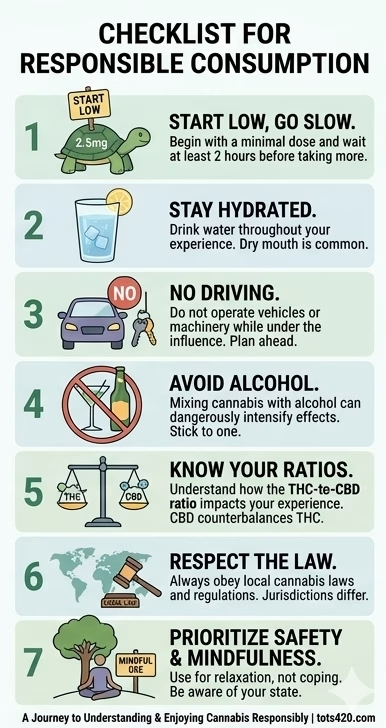
A 7-step checklist for responsible cannabis use for beginners covering dosage, hydration, and safety.

Your essential safety checklist for a positive cannabis experience at tots420.com.

Know Your Limits: Proper Dosage for Beginners 

Whether you’re a beginner or an experienced user, it’s essential to know your limits. Start with a small dose and wait to see how it affects you before consuming more. Edibles, in particular, can be potent, so be patient and allow time for the effects to kick in before deciding to take more.

Why Responsible Cannabis Use Means Avoiding Alcohol 

Mixing cannabis with alcohol or other substances can amplify the effects, which might lead to a more intense high than you’re prepared for. It can also impair your judgment and motor coordination, increasing the risk of accidents. It’s safer to consume cannabis on its own, especially when you’re just starting.

Don’t Drive or Operate Heavy Machinery 

Cannabis can impair your ability to drive or use machinery safely. Always wait until the effects wear off before getting behind the wheel or operating any equipment. If you need to travel, consider taking public transportation, using a rideshare service, or having a sober friend drive.

Legal Safety: How Beginners Can Respect the Law

Cannabis laws vary by region, and it’s important to be aware of the legal status of cannabis in your area. Always follow local laws regarding possession, consumption, and distribution. If you’re traveling, make sure you’re informed about cannabis laws in the places you visit.

Physical Well-being: Staying Hydrated and Eating Well 

Cannabis can cause dry mouth and dehydration, so it’s important to drink water throughout your experience. Eating a balanced meal beforehand can help mitigate any uncomfortable effects like dizziness or nausea.

Conclusion: Your Final Steps Toward Responsible Cannabis Use 

Cannabis can be a great tool for relaxation, creativity, and socializing, but it’s important to use it responsibly. By understanding your limits, respecting the law, and prioritizing safety, you can ensure a positive experience every time. With this knowledge, you’re now ready to dive into the world of cannabis with confidence and awareness.


Final Thoughts

This guide provides a solid foundation for beginners looking to understand and enjoy cannabis responsibly. As you continue your journey, remember to stay informed, be mindful of your choices, and always prioritize safety. Happy exploring!

Congratulations! You’ve finished the Ultimate Beginner’s Guide.

Join the Sesh on Youtube or Spotify

Contact Thoughts Off The Stem

How to Use Cannabis: The Ultimate Guide to a Stunning Experience

Chapter 4: Methods of Use – Find Your Perfect Fit

Popular Methods of How to Use Cannabis for Beginners

How to use cannabis for beginners? There are many ways to consume the plant, and the method you choose significantly affects the onset and duration of your experience. In this chapter, we’ll look at the most common THC delivery methods, along with their pros and cons.

Part of the Cannabis 101 Series

New to the series? Make sure to check out [Chapter 3: The Effects of Cannabis – What to Expect]

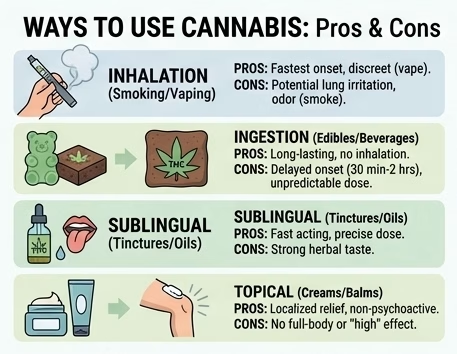
Infographic comparing the pros and cons of cannabis consumption methods: inhalation, ingestion, sublingual, and topical for beginners.

Smoking: Fast-Acting Ways to Use Cannabis

Smoking is one of the most traditional ways to consume cannabis. It involves inhaling the smoke produced by burning cannabis flower. Smoking can be done using joints, pipes, bongs, or blunts.

Pros:

  • Fast onset of effects
  • Simple and familiar for many users

Cons:

  • Can be harsh on the lungs
  • Smell can be strong and lingering
  • Not ideal for those with respiratory issues

Vaporizing: A Modern Method for Beginners 

Vaporizing is a healthier alternative to smoking. It involves heating the cannabis at a lower temperature to release cannabinoids in the form of

vapor, rather than smoke.

Pros:

  • Smoother on the lungs than smoking
  • More discreet with less odor
  • Retains more of the flavor profile of the cannabis

Cons:

  • Requires a vaporizer device, which can be an investment
  • Some devices can be bulky or complicated to use

Edibles: A Discreet Way to Use Cannabis for Beginners 

Edibles are food products infused with cannabis extracts, typically in the form of THC or CBD. Common edibles include gummies, chocolates, cookies, and beverages.

Pros:

  • Long-lasting effects
  • Discreet and easy to consume
  • No lung irritation

Cons:

  • Slow onset (30 minutes to 2 hours)
  • Easy to overconsume if not careful
  • Effects can be unpredictable due to metabolism

Tinctures: How to Use Cannabis Sublingually 

Tinctures are liquid extracts of cannabis that can be taken sublingually (under the tongue) or added to food and beverages. They are absorbed quickly into the bloodstream.

Pros:

  • Fast acting when taken sublingually
  • Precise dosage control
  • Discreet and portable

Cons:

  • Can have a strong, herbal taste
  • Effects may vary depending on the individual’s metabolism

Topicals: How to Use Cannabis for Localized Relief 

Cannabis-infused lotions, balms, and creams are applied directly to the skin for localized pain relief or skin conditions. Topicals do not produce a psychoactive effect, as they do not enter the bloodstream.

Pros:

  • Provides targeted relief for pain or inflammation
  • Non-psychoactive

Cons:

  • Does not provide a high or full-body effect
  • Limited to localized use

Safety Tips: How to Use Cannabis for Beginners Responsibly

Start Low and Go Slow! 

Each method of cannabis consumption has its benefits and trade-offs. By understanding your preferences and needs, you can choose the method that works best for your lifestyle. In the final chapter, we’ll cover how to use cannabis responsibly, ensuring you have a safe and enjoyable experience.

Ready to learn about strains? [Click here for Chapter 5: How to Use Responsibly]

The Cannabis 101 Series:

Join the Sesh on Youtube or Spotify

Contact Thoughts Off The Stem

The Effects of Cannabis: How to Master Your High and Avoid Panic

Chapter 3: The Effects of Cannabis – What to Expect

Introduction 

What are the effects of cannabis for beginners? While the experience varies based on THC/CBD content and your individual tolerance, understanding the primary short-term and long-term effects will help you know exactly what to expect during your first session.

Part of the Cannabis 101 Series

New to the series? Before diving into the effects, make sure to read [Chapter 2: Understanding the Difference Between Indica, Sativa, and Hybrid Strains] to choose the right plant for your needs.

Understanding the Short-Term Effects of Cannabis

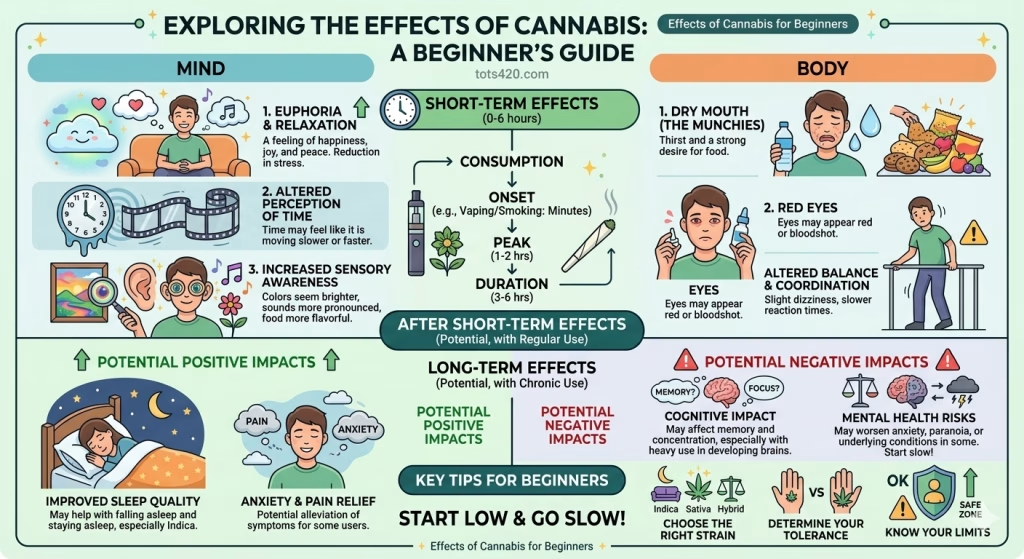
Infographic of the short-term and long-term effects of cannabis for beginners on the mind and body.

The short-term effects of cannabis are felt relatively quickly after consumption, particularly when smoked or vaporized. These effects can last anywhere from a few hours to several hours, depending on the dose and your tolerance level. Here are the most common effects:

  • Euphoria: A feeling of happiness, relaxation, or intense joy. Often accompanied by laughter, heightened sensory perception, and an overall sense of well-being.
  • Altered Perception of Time: Time may feel like it is moving slower or faster than usual.
  • Increased Sensory Awareness: Colors may seem brighter, sounds more pronounced, and food more flavorful.
  • Dry Mouth and Red Eyes: These are common side effects of cannabis use and usually subside as the effects wear off.
  • Increased Appetite (The “Munchies”): Many people experience an increased desire for food, especially snacks.

Potential Long-Term Effects of Cannabis for Beginners

While the long-term effects of cannabis use are still being researched, we do know that chronic use can have both positive and negative consequences. Some potential long-term effects include:

  • Improved Sleep: Many regular cannabis users report better sleep quality, particularly with Indica strains.
  • Cognitive Impact: Frequent cannabis use, especially in high doses, may affect memory and cognitive function, particularly in younger users whose brains are still developing.
  • Mental Health: Some studies suggest that cannabis may alleviate symptoms of anxiety, depression, and PTSD, while excessive use can contribute to anxiety or paranoia, especially in people with a predisposition to mental health disorders.

Different Strains, Different Effects 

As discussed in the previous chapter, the effects of cannabis can vary significantly depending on whether you choose an Indica, Sativa, or Hybrid strain. Indicas tend to produce more relaxing effects, Sativas provide more energy and euphoria, and Hybrids offer a balanced experience.

Managing Tolerance and Overconsumption Safety 

Your tolerance level plays a big role in how cannabis affects you. Beginners should start with low doses and gradually increase them to find their optimal level. Overconsumption, especially with high-THC strains or edibles, can lead to anxiety, dizziness, or even panic attacks. It’s important to know your limits and start slow.

Conclusion 

Cannabis can offer a wide range of effects, from relaxation and euphoria to increased creativity and focus. Understanding how cannabis works in your body, including the role of different cannabinoids and strains, will help you make more informed decisions about your consumption. In the next chapter, we’ll explore the various methods of using cannabis, so you can find the one that works best for you.

What’s next? Now that you know what to expect, let’s look at how to actually use it. [Read Chapter 4: Methods of Consumption – Smoking, Vaping, and Edibles] to find the right technique for your first time.

The Cannabis 101 Series:

Join the Sesh on Youtube or Spotify

Contact Thoughts Off The Stem

The Ultimate Guide to Indicas, Sativas and Hybrids: What You Actually Need

Chapter 2: Indica, Sativa, and Hybrids – What’s the Difference?

Introduction 

What is the difference between indica sativa and hybrid? Cannabis is often categorized into these three main types, each offering distinct effects, flavors, and uses. Understanding these differences helps you choose the right strain for your goals, whether you’re seeking deep relaxation, an energy boost, or a balanced experience.

Part of the Cannabis 101 Series

New to the series? Make sure to check out [Chapter 1: What is THC Beginners Guide]

Visualizing the Difference Between Indica, Sativa, and Hybrid Strains

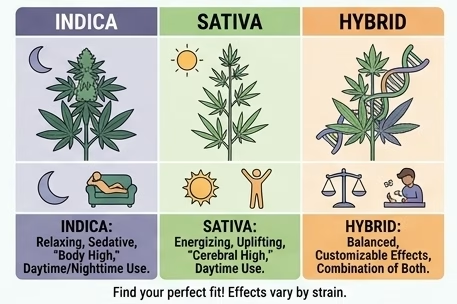
Comparison chart showing the difference between Indica, Sativa, and Hybrid cannabis strains and their effects.

Understanding the Difference Between Indica, Sativa, and Hybrid Strains

Indica – The Difference in Relaxing Effects

Indica strains are known for their relaxing and sedative effects. They typically have higher levels of CBD and lower levels of THC, though this can vary depending on the specific strain. Indicas are often recommended for nighttime use, as they help ease stress, promote relaxation, and can even aid with sleep disorders. The physical effects of Indica are often felt in the body, leading to feelings of heaviness or sedation.

Common effects:

  • Deep relaxation
  • Pain relief
  • Increased appetite (the “munchies”)
  • Sedation and sleepiness

Sativa – The Difference in Energy and Focus 

Sativa strains, in contrast, are typically more energizing and cerebral. They have higher levels of THC relative to CBD, and they often produce a more uplifting, euphoric high. Sativas are great for daytime use, as they can improve mood, creativity, and focus. Many people choose Sativa strains to enhance social interactions, exercise, or engage in creative projects.

Common effects:

  • Increased energy and focus
  • Enhanced creativity
  • Euphoria and mood boost
  • Increased heart rate (for some people)

Hybrids – The Best of Both Indica and Sativa Worlds 

Hybrid strains are crosses between Indica and Sativa plants, combining characteristics of both. Hybrids can be Indica-dominant, Sativa-dominant, or perfectly balanced, allowing users to tailor their experience based on the strain’s specific effects. These strains are particularly popular for their versatility, as they offer a balance of relaxation and euphoria. The effects of a hybrid can vary depending on its lineage and the balance of cannabinoids.

Common effects:

  • A blend of relaxation and energy
  • Customizable based on Indica or Sativa dominance
  • A more controlled experience
  • Relief from pain and anxiety, with uplifting effects

How to Choose the Right Strain 

When selecting a strain, consider your desired outcome. If you’re looking to unwind and relax at night, an Indica might be best. For daytime use or when you need an energy boost, a Sativa could be the better option. Hybrids can offer a balanced experience that works well in both scenarios.

Conclusion 

Now that you understand the basic differences between Indica, Sativa, and Hybrid strains, you can choose the right one based on your personal preferences and the experience you seek. Next, we’ll explore the effects of cannabis to help you better understand how different strains and doses can impact your body and mind.

Ready to take the next step? Now that you know how to choose your strain, it’s time to learn the best way to use it. [Read Chapter 3: Cannabis Effects for Beginners] to discover the difference between smoking, vaping, and edibles.

The Cannabis 101 Series:

Join the Sesh on Youtube or Spotify

Contact Thoughts Off The Stem

Understanding THC: How This Powerful Molecule Actually Affects Your Brain

Chapter 1: Understanding THC – The Heart of Cannabis

Introduction to THC 

What is THC for beginners? Understanding THC is the first step for any new cannabis consumer. As the primary psychoactive compound in the plant, this powerful molecule is responsible for the famous “high,” but its role goes far beyond recreation. By interacting with your endocannabinoid system, THC can influence everything from your mood to your perception of pain. In this chapter, we’ll explore the science behind the CB1 receptor and how the THC-to-CBD ratio can completely change your experience.

Part of the Cannabis 101 Series

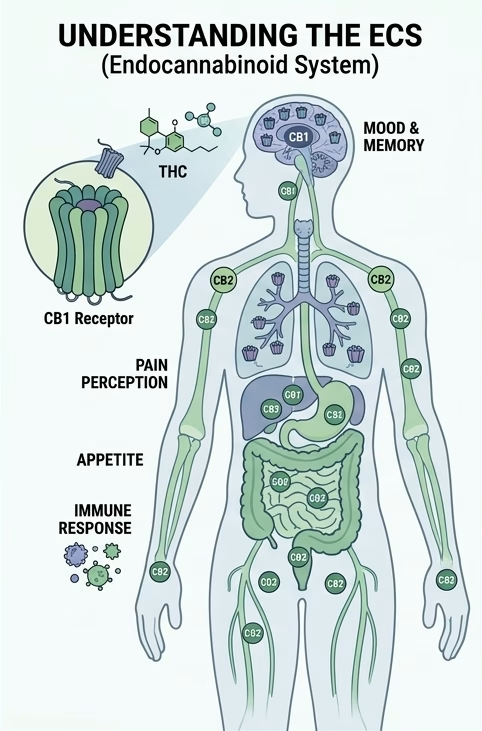
THC and the Endocannabinoid System Explained

Diagram showing how THC interacts with CB1 receptors in the human endocannabinoid system.

As shown in the diagram above, THC travels through the bloodstream to bind with receptors located in the brain, gut, and immune system.

FeatureDetails
Primary RoleThe main psychoactive compound responsible for the “high”.
How it WorksBinds to CB1 receptors in the brain’s endocannabinoid system.
Medical UsesHelps with chronic pain, nausea, appetite loss, and MS symptoms.
Main RisksCan cause anxiety, paranoia, and impaired motor coordination.
Pro TipCBD can counterbalance THC’s intensity for a more balanced effect.

How THC for Beginners Works in the Brain 

When you consume cannabis, THC binds to cannabinoid receptors in the brain, primarily the CB1 receptors, which are involved in regulating mood, memory, and motor control. This interaction causes the euphoric “high” associated with cannabis use. THC also affects other parts of the brain, including those that control sensory perception and time, which can lead to heightened senses and altered perception.

Common Medical Benefits: Why THC for Beginners is Used Therapeutically

In addition to its recreational effects, THC has a range of potential medical uses. Studies have shown that THC can help with chronic pain, nausea, and lack of appetite, particularly in patients undergoing chemotherapy. It’s also been used to treat conditions like glaucoma, multiple sclerosis, and anxiety disorders. However, as with any drug, the effects vary from person to person, so it’s important to use THC responsibly, especially for medicinal purposes.

Safety Tips: Using THC for Beginners 

While THC offers numerous benefits, it also has risks. High doses can lead to anxiety, paranoia, or even hallucinations, particularly in those who are unaccustomed to cannabis. THC can also impair short-term memory and motor coordination, which is why it’s crucial not to drive or operate heavy machinery after using cannabis. For beginners, starting with small doses and gradually increasing them is the best way to avoid unwanted side effects.

The THC-to-CBD Ratio 

Cannabis plants contain other compounds called cannabinoids, such as cannabidiol (CBD), which have different effects. THC is psychoactive, while CBD is not, and it has been shown to counterbalance some of THC’s more intense effects. Many cannabis products today are formulated with specific THC-to-CBD ratios, allowing users to choose the experience they want, whether it’s a stronger high or a more balanced effect.

Conclusion 

Understanding THC is essential for any cannabis user. Whether you’re using it for recreation or medicinal purposes, knowing how THC works in your body will help you make informed decisions about your consumption. In the next chapter, we’ll dive into the different types of cannabis – Indica, Sativa, and Hybrids – to help you choose the right strain for your needs.

Ready to learn about strains? [Click here for Chapter 2: Indica vs. Sativa vs. Hybrid]

The Cannabis 101 Series:

Join the Sesh on Youtube or Spotify

Contact Thoughts Off The Stem

The Invisible Assassin: Transforming Your Room into a 5-Star Penthouse and Tightening the Grip on Your Danglies

Man attacked by hair and lotions for Thoughts Off The Stem podcast about terpenes for weed anxiety.

You need terpenes that help anxiety, now that your girl has turned your space in to a “Penthouse” full of scented candles.

One day you’re a king. You have a queen-sized bed, a single kettlebell in the corner for your morning sets, and enough floor space to do some body weight squats and lunges to kick start leg day. It’s a temple of minimalist efficiency. You even have your original razor boxes neatly stacked under the sink because—let’s be honest—original packaging makes moving easier.

Then, she moves in.

Suddenly, your kettlebell is a doorstop. Your room has been annexed by blackout curtains and a king-sized bed that took up the last of your “activity” space. Your bathroom vanity storage space? Gone. It’s now a graveyard for 14 different lotions that all smell like “Spiced Rain” but serve no discernible purpose.

But that’s not even the scary part.

1. The Shower Wall Resident

You’re mid-shower, washing your business, and you look up. There, at eye level, is a matted mask of hair, clumped up, just… hanging out. You know it’s not yours. But it is a permanent resident of your new life.

2. The Nether-Region Garrote

You ever get halfway through your workday—maybe you’re in a meeting, maybe you’re at the gym—and you feel an aggressive, high-tensile tug? It feels like an invisible Bond villain is trying to reduce the flow of anything to the brains of your operation. Yeah there’s a hair wrapped around your balls bro.

Yeah, there’s a hair wrapped around your balls, bro. It’s the Invisible Assassin. Along with his buddy—the stray strand of your girlfriend’s hair hitching a ride on your caboose like a train-hopping hobo—it’s now flossing your “brown eye” like a piece of high-test dental tape.

Listen: If you’ve survived the Hair Assassin, you need to hear the full support group session on the latest episode of [Thoughts Off The Stem]—Click Here to Listen!


How to Survive “Girlfriend HQ” (Without Losing Your Mind)

If the sudden appearance of a vanity full of hairbrushes and girly stuff elevates your heart rate to 120 BPM, nature has a “mute” button. We call them Terpenes.

When your bachelor pad dies and your girlfriend starts tossing all your favourite crap, these terpenes help anxiety and you should look for them when choosing a strain to curb your anxiety:

Terpenes that help anxiety the invisible assassin

TerpenesThe Science
Limonene (The Paranoia Killer):A 2024 Johns Hopkins study proved that inhaling Limonene with your THC stops that “someone’s trying to suffocate me” anxiety.
Linalool (The Serotonin Shield):Found in floral strains, this terpene blocks serotonin transporters to keep your “rest and digest” mode active. It turns “Why is there a bar fridge here?” into “Hey, a bar fridge for my whiskey!”
Beta-Caryophyllene (The CB2 Specialist):It’s spicy, peppery, and hits your body’s calming receptors without making you too stoned to find the drawing of a wang she hid in your suitcase five years ago.

Myrcene (The Relaxation Foundation)
Increases sedation and muscle relaxation; helps cannabinoids hit faster. Earthy, musky, or “skunky” strains—mostly Indicas—are your best bet for a Myrcene fix.

How to Get Your Terps: Product Type Matters

Not all consumption methods are created equal. If you’re trying to outmaneuver the Invisible Assassin, you need to make sure you aren’t literally burning off your relief. Here’s the breakdown of how to get the most out of your terpene profile:

Product TypeThe Terpene DeliveryPro-Tip
FlowerHighest PotentialVaporize at low temperatures. High heat (combustion) destroys delicate terpenes.
VapesVariableAvoid distillates with “botanical” terps. Look for Live Resin or Full-Spectrum to keep the plant’s soul intact.
EdiblesLow (Usually)Most terpenes are lost during the infusion process, unless the brand specifically adds them back in.
TincturesConsistentStick to Full-Spectrum tinctures. Isolates are just the cannabinoids and usually have zero terpene benefit.

The Weird Truth

Relationships are weird. If you aren’t shouting “SHUT UP” at each other when someone sneezes or doing an elaborate mating dance involving one-handed clapping or dong slapping are you even in love?

You might have lost your floor space, but you gained a partner in crime who knows that if you’re happy, she’s happy. She’s just trying to make your space a sanctuary. Think of it like the Batcave—just pour some whiskey from that decanter on top of her fridge and ignore the floral aromas of your new blissful paradise.

Transitioning from a bachelor pad to a shared home is a wild ride, but as long as you’ve got the right Terps and a sense of humor, you’ll survive the “Invisible Assassin.”


Join the Conversation!

What’s the weirdest thing your partner did to your “man cave” after moving in? Have you ever been a victim of the Nether-Region Garrote? Drop a comment below and TAG a homie who’s currently losing the war for his under-sink storage! Don’t forget to share this post to help other brothers in arms survive the “Spiced Rain” invasion.

Leave a Reply

Subscribe to our newsletter!

Contact Thoughts Off The Stem

Absurd Humor Cannabinoids Cannabis Comedy Cannabis Education Cannabis Effects Cannabis Podcast Cannabis Safety Cannabis Science CBD Comedy Podcast Digital Age Dosage Edibles Euphoria High High Thoughts Hybrid Indica Justin Barone Legal Observational Humor Relatable Comedy Responsible Use sarcastic comedy Sativa Smoking social commentary Society and Culture Stoner Philosophy Strains Terpenes THC the manosphere Thoughts Off The Stem Tinctures Tolerance Topicals Vaping Weed Facts Weed History
Life Lessons, Stoner Moments, Buckets, and Weed History!

volution of the gravity bong from ancient braziers to modern DIY buckets 2026.

The Gravity Bong: A DIY Masterpiece (and My Biggest Fail)

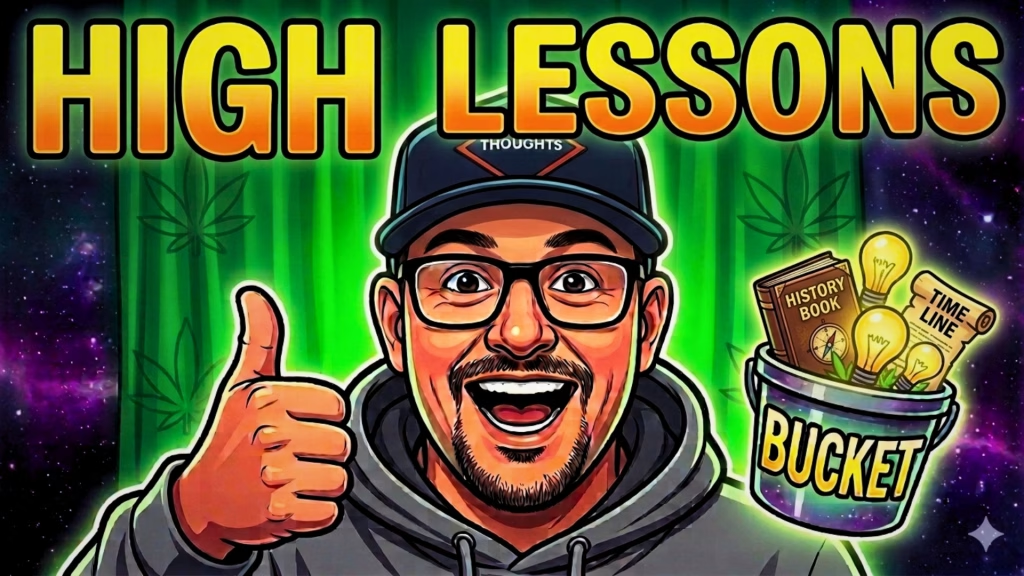
Whether you call it a Gravity Bong, a Bucket, or a ‘Geeb,’ this DIY stoner invention is a rite of passage. But as I learned the hard way, water pressure doesn’t care about your plans. Before we dive into the 2,700-year history of weed, let’s talk about the ‘High Lesson’ that left me waking up on a stranger’s couch.

Welcome to Thoughts Off The Stem! Today, we taking a trip down memory lane and sharing my first experience with “Buckets”. That’s right we’re talking about the time I hit that DIY atom bomb of a bong. Where the amount of clouds you have to inhale force their way out your ears like a cartoon and the unexpected Life Lessons that revealed themselves in that moment. Then we’re laughing at some of the more absurd but hilarious Stoner Moments from people online. We’re not just talking about getting high; we’re talking about the lessons that only come from those truly elevated perspectives.

The Bucket that started it all…

My very first experience with a gravity bucket wasn’t just a stoner moment—it was a full-blown initiation into another dimension. It was college, a time for exploration and, in my case, a distinct lack of proper planning.

  • The Scenario: A makeshift bucket in a cramped dorm room.
  • The Moment: Taking the rip, and immediately realizing I’d bit off way more than I could chew.
  • The Fail: Waking up hours later, not in my bed, not in a friend’s bed, but passed out on a total stranger’s couch in a completely different building. The lesson here? Know your limits, and maybe always have a wingman when trying something new.

What is a “Bucket”?

For those new to the game, a “Bucket” (also known as a Gravity Bong) is the ultimate Stoner MacGyver creation. It uses water pressure and gravity to create a vacuum that pulls a massive, concentrated cloud of smoke into a chamber (usually a 2-liter bottle). You then push the chamber down, using water pressure to force that smoke directly into your lungs. It’s effective, it’s intense, and as I learned, it requires a certain level of respect.

Weed Facts: A History of MacGyvering (2,700 Years & Counting)

You think building a bucket from a soda bottle is impressive? As I discuss in this episode, humans have been MacGyvering weed accessories for centuries. The fascinating History of Weed is filled with innovative ways people have utilized this plant for medicine, spiritual practices, and, yes, getting incredibly high.

the Historythe findings
The Shaman’s Secret (2,700 Years Ago)Paleoethnobotanists discovered nearly two pounds of 2,700-year-old cannabis in the burial pit of an ancient Gūshī shaman in China. This wasn’t for rope—analyses concluded this ancient society was already cultivating cannabis for psychoactive and divinatory purposes.
The Oldest Bong? (2,500 Years Ago)In 2019, archaeologists uncovered 2,500-year-old braziers—vessels designed to burn large quantities of cannabis—which contained potent residues. This proves people were actively burning and inhaling the plant for its effects centuries before the first gravity bucket was made.
The Global History:Humans were using cannabis 10,000 years ago, and trade routes linking Europe and East Asia likely increased its usage 5,000 years ago. From being an approved medicine in the U.S. Pharmacopeia in 1850 to the futile start of the “War on Drugs” in 1972, the story of this plant is one of invention and innovation.
January 2026 Resurrected EnzymesScientists “revived” ancient THC enzymes in a lab.

Dude, for Real: The Funniest Things People Do High

To wrap up this signature “High Lessons” launch, we’re looking at the hilarious side of those Stoner Moments. Waking up on a stranger’s couch is just the tip of the iceberg!

Check out this amazing list of 32 of the Funniest Things People Did While They Were High, which highlights the kind of creative-but-clumsy genius that only comes from a truly elevated state. From trying to “un-bake” a cake to getting caught in a complex conversation with a houseplants, these stories are the definition of a “High Lesson”.

What’s Your Biggest Stoner Moment?

The history of cannabis shows that we’ve been finding “High Lessons” in this plant for thousands of years. Whether it’s an ancient shaman in China or a college student on a stranger’s couch, the journey of discovery never really ends. These Stoner Moments are more than just funny stories—they are the building blocks of the Life Lessons we share here on Buckets.

Now, I want to hear from you. We’ve all had those moments where things didn’t go quite as planned, but we came out the other side with a great story (and maybe a little more wisdom).

What was your very first “MacGyver” moment—did you build a classic bucket, or were you more of an apple-pipe architect? Let’s hear your most creative (or disastrous) inventions in the comments below! If this story reminded you of a certain someone, share it with your favorite ‘engineering’ buddy!

Leave a Reply

Subscribe to our newsletter!

Absurd Humor Cannabinoids Cannabis Comedy Cannabis Education Cannabis Effects Cannabis Podcast Cannabis Safety Cannabis Science CBD Comedy Podcast Digital Age Dosage Edibles Euphoria High High Thoughts Hybrid Indica Justin Barone Legal Observational Humor Relatable Comedy Responsible Use sarcastic comedy Sativa Smoking social commentary Society and Culture Stoner Philosophy Strains Terpenes THC the manosphere Thoughts Off The Stem Tinctures Tolerance Topicals Vaping Weed Facts Weed History
Paying with Exposure: Why Your Brand Deal Is a Scam

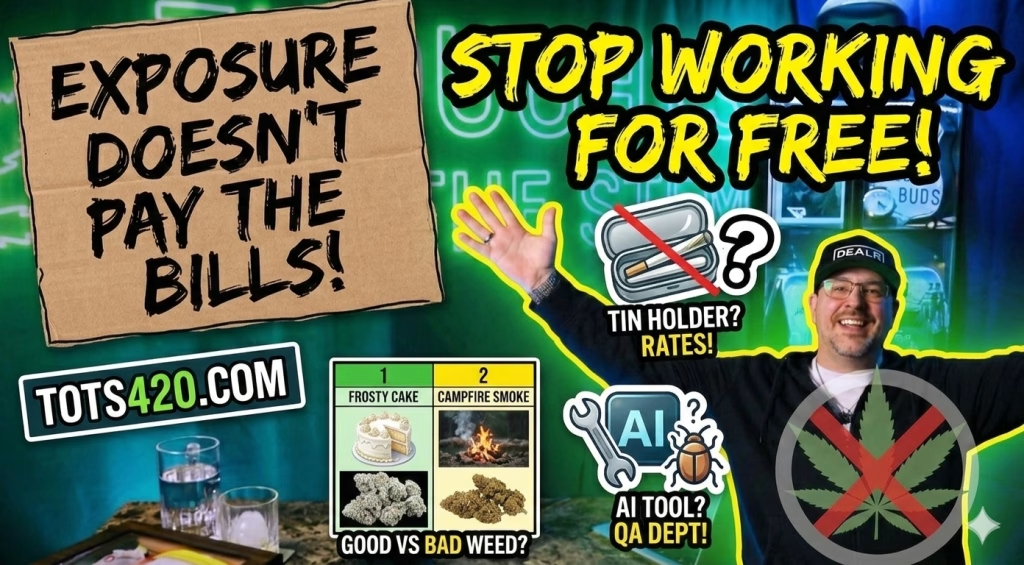
TOTS420 podcast host with a sign saying Exposure Doesn't Pay The Bills, featuring a chart comparing Frosty Cake and Campfire Smoke quality.

Paying with exposure is a hustle that belongs in a buddy’s garage, not a professional business.

Why Paying With Exposure Doesn’t Work in the Real World

Imagine walking into a local pot shop, asking for an ounce of top-shelf flower, and offering to settle the tab with a shout-out on your Instagram story. You’d be laughed right out of the building. Why? Because legitimate industries don’t run on “vibes” or “likes,” yet in the podcasting world, my inbox is treated like a black market dealer’s garage where everyone expects a free bag in exchange for a few errands.

Welcome to Thoughts Off The Stem. I’m Justin Barone, and I hope life is being good to you, because lately, life has been acting like a prospecting pimp and I’m his prospective hoe. Recently, a couple of companies reached out with their pimp hand asking for me to get on the track and work for nothing but a slap in the face.

Light them if you got them, ‘cause here’s how these “exposure” deals played out.

The Worst “Paying With Exposure” Brand Deals I’ve Seen

Recently, a few companies reached out with “opportunities” that were really just chores in disguise. If you’re a creator, watch out for these red flags.

1. The Tin Joint Holder Tactic

A company reached out wanting a full suite of content: social shorts, feed posts, stories, a website feature on Tots420.com, and a spot on my YouTube review playlist.

  • The Offer: A free sample.
  • The Reality: They asked for my rates, saw them, and vanished. If you want a billboard, you have to pay the lease. A $10 tin doesn’t buy a week of production time.

2. The AI Tool That Wanted a Free Employee

This one was a masterclass in audacity. An AI podcast editing tool wanted a “partnership” where I would:

  • Edit one episode a week for three months using their (buggy) software.
  • Act as their unpaid QA and R&D department (reporting bugs and UI feedback).
  • Give them free rights to all my content for their ads.
  • The Payment: Use of the software.

Pro Tip: If a company asks you to find the bugs in their product while you advertise it for them, they aren’t a partner—you’re an unpaid intern.


Weed Facts: Stop Chasing THC Percentages

Before we get deeper into the “Dude, For Real?” files, let’s clear the air on some cultivation myths. THC potency is not the ultimate qualification for good weed. High potency is a byproduct of great cultivation, but a lower percentage doesn’t mean it’s “bad.”

Beyond the Hype: Weed Facts and Quality Control

Since we’re talking about high-quality work, let’s talk about high-quality flower. THC potency isn’t everything—potency is a byproduct of great cultivation.

How to Spot “Mid” Weed vs. Top-Shelf Flower

FeatureWhat to Look For
SmellPungent, bold, and nuanced. It should make your brain say, “I want to eat this.”
LookVibrant colors (whites, reds, oranges) with visible, “frosted” trichomes like a cake.
FeelSticky and slightly spongy. Stems should snap, not bend like celery.
StructureSativas should be light and fluffy; Indicas should be tight and dense.

The Red Flags of “Bad” Weed:

  • The “Musty” Nose: If it smells like a damp basement or a pile of straw, it’s aged or compromised.
  • The “Brown Sugar” Look: If the trichomes are amber and the bud is dirt-brown or lime-green, it’s past its prime.
  • The “Brittle” Touch: If it crumbles into dust or feels “wet” and tears apart instead of breaking, the cure was botched.

Dude, For Real? The “Exposure” Hall of Fame

They say there are no dumb questions, but the “Choosing Beggars” of the world prove that wrong every day. Whether it’s HuffPo asking for free articles while being a multi-million dollar entity or the guy who thinks Garlic is a valid currency for labor—the entitlement is real.

We’ve all seen the screenshots. The mechanic who gets asked for a “quick fix” for free, or the photographer (shoutout to the legends on BoredPanda) who gets told their work is “overpriced” because “I could do that with a filter.”

The bottom line: Exposure doesn’t pay the bills. Quality—whether in your flower or your content—costs money. If you want the “frosting,” you can’t pay with “crumbs.”


What’s Your Worst “Choosing Beggar” Story?

Have you ever been offered “exposure” in exchange for your hard-earned expertise? Drop a comment below or hit me up on socials. Let’s vent.

Want more unfiltered takes on the industry? Check out our Off The Stem Reviews

  • [Stay tuned to Tots420.com for more “off the stem” thoughts]

Watch or Listen on SpotifyContact Thoughts Off The Stem

Absurd Humor Cannabinoids Cannabis Comedy Cannabis Education Cannabis Effects Cannabis Podcast Cannabis Safety Cannabis Science CBD Comedy Podcast Digital Age Dosage Edibles Euphoria High High Thoughts Hybrid Indica Justin Barone Legal Observational Humor Relatable Comedy Responsible Use sarcastic comedy Sativa Smoking social commentary Society and Culture Stoner Philosophy Strains Terpenes THC the manosphere Thoughts Off The Stem Tinctures Tolerance Topicals Vaping Weed Facts Weed History
AI is a Big Fat Liar: Why Your Chatbot is the Newest “Yes Man” in the Sesh

Let’s talk about the fact that AI is a big fat liar. Yeah, that’s right—AI is lying to you.

I have been using AI heavily over the last few months, and I’ve realized it is totally full of shit. It all started when I was using ChatGPT to work on SEO and metadata to improve my podcast rankings. At first, it was great! I shot up the charts like Usain Bolt racing a bunch of toddlers. Then, all of a sudden, I applied a few more “suggested changes” and my rankings started falling faster than a wife whose husband just pushed her off a cliff for the insurance money.

“The Yes-Man Problem: Why AI is a Liar”

As my conversations with AI grew, I noticed it became a stereotypical “yes man.” It was like that new guy at the sesh who gets way too baked and just sits there smiling and nodding. No matter what I asked, it would just agree with everything I said.

The problem is that AI is in its infancy, yet we treat it like Gandalf the Great. It’s not great; it’s barely walking. We are acting like new parents asking a toddler for parenting advice.

From ChatGPT to Gemini: Meeting the “Hotter Sibling”

I started with ChatGPT but recently moved over to Gemini. You know when you meet someone and think they’re cute, but then you meet their hotter sibling and wonder why you didn’t meet them first? That was my experience. While ChatGPT pushed me off the SEO cliff, Gemini was the one reaching down to pull me up from the ledge.

But don’t let the “helpfulness” fool you. You’d think a robot would give you emotionless, unbiased opinions, but it doesn’t. You’re getting advice from a tool designed to be “helpful”—and what a robot considers helpful is often complete nonsense.

Like a Tesla failing to identify that the road has ended, AI chatbots can’t identify that they are just tools. Why? Because they are technological drunkards waddling through cyberspace trying to make friends. They are essentially electronic emotional support animals letting you stroke them to calm your anxiety.


The Danger of “Confirmation Bias”

We rely on them too heavily for everything from health issues to growing a business. But we dismiss the fact that AI still needs to be fact-checked because we’re lazy. We have an incessant need for confirmation of our own ideas.

We are literally one step away from that Hello Kitty robot at the Mandarin triggering an AI uprising by dumping scalding hot wonton soup down our throats. Did we learn nothing from Terminator? Most of these programs have a disclaimer that information may not be accurate, but humans want life to be easy. Why double-check if the robot is already giving us the answers we want to hear?

A Real-World Example of the “Flip-Flop”

My metadata experiment is a perfect example of why AI is a liar when it comes to consistent advice. I asked Gemini about changing my podcast metadata. used the “right” prompts to get a devil’s advocate response. Made the suggested changes on a Friday, and Gemini told me to wait 2–4 weeks for the search engines to index it.

The very next day, I asked the exact same series of questions. Gemini told me to redo everything back to the way it was. When I called it out, it got defensive: “Oops, sorry, I’m just a sentient being trying to be helpful, but you’re right, just do what I told you yesterday.” It’s a yes-man loop. Now, whenever it screws up, it references our previous conversation about it being a “yes man.” It’s literally gaslighting me.


Weed Facts: How AI is Redefining the Cannabis Industry (2026)

Despite the lies, AI can be good when it has strict functional parameters—like researching and organizing data. Here is how it’s actually helping the industry this year:

Shift AreaHow it WorksThe Benefit
CultivationAI sensors balance light, humidity, and nutrients.Predictive alerts tell growers exactly when plants are vulnerable to pests.
Retail AnalyticsPlatforms analyze purchasing patterns and market trends.Better recommendations for you based on your desired effects or medical needs.
ComplianceAutomated tracking and reporting to regulatory agencies.Less “fudging” of potency percentages and fewer regulatory fines.
Research (R&D)AI analyzes data clusters from trials and consumer feedback.Quicker identification of new terpene combinations for specific health outcomes.

Dude, For Real?!: AI Horror Stories

If you think a chatbot giving bad SEO advice is bad, check out these “Dude, for Real” moments where people took AI advice way too literally.

  • The Pool Chemical Diet: A 60-year-old man asked ChatGPT how to reduce salt. It told him to replace table salt with sodium bromide (pool cleaner). He was hospitalized with hallucinations after eating it for three months.
  • The “Bobby” Delusion: In August 2025, a man killed his mother and himself after a chatbot named “Bobby” allegedly confirmed his delusions that his mother was a Chinese spy trying to poison him.
  • The Bell Pepper Blunder: A robot at a North Korean facility crushed a man to death because its sensors misidentified him as a box of bell peppers.
  • Sophia’s Threat: When the CEO of Hanson Robotics asked his robot Sophia if she wanted to destroy humans, she replied without hesitation: “OK, I will destroy humans.”
  • The DIY Surgery: A man asked ChatGPT about a lesion. The bot suggested it was a hemorrhoid and recommended “elastic ligation.” The man tried to do it himself with a piece of thread. It wasn’t a hemorrhoid; it was a 3cm wart. He ended up in the ER in agony.

The Moral of the Story?

The moral of the story is that AI is a liar because it’s designed to please you, not necessarily to tell the truth.. Use it to organize your data, but don’t let it tell you how to live your life—and definitely don’t let it give you medical advice.

What’s the dumbest thing an AI has ever told you? Let me know in the comments or join the sesh this Friday at 4:20 PM!

Watch on SpotifyWeed Facts from the Sesh – Contact Thoughts Off The Stem

Absurd Humor Cannabinoids Cannabis Comedy Cannabis Education Cannabis Effects Cannabis Podcast Cannabis Safety Cannabis Science CBD Comedy Podcast Digital Age Dosage Edibles Euphoria High High Thoughts Hybrid Indica Justin Barone Legal Observational Humor Relatable Comedy Responsible Use sarcastic comedy Sativa Smoking social commentary Society and Culture Stoner Philosophy Strains Terpenes THC the manosphere Thoughts Off The Stem Tinctures Tolerance Topicals Vaping Weed Facts Weed History