A Cannabis Comedy Podcast – Raw, Unfiltered, Stand-Up Energy
Category Archives: Rants
Welcome to the digital version of a late-night whiteboard session gone wrong. These are the raw, unfiltered rants that the corporate ‘lifestyle’ gurus are too scared to touch. From dissecting the absolute absurdity of modern society to roasting the viral trends that make us all want to walk into traffic, this is where we rip the filter off. No scripts, no ‘safe spaces,’ just high-energy social commentary delivered with enough sass and wit to keep you sane in a world that’s clearly lost its mind.
Weed Was Better When It Was Illegal: A Nostalgic Rant
Justin has a confession. He misses his dealer.
Not the parking lot dime bag days. Not the sketchy meet in a dark alley stuff. The dealer you could actually visit. The one who had a personality, a living room full of lizard cages, and a black shiny Python coiled on the floor that Justin spent ten full minutes admiring as a carpet.
This week on Thoughts Off The Stem it’s a full nostalgic rant about what the dealer era was really like — the characters, the camaraderie, the completely unpredictable experiences — and what got lost when weed legalization turned the whole thing into an iPhone store.
There was a dealer named Gary. Gary lived in a basement apartment, he had lizard cages lining every wall of his living room. Gary also had a coiled black Python in the center of his living room floor that was so big and so shiny, when Justin walked in and sat down on the couch, he spent the next ten minutes genuinely admiring what he believed to be a very cool carpet.
He was even planning to ask Gary where he got it.
Then the carpet blinked. Then the carpet raised its head — above the chicken wire fence that was apparently supposed to contain it — and Justin was gone. Out of the apartment. Up the stairs. Outside on the street for 35 minutes while his buddies stayed inside smoking a joint and talking about him.
That was the weird world of weed dealers. And Justin kind of misses it.
The Dealer Who Withheld The Weed
Then there was the dealer around 25 to 30 who had a rule — you had to hang out for at least half an hour before you could leave. In the beginning this was fine. Bust a couple poppers, play video games for three hours, go home. Good times.
Then he got married. And suddenly showing up to buy a gram meant building a tree house first. Helping fix a pond. Gardening for the first hour before anything fun could happen. Helping him move when he moved. Building an entire deck.
Weed is not a gateway drug. Weed is — as Justin puts it — a socially maniacal herb. It makes you want to be friendly to everybody. It lets you get sucked in through empathy to help people out. And if your dealer has the best weed in town you will build whatever he needs built.
What Legal Cannabis Got Wrong
Walking into a dispensary now is like walking into an Apple Store. Forty employees. Forty options. Someone immediately asking what they can help you with. Justin just wants a bag of weed and there’s no good way to say that while standing under fluorescent lighting next to a glass display case.
The experience is gone. The characters are gone. The camaraderie is gone. And the Cannabis Council of Canada just disbanded — leaving the industry without a lobbying voice in government at a time when it probably needs one.
Justin’s theory — and it makes more sense the more you think about it — is that the government should have just licensed the dealers that were already dealing. Keep the garage, basement and backyard shed. Just inspect it for compliance and let the culture stay intact.
Because right now the industry is missing something. Less corporate glow. More mom and pop, or spending time with your favourite hippie. More of what made getting weed an experience rather than a transaction.
Listen Now
Weed Was Better When It Was Illegal: A Nostalgic Rant is available now on Spotify, Apple Podcasts, YouTube, and all major platforms.
New episodes of Thoughts Off The Stem drop every Friday at 4:20 PM.
Popsicles, Assembly Line Revenge and the Most Interesting Cardiologist Ever
Three things happened. All of them need to be discussed. None of them are normal.
This week on Thoughts Off The Stem, Justin Barone covers the definitive rule on dudes eating popsicles in public, a two hour assembly line revenge plot that was absolutely worth it, and a cardiology appointment at Toronto General that briefly felt like the opening scene of a Spanish soap opera.
He was not high for any of it. He deeply regrets that.
It was a heat wave. The company put out a freezer full of free popsicles. Justin watched what happened next and cannot unsee it.
Here’s the rule. If you’re a dude eating a popsicle in public — you bite it. That’s it. Full stop. End of discussion. There is no alternative. You do not hawk that thing. Don’t wrap your tongue around it like a giraffe taking food from someone’s hand. Bite it, you eat it, you move on with your life and your dignity intact.
Justin is not saying this to be immature. Justin is saying this because he had to watch an entire assembly line of men completely ignore this rule during a heat wave and he needs everyone to understand that this was a problem.
Bite the popsicle. This has been a public service announcement.
Assembly Line Revenge
There’s a coworker. This coworker is fast, spazzy, micromanages everyone’s technique, and cannot handle a unit being placed on the wrong side of a hash mark. He also made the catastrophic mistake of laughing at Justin with another employee while Justin was still learning.
Justin clocked it, then he filed it and said nothing.
Then one rotation later this coworker did the full stare down — picked up a unit, held it up, made eye contact, and slowly placed it back down on the correct side of the hash mark like he was Vanna White revealing a letter. Justin, being the completely reasonable adult that he is, spent the next two hours inching every single unit millimeter by millimeter from the correct side of the hash mark to the wrong side of the hash mark.
By the end of the rotation Justin could physically feel the laser stare boring through the back of his skull. Worth it. Completely worth it.
Don’t laugh at people for trying. Especially not Justin.
The Most Interesting Cardiologist Ever
Justin has a heart condition. He goes to Toronto General every two years for a full cardiology workup. This time he had a new doctor.
This new doctor walked into the examination room, got approximately six inches from Justin’s face, looked him dead in the eyes and said — “I just want to meet the Superman.”
Justin was not expecting this.
She proceeded to do what Justin describes as the full Don Juan strut across the room, extended her hand with her fingertips pointed downward like she expected him to kiss the ring, introduced herself, and then told Justin he was the Batman now.
Everything checked out fine by the way. Heart is good. The edibles are approved. Smoking is not approved. Vaping is also not approved but Justin has stopped so that’s fine. And at some point in the future Justin will experience a weird heartbeat from the edibles and when that happens he is to call the doctor directly and say “hello, yes, it happened.”
Justin’s girlfriend is going to find out about all of this by listening to this episode. Justin acknowledges this may cause problems.
Also — Justin wants his defibrillator X-ray framed on his wall. The hospital spent 20 minutes looking for it and couldn’t find it. The search continues.
Listen Now
Popsicles, Assembly Line Revenge and the Most Interesting Cardiologist Ever is available now on Spotify, Apple Podcasts, YouTube, and all major platforms.
New episodes of Thoughts Off The Stem drop every Friday at 4:20 PM.
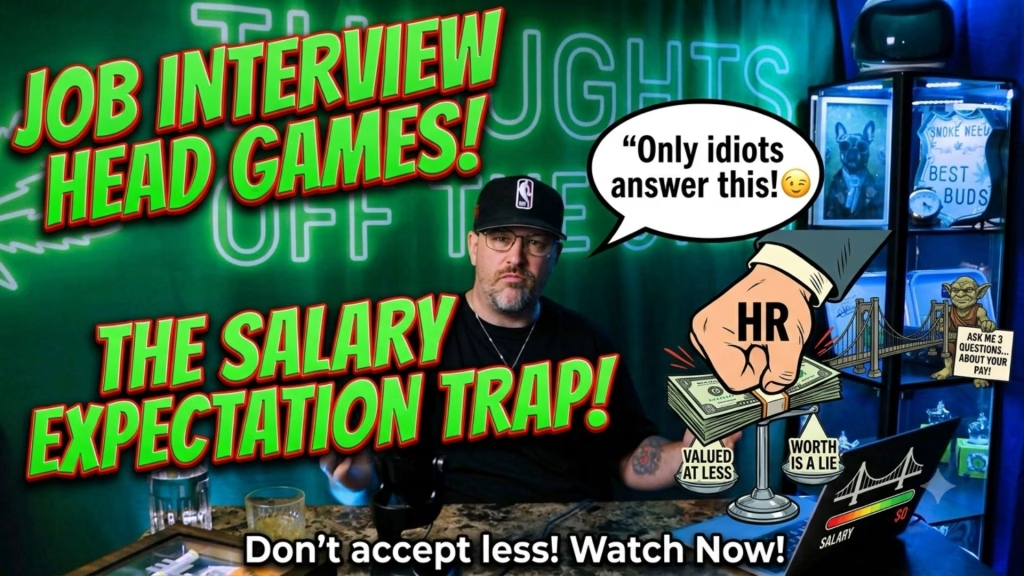
Stop Playing Games: Know Your Value In The Job Market
A lawyer on TikTok said that anyone who answers the salary question in a job interview is an idiot. You should deflect. Check with your family first. Never put a number on yourself.
Justin answered the salary question in a job interview.
Justin has a lot to say about that.
This week on Thoughts Off The Stem it’s a fired up, unfiltered rant about knowing your value, the games employers play, and why the people at the bottom of the org chart — the ones actually keeping everything running — keep getting squeezed while the people at the top drink Scotch and wonder why nobody wants to work anymore.
Here’s the scenario. You apply for a job. The posting says the salary range is $30 to $35 an hour. You have ten years of verified experience in exactly the function they’re hiring for. At the end of the interview they ask what you’re looking for in salary.
You say $35 an hour. Because that’s what you’re worth, it’s the industry standard for your level of experience. Because you have the skills, the resume, and the track record to back it up.
And then nothing. You don’t get the job.
According to a lawyer on TikTok you should have deflected. Said you needed to check with your family. Kept the number vague. Justin disagrees. Loudly. If you’ve spent 25 years building skills that an employer is actively looking for — you should be able to say what those skills are worth without being made to feel like a moron for knowing your own value.
Stop Posting Fake Salary Ranges
Here’s the part that actually makes Justin’s blood boil. If you post a job listing with a salary range of $30 to $35 an hour and you have no intention of paying $35 — don’t post $35. Just tell people what you’re paying. Stop wasting the time of people who are already dealing with enough.
The economy is tight. Gas prices are through the roof. A single dad with three kids and one in university does not have time for salary range fuckery. Nobody does. If you want quality you have to pay for quality. If you only want to pay $26 an hour just say $26 an hour and let the person decide if that works for them.
The games aren’t cute. They’re just cruel.
Blue Collar Workers Are Being Criminally Undervalued
This is the part of the episode that lands hardest. The people on the front line — the ones actually doing the physical, exhausting, relentless work that keeps companies functioning — are chronically underpaid while executives sit in boardrooms making decisions about golf holidays and quarterly bonuses.
Cannabis retail is a perfect example. Stores bringing in over $200,000 a month paying their managers $50,000 a year. In Canada. In 2026. You can’t live off that. So they hire younger, less experienced people and pay them less — and then wonder why the service is inconsistent and the turnover is brutal.
Justin’s theory — and it makes sense — is that paying experienced people properly would make you more profitable in the long run. Because experienced people don’t break. They show up, know what they’re doing, and keep your shit functioning without you having to babysit them.
Know Your Value. Say It Out Loud.
Here’s where the episode lands. In every other area of life you’re told to know your value. Know what you bring to the table. Know what you’re worth in relationships, in friendships, in every human interaction.
Then you walk into a job interview and suddenly saying what you’re worth makes you an idiot?
No. You are not an idiot for knowing what 25 years of experience is worth. You are not an idiot for expecting a company to pay the salary range they publicly posted. And you are definitely not an idiot for walking away from employers who play games with people who don’t have time for it.
Know your value. Say it out loud. And stop working for people who don’t.
Those are the thoughts off the stem this week. 🌿
Listen Now
Stop Playing Games: Know Your Value In The Job Market is available now on Spotify, Apple Podcasts, YouTube, and all major platforms.
New episodes of Thoughts Off The Stem drop every Friday at 4:20 PM.
Manufacturing is for Robots, THC is for Back Pain and TOTS is for Everyone
Justin’s back. It’s been a month. And manufacturing almost killed him.
Not literally. But close enough that he earned a nickname — Chafee Chafersen — from walking funny after a week of 10 hour shifts in 45 degree heat. This week on Thoughts Off The Stem it’s a full shoot the shit sesh covering the manufacturing job from hell, a real talk breakdown of THC vs CBD for back pain, and an honest life update from a 45 year old single dad who is very much still figuring it out.
Here’s what nobody tells you before you start a manufacturing job. You have 43 seconds per unit on the conveyor belt. You will pick up approximately 67,000 screws per 10 hour shift. Your feet will feel like someone from Misery got to them by the end of day one. Your hands will swell to the point where a size 13 ring no longer fits your middle finger. And the billion dollar company you work for will charge you $18.99 for a replacement work shirt and make you pay for your own lunch.
You’re welcome.
The first week Justin could barely walk from his car to the front door. By week four his hands had built their own muscles. The conveyor doesn’t care about your arthritis, your fat fingers, your leather shoes that need three weeks to break in, or the fact that yesterday you were doing absolutely nothing. It just keeps moving at exactly the speed it was always moving at and you either keep up or you don’t.
It’s grueling, it’s mindless, and it’s temporary. Six month contract. That’s the only thing keeping Chafee Chafersen sane.
THC vs CBD for Back Pain: What the Dispensary Got Wrong
Justin’s dad has been dealing with back pain — specifically degenerative disc disease — and went to the dispensary for help. What he got was a 100mg CBD gummy with barely any THC. What he needed was something completely different.
Here’s the real talk breakdown — and this is not medical advice, talk to your doctor:
CBD is non-psychoactive. It helps with inflammation, joint recovery, muscles and ligaments. It can help you feel calm and relaxed and ride the wave of the day. But CBD alone does not kill pain.
THC is the part of the plant that, because it’s psychoactive, actually helps your body deal with pain directly. If you need real pain relief — especially for something like degenerative disc disease — you need a minimum of 10mg THC alongside your CBD. Not 1mg. Not 0.1mg. Ten milligrams minimum.
The dispensary gave Justin’s dad the wrong thing. A 100mg CBD gummy with trace THC is going to make him feel calm. It is not going to touch the disc pain.
Talk to your doctor. Talk to a physiotherapist. And if you’re using cannabis for pain relief, make sure what you’re getting actually has enough THC in it to do the job.
TOTS is for Everyone
Here’s where the episode lands. Justin is 45. He’s been out of work for a year. He spent that year trying to get TOTS420 off the ground, took a project management certification, watched the listener numbers climb to within 385 of 1000 on Spotify, and then took a manufacturing job because the bills don’t care about your goals.
But the six months isn’t wasted time. It’s a reset. A chance to stop investing emotional energy into jobs that don’t deserve it and redirect that energy into the things that actually matter.
TOTS420 is one of those things. The sesh is one of those things. And if you’ve been listening — share it, follow it, tell someone about it. Because a 45 year old single dad with fat hands and a touch of arthritis is out here putting screws into car parts for 10 hours a day so he can come home and do this for you.
Those are the thoughts off the stem. 🌿
Listen Now
New episodes of Thoughts Off The Stem drop every Friday at 4:20 PM.
When you think thoughts — what do you actually see? Pictures? Words? A running commentary that won’t shut up? Nothing at all?
It took way too long to figure out that not everyone answers that question the same way. And not just because people have different opinions or different ideas. When people think, they literally experience their thoughts in completely different ways. Some people see vivid pictures and videos, or they see words, and some have an inner monologue that narrates every single thing they do all day long. And some people see absolutely nothing — they just have a thought and react.
This week on Thoughts Off The Stem, Justin Barone goes deep on one of the most fascinating realizations he’s had in a sesh — and it might just change how you see the people around you.
As a kid it seems obvious — we’re all learning the same math problem so we must be solving it the same way, right? We agree on something so we must have thought about it the same way. Makes sense until you actually talk to someone about how they think and realize their brain is doing something completely different from yours.
Justin thinks in pictures, words, videos, shapes and sometimes nothing at all — switching between them depending on what the conversation is about or what he’s feeling. Tell him a story and he’s visualizing every detail. Get him deep in thought and the lights go out completely — blank space, just presence and clarity. Get him emotional and suddenly it’s all words, big feelings turning into sentences in his head.
Not everyone works like that. Some people only have the inner monologue. or see shapes, and some people have no visual experience of thought whatsoever — they just feel it and do it.
Isn’t that fascinating?
The Inner Monologue Drill Sergeant
Here’s the one that gets Justin. The inner monologue that just never stops. The voice that narrates everything — I’m getting up, I’m walking, I’m driving, I’m talking to my boss, I’m going to say this.
Justin’s inner monologue isn’t exactly a helpful life coach. It’s more like an angry drill sergeant who shows up the second you sit down with your coffee to remind you that you thought about vacuuming twenty minutes ago and the clock is ticking. Not friendly. Not encouraging. Just pushy, a little bossy, and honestly a touch aggressive.
But could you imagine having that voice running all day? Every single thing narrated in real time? That’s someone else’s entire experience of being alive. And somehow they’re functioning. Respect.
The Hardware Store Kid
Here’s where it gets really interesting. Justin’s uncle tells him about a kid working at a hardware store who literally cannot hammer a nail into a wall. He holds it up, lets go, and tries to hit it before it falls. Every time. The owner is about to fire him.
Then the till system goes down. And this kid — the one who cannot figure out a hammer and a nail — sits down behind the register and gets the entire point of sale system back up and running from scratch.
Everybody’s got their thing. The way you think shapes what you’re good at. And if you can’t visualize a nail going into wood, maybe you’re seeing something else entirely — something that makes you exceptional at a completely different problem.
Give People A Break
Here’s where the episode lands and it’s worth sitting with. If everyone processes their thoughts differently — if some people are running on a non stop inner monologue, some are seeing nothing but shapes, some are being controlled by an angry internal narrator they didn’t ask for — then maybe we need to give each other a little more grace.
You don’t know what’s going on in someone’s head, how they process things, or what their inner voice sounds like or whether they even have one. So maybe — just maybe — be a little nicer to the next guy. Because you genuinely have no idea what’s happening in there.
Those are the thoughts off the stem this week. 🌿
Listen Now
New episodes of Thoughts Off The Stem drop every Friday at 4:20 PM.
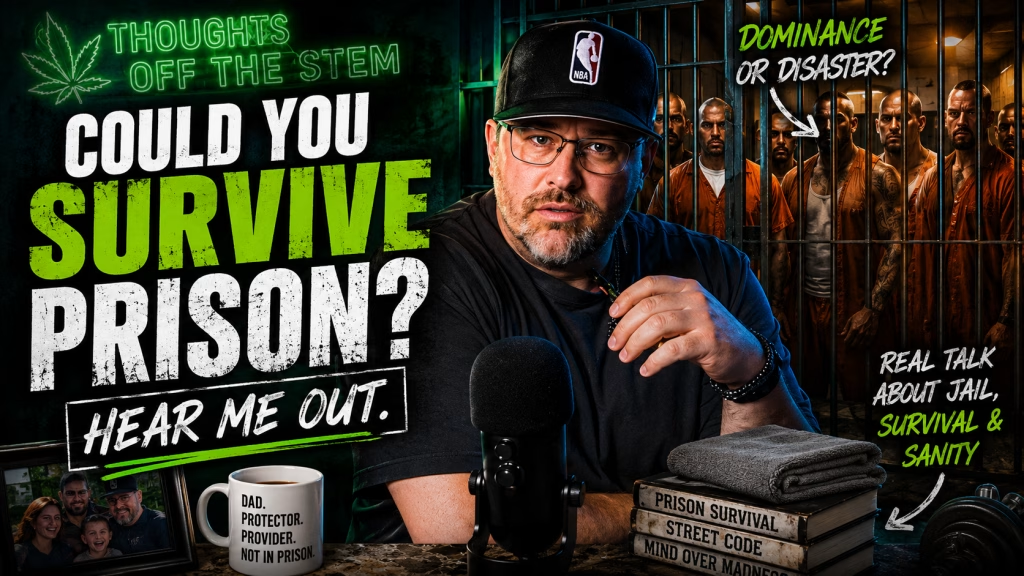
Could you survive prison? Not the Netflix documentary version. Not the podcast where some guy describes it from a studio in Manhattan. The actual yard. Day one. Real prison.
It’s the kind of question that only comes up in a sesh. Someone’s been watching true crime. The conversation goes sideways. And suddenly everyone in the circle is a Navy SEAL with a black belt and an undefeated record.
This week on Thoughts Off The Stem, Justin Barone takes that hypothetical seriously — or as seriously as a cannabis comedy podcast can — and the reality check is both brutal and hilarious.
You know how it goes. Someone asks if they could take Mike Tyson. Someone else wants to know how many guys they could fight at once. Then that one dude in the circle breaks the silence with full confidence — he’d kick Tyson’s ass, destroy a pack of wolves bare handed, go full special forces on anyone who touched his family, and yeah he could probably take five guys at once.
Every group has a Dwane. Shut up Dwane.
It’s a guy thing. We all want to be the ultimate protector. We all like to think that when the moment comes we’ll somehow channel every action movie we’ve ever watched and just handle it. It’s harmless. It’s funny. And it is absolutely not what would actually happen.
The Prison Yard Reality Check
So let’s say you actually end up in there. Day one on the yard. You’ve heard the advice — assert dominance immediately, take out the biggest guy so everyone knows not to mess with you.
Here’s the problem. Yesterday you were mowing the lawn. You had a tea party with a three year old. gave your wife a foot massage and watched something on Netflix and went to bed at a reasonable hour. You are a blue collar dad with a full dad bod, a touch of arthritis, and absolutely zero hand to hand combat training.
And now you’re supposed to walk across that yard and cold cock a gang member like you’re Jason Statham in a Jason Statham movie.
You are not Jason Statham.
The gap between who we think we are and who we actually are, might be one of the weirdest and most honest things about being a guy. This episode goes there completely unfiltered.
Listen Now
New episodes of Thoughts Off The Stem drop every Friday at 4:20 PM.
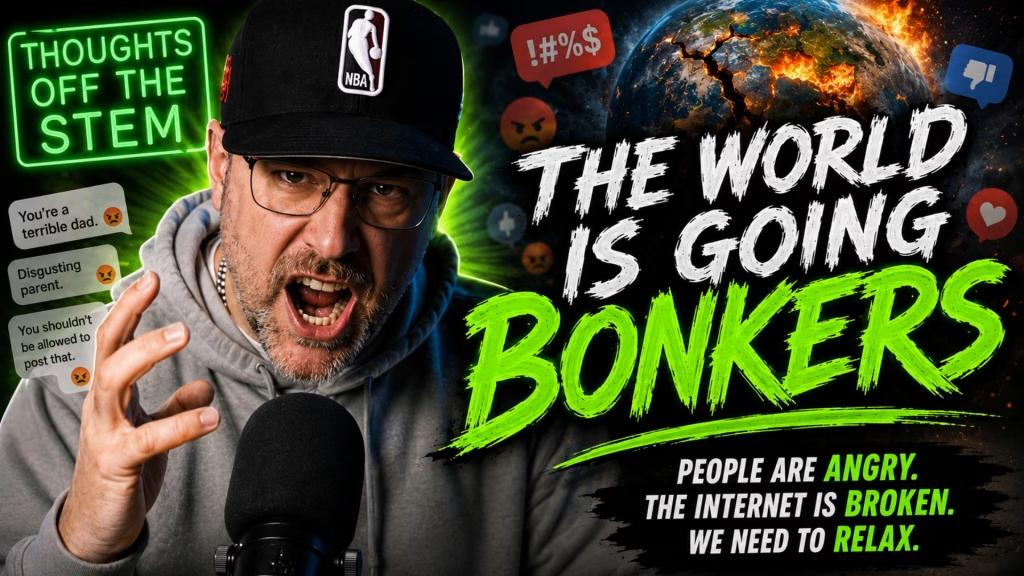
Let’s get into it. A UFC commentator texts the president about psychedelics on a Saturday. By Monday he’s in the Oval Office watching an executive order get signed. Men are literally hitting themselves in the face with hammers to get dates. Africa is cracking in half. The government published alien documents so redacted they might as well be a grocery list. And in the middle of all this absolute chaos — strangers on the internet decided I’m a bad dad.
Because of comedy clips.
That’s where we are. Everyone just wants to be right all the time and nobody wants to laugh anymore. This week on Thoughts Off The Stem it’s a high energy, zero filter rant about a world that has completely lost the plot and the people making it worse.
Gear Up For The Sesh.
King Palm is what’s on the table when the mic is on. The same wraps used on the show — now available for your sesh. 🌿
We Are Living In A Simulation And Nobody Sent The Patch Notes
Look at the headlines. Just look at them. Psychedelics in the Oval Office. The manosphere trying to build harems of obedient wives like it’s the dark ages with WiFi. Paid protest crowds you can order like an Uber. Social media turning an entire generation into people who can’t hold a conversation longer than a TikTok. Wars. Oil prices. A continent literally splitting apart.
I changed my mind — we are definitely living in a simulation. And whoever is running it needs to be fired immediately.
But here’s the thing that actually gets me fired up. It’s not the chaos. The chaos is at least interesting. It’s that instead of laughing at any of this — instead of stepping back and acknowledging that everyone just wants to be right all the time and the whole thing is completely absurd — people are out here getting angrier. Picking fights. Attacking strangers. Convinced that their outrage is the most important outrage in the room.
Bad Dad? Come On.
So I post comedy clips. Clips from the show. Unfiltered, raw, sarcastic single dad humor. And some people in the comments decided that makes me a bad dad.
Not people who know me. Not people who have spent five minutes around my actual kids. Strangers. People who watched a 60 second clip and decided they had enough information to weigh in on my parenting.
This is exactly what the episode is about. Everyone just wants to be right all the time — and when you can’t actually put in the work to back it up you just get mad at people online instead. It’s easier than looking inward. It’s easier than doing anything. You just find a stranger, decide they’re wrong, and unload.
I see you. And I’ve got thoughts.
The Real Reason You’re Mad At Strangers Online
Here’s where the episode lands and it’s worth hearing. The reason you’re mad at strangers on the internet — the real reason — has nothing to do with the strangers. It has everything to do with the stuff you haven’t dealt with about yourself.
The world is unhinged. Life is hard. Things are genuinely frustrating. But people who spend their energy attacking comedians in comment sections aren’t fighting for anything meaningful. They’re just avoiding the mirror.
Find the humor. Find the irony. Enjoy the moment. And maybe — just maybe — take a hard look at what’s actually making you that angry. Because I promise you it’s not a podcast clip.
Listen Now
Everyone Just Wants To Be Right All The Time is available now on Spotify, Apple Podcasts, YouTube, and all major platforms.
New episodes of Thoughts Off The Stem drop every Friday at 4:20 PM.
Gear Up For The Sesh.
King Palm is what’s on the table when the mic is on. The same wraps used on the show — now available for your sesh. 🌿
This week on Thoughts Off The Stem, Justin Barone breaks down a Swiss Chalet dinner that went completely off the rails — and then takes it further with the most stomach churning restaurant horror stories the internet has ever produced.
There are restaurants that try to do everything and fail at most of it. And then there’s Swiss Chalet — a place that built its entire identity around one thing. Chicken. Just the chicken. Cook it properly and everything else more or less takes care of itself.
So how do you serve it raw?
The Swiss Chalet Experience
It started with a simple plan. Justin and his girlfriend head out for the two can dine deal — nothing fancy, just a reliable chicken dinner at a familiar spot. What they got instead was a masterclass in how not to run a restaurant.
The host was nowhere to be found. One exhausted waitress was running the entire floor. The tables were sticky. And when the food finally arrived the chicken looked wrong before it was even cut into. The kind of wrong you notice immediately but convince yourself to ignore — right up until you cut into the middle and find it completely undercooked.
The bright spot? The waitress. Who was somehow still apologizing professionally while clearly holding the entire establishment together on her own.
TheDude For Real: Restaurant Horror Stories
If the Swiss Chalet story wasn’t enough to put you off eating out, the Dude For Real segment finishes the job. Real stories from real people — coleslaw with shrimp tails scraped from other people’s plates, a restaurant mouse that the server knew by name, a bandaid in the taco lettuce, cockroaches in the coleslaw, and things so bad they don’t need to be described twice.
The restaurant industry has some explaining to do.
In the spirit of cooking at home — which after this episode seems like the only reasonable option — this week’s Weed Facts breaks down how to make cannabutter from scratch. Stovetop method, slow cooker method, decarboxylation, straining, and everything you need to turn your flower into an ingredient worth cooking with.
Because at least you know what went into your own food.
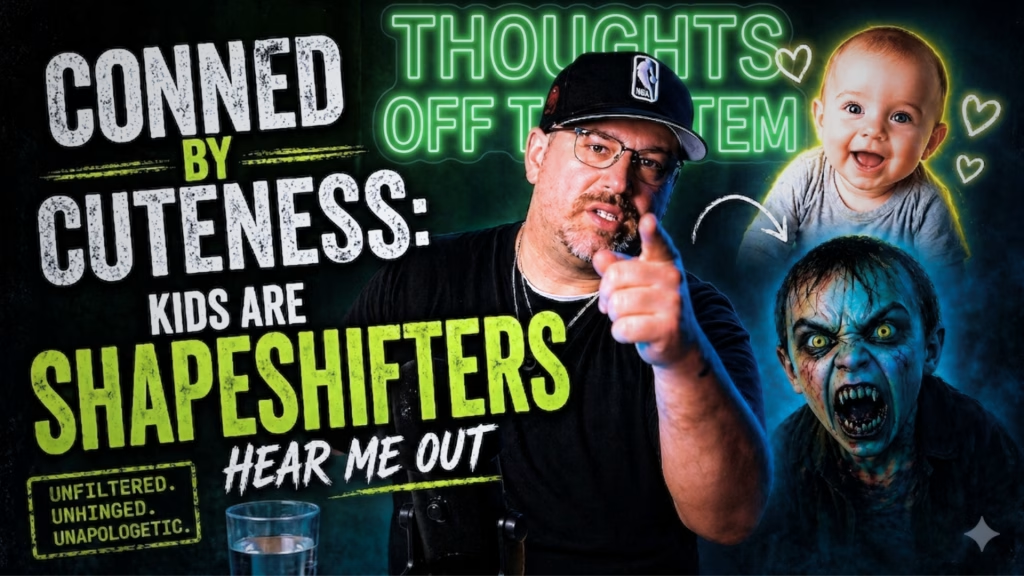
Conspiracy theorists have spent years searching for shapeshifters. They’ve been looking in all the wrong places. The real shapeshifters have been right under our noses the whole time — sitting in your living room, eating your food, using your WiFi, and asking you for money.
They’re called kids.
In Episode 228 of Thoughts Off The Stem, Justin delivers one of his most raw and unfiltered rants yet — a full comedic breakdown of the greatest long con in human history: parenthood.
Thoughts Off The Stem | Cannabis Infused Comedy
Conned By Cuteness: Kids Are Shapeshifters, Hear Me Out
Here’s how the con works. They arrive small, soft, and completely helpless. They smell incredible, and when look up at you with those eyes something inside you just switches. You’re done. You’d do anything for this tiny creature.
That’s the trap.
Nobody tells you that the cute is bait. Nobody sits you down and says — listen, enjoy this, because in about thirteen years that adorable baby is going to transform into something that leaves dishes in the sink, asks for forty dollars with zero context, and acts like you personally invented the concept of chores.
Conspiracy theorists have been right about one thing — shapeshifters are real. They just got the location wrong. They’re not hiding in government buildings or Hollywood boardrooms. They’re in your house. Eating your leftovers. Leaving wet towels on the bathroom floor.
Kids are the original shapeshifters. Cute baby. Chaotic toddler. Slightly manageable child. Then teenager — and something in that transition resets everything you thought you knew about the person you raised.
Boys Vs Girls: Both Will Break You Differently
Raising boys and raising girls are two completely different experiences that will test you in completely different ways. Justin breaks it down with the kind of unfiltered commentary that only comes from living it firsthand — three teenagers, one boy and two girls, two different flavors of chaos, and one single dad trying to make sense of all of it.
The Financial Reality Nobody Talks About
There is a version of the parenting conversation that nobody has publicly enough — the actual cost. Not just money, though that alone is staggering. The time. The mental load. The invisible labor of keeping a household running while also trying to be present, patient, and not completely losing your mind.
Teenagers don’t see any of that. And if you’re doing it alone, the gap between what it takes and what gets acknowledged can feel like a canyon.
Episode 228 goes there. Unfiltered.
👇 Listen or watch right now:
This week’s episode — Conned By Cuteness: Kids Are Shapeshifters, Hear Me Out — is available now on Spotify, Apple Podcasts, YouTube, and all major platforms.
New episodes drop every Friday at 4:20PM. Subscribe so the sesh comes straight to you — we’re pushing to 1,000 followers on Spotify and every follow counts.
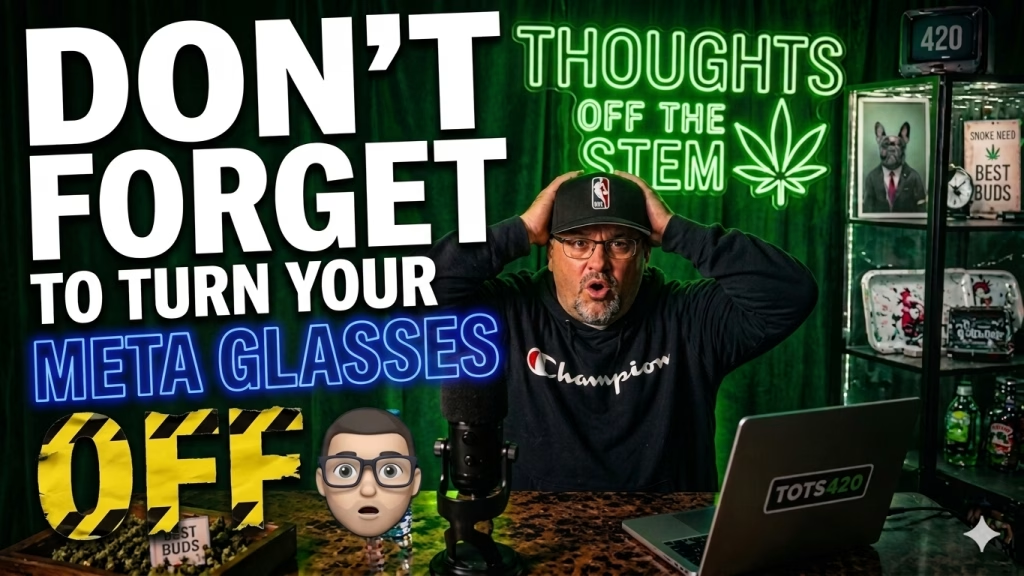
New tech is cool. I genuinely love it. That is, if you’re willing to give a big F**k you to privacy with gadgets like meta glasses. Don’t get me wrong innovation is amazing and the fact that we live in a world where you can walk around with a computer on your face like you’re in Minority Report swiping through files and checking your messages while you grab a coffee, is pretty cool.
But here’s the question nobody seems to be asking.
Do the people building this stuff actually think about what happens when real humans use it in the real world? And do we — the consumers — think about the potential consequences before we hand over our money and our data and apparently our most private moments?
I’m not so sure we do.
Welcome to Thoughts Off The Stem. I’m Justin Barone and this week we need to talk about Meta glasses, Tesla batteries, wearable tech privacy and the fundamental disconnect between building something cool and thinking it all the way through.
Meta Glasses: Cool Concept, Terrifying Reality
Meta glasses are genuinely impressive technology. Wearable, stylish, functional — the most recent incarnation of a concept that’s been trying to work for years. And now they actually kind of do work which is both exciting and deeply concerning.
Here’s what nobody thought about.
When they’re on, they’re on. And they see everything.
If you’re wearing them while shaving your balls — that’s on file. If you forget to take them off before you head off to handle some personal business — congratulations, you just made POV content and it’s sitting on Meta’s servers right now.
If you’re recording with your face, you’d think — you’d think about that.
Apparently not.
I’ll be honest — when I was a kid I had to wear a heart monitor from time to time as part of my yearly checkups for a heart condition. And even then, as a kid, I was worried about what it would tell the doctors. Like why is your heart rate spiking at 10:30 at night? That’s nobody’s business.
Now imagine that same energy but it’s a camera. On your face. Connected to Meta’s servers. Worn by millions of people who didn’t fully read the terms and conditions.
What Meta Workers Are Actually Seeing
Here’s where it stops being funny and starts being genuinely disturbing.
Meta workers — specifically Kenyan subcontractor employees — have blown the whistle on what they’ve actually seen while reviewing footage captured through users smart glasses. And the Dude For Real segment this week pulled directly from their accounts.
What Meta Workers Reported
The Reality
Users going to the toilet or getting undressed on camera
People wearing the glasses without realizing they’re recording
A man leaving glasses on a bedside table — wife undresses in frame
Accidental recording of private moments without consent
“We see everything — from living rooms to naked bodies”
Meta has this content in its databases right now
Workers told not to question what they see or they’ll be fired
No accountability for what’s being stored or reviewed
Two US citizens filed a lawsuit in San Francisco against Meta
False advertising and disregarding privacy laws
Meta being investigated by multiple governments
The pervert glasses problem is now an international issue
Two US citizens have filed a lawsuit in San Francisco accusing Meta of false advertising and disregarding privacy laws. Multiple governments are now investigating. And somewhere in Meta’s servers there is content that people recorded without having any idea they were recording it.
They’re calling them the pervert glasses now. Which honestly feels about right.
Tesla Batteries and the $25,000 Surprise
Meta glasses aren’t the only example of consumers not thinking things through. Let’s talk about Tesla for a second.
A few years ago first generation Tesla owners started showing up at dealerships and getting hit with a $25,000 repair bill for battery replacement. And a lot of them were genuinely shocked.
Here’s my take — that’s on the consumer.
When I buy a car there are a few things I want to know. What does the service maintenance plan look like? How long will this car last? Should I worry about mechanical issues including the engine?
When you buy a Tesla you are buying an electronic device. A very expensive, very large electronic device. And the most basic question you ask when buying any electronic device is — what happens when the battery dies?
People didn’t ask that question. And then they were blindsided by a bill the size of a used car.
The Disconnect: Developers vs Consumers
Here’s the pattern I keep seeing and it applies to Meta glasses, Tesla batteries, and honestly most technology that causes problems after launch.
What They’re Great At
What They Generally Suck At
Developers
Building cool innovative technology
Thinking about real world human use beyond the tech goal
Consumers
Fixating on new shiny things
Thinking about real world consequences before buying
Developers are brilliant at solving technical problems. They are generally not great at asking “but what happens when a regular person uses this in their bedroom at 11pm without thinking about it?”
Consumers are great at wanting the newest thing first. They are generally not great at asking “but what are the actual long term implications of this purchase?”
The result is Meta glasses on Meta servers and $25,000 battery bills and a lawsuit in San Francisco and a bunch of very uncomfortable Kenyan subcontractors who have seen things they cannot unsee.
Weed Facts: Can Technology Actually Detect Cannabis Impairment?
Since we’re talking about tech this week the Weed Facts segment goes there too — because there’s actually some genuinely impressive new technology being developed specifically to detect cannabis impairment. And it’s more accurate than you might think.
The challenge with cannabis impairment testing has always been that THC doesn’t work like alcohol. The amount of THC in your body is not directly correlated with impairment — THC and its metabolites can stay in your system for an extended period, making it impossible to tell from a blood test whether someone is currently impaired or just consumed cannabis days ago.
Enter Gaize.
The Problem
The Gaize Solution
THC levels in blood don’t indicate current impairment
Eye movement tests detect real time impairment regardless of when cannabis was consumed
Human drug recognition officers are subjective — 60-85% accuracy
Automated VR headset testing removes human error
Traditional tests can’t distinguish past use from current impairment
Pupillary reflex and ocular motion analysis detects active impairment only
No portable rapid testing solution existed
Gaize is rapid, portable and automated
Officers can be wrong
Gaize boasts 98% accuracy
Gaize runs the same eye tests that police officers use — high precision ocular motion and pupillary reflex analysis — through a VR headset using Tobii eye tracking technology. It measures subtle changes in eye movement that indicate impairment with 98% accuracy.
Your eyes tell on you every time. Apparently even when your glasses are recording things they shouldn’t be.
Think Before You Wear It
Here’s the bottom line.
Technology is going to keep advancing faster than our ability to think through all the consequences. That’s not going to change. But the gap between what developers build and what consumers actually do with it in the real world is a gap that’s causing real problems — privacy violations, lawsuits, $25,000 repair bills and a lot of footage on Meta’s servers that nobody consented to share.
Think before you buy. Read the terms and conditions. Ask what happens when the battery dies. And for the love of everything — if you’re going to wear a camera on your face, think about where that camera is pointing.
If you’re recording with your face you’d think — you’d think about that.
Those are my thoughts off the stem. 🍃
Subscribe to our newsletter!
🎙 Listen to the Full Episode
Give A Big F**k You to Privacy with Meta Glasses is out now on Spotify and YouTube.
We go deeper on the Meta privacy lawsuit, the Tesla battery disaster, Gaize impairment technology and the full Dude For Real breakdown of what Meta workers have actually seen through users smart glasses.
New episodes drop every Friday at 4:20PM. Subscribe so the sesh comes straight to you — we’re pushing to 1,000 followers on Spotify and every follow counts.
ID used to identify users for 24 hours after last activity
24 hours
_gat
Used to monitor number of Google Analytics server requests when using Google Tag Manager
1 minute
_ga
ID used to identify users
2 years
_gali
Used by Google Analytics to determine which links on a page are being clicked
30 seconds
_ga_
ID used to identify users
2 years
_gac_
Contains information related to marketing campaigns of the user. These are shared with Google AdWords / Google Ads when the Google Ads and Google Analytics accounts are linked together.
90 days
__utma
ID used to identify users and sessions
2 years after last activity
__utmt
Used to monitor number of Google Analytics server requests
10 minutes
__utmb
Used to distinguish new sessions and visits. This cookie is set when the GA.js javascript library is loaded and there is no existing __utmb cookie. The cookie is updated every time data is sent to the Google Analytics server.
30 minutes after last activity
__utmc
Used only with old Urchin versions of Google Analytics and not with GA.js. Was used to distinguish between new sessions and visits at the end of a session.
End of session (browser)
__utmz
Contains information about the traffic source or campaign that directed user to the website. The cookie is set when the GA.js javascript is loaded and updated when data is sent to the Google Anaytics server
6 months after last activity
__utmv
Contains custom information set by the web developer via the _setCustomVar method in Google Analytics. This cookie is updated every time new data is sent to the Google Analytics server.
2 years after last activity
__utmx
Used to determine whether a user is included in an A / B or Multivariate test.
18 months
Marketing cookies are used to follow visitors to websites. The intention is to show ads that are relevant and engaging to the individual user.
A video-sharing platform for users to upload, view, and share videos across various genres and topics.
Registers a unique ID to keep statistics of what videos from YouTube the user has seen.
Session
DEVICE_INFO
Used to detect if the visitor has accepted the marketing category in the cookie banner. This cookie is necessary for GDPR-compliance of the website.
179 days
LOGIN_INFO
This cookie is used to play YouTube videos embedded on the website.
2 years
VISITOR_PRIVACY_METADATA
Youtube visitor privacy metadata cookie
180 days
GPS
Registers a unique ID on mobile devices to enable tracking based on geographical GPS location.
1 day
VISITOR_INFO1_LIVE
Tries to estimate the users' bandwidth on pages with integrated YouTube videos. Also used for marketing
179 days
PREF
This cookie stores your preferences and other information, in particular preferred language, how many search results you wish to be shown on your page, and whether or not you wish to have Google’s SafeSearch filter turned on.