Conspiracy theorists have spent years searching for shapeshifters. They’ve been looking in all the wrong places. The real shapeshifters have been right under our noses the whole time — sitting in your living room, eating your food, using your WiFi, and asking you for money.
They’re called kids.
In Episode 228 of Thoughts Off The Stem, Justin delivers one of his most raw and unfiltered rants yet — a full comedic breakdown of the greatest long con in human history: parenthood.
Thoughts Off The Stem | Cannabis Infused Comedy
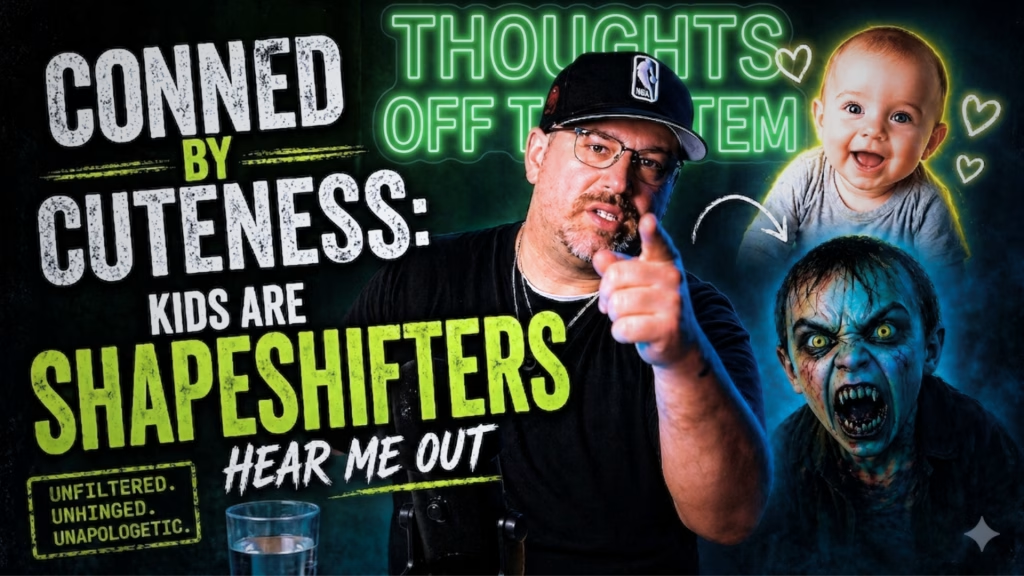
Conned By Cuteness: Kids Are Shapeshifters, Hear Me Out
Here’s how the con works. They arrive small, soft, and completely helpless. They smell incredible, and when look up at you with those eyes something inside you just switches. You’re done. You’d do anything for this tiny creature.
That’s the trap.
Nobody tells you that the cute is bait. Nobody sits you down and says — listen, enjoy this, because in about thirteen years that adorable baby is going to transform into something that leaves dishes in the sink, asks for forty dollars with zero context, and acts like you personally invented the concept of chores.
Conspiracy theorists have been right about one thing — shapeshifters are real. They just got the location wrong. They’re not hiding in government buildings or Hollywood boardrooms. They’re in your house. Eating your leftovers. Leaving wet towels on the bathroom floor.
Kids are the original shapeshifters. Cute baby. Chaotic toddler. Slightly manageable child. Then teenager — and something in that transition resets everything you thought you knew about the person you raised.
Boys Vs Girls: Both Will Break You Differently
Raising boys and raising girls are two completely different experiences that will test you in completely different ways. Justin breaks it down with the kind of unfiltered commentary that only comes from living it firsthand — three teenagers, one boy and two girls, two different flavors of chaos, and one single dad trying to make sense of all of it.
The Financial Reality Nobody Talks About
There is a version of the parenting conversation that nobody has publicly enough — the actual cost. Not just money, though that alone is staggering. The time. The mental load. The invisible labor of keeping a household running while also trying to be present, patient, and not completely losing your mind.
Teenagers don’t see any of that. And if you’re doing it alone, the gap between what it takes and what gets acknowledged can feel like a canyon.
Episode 228 goes there. Unfiltered.
👇 Listen or watch right now:
This week’s episode — Conned By Cuteness: Kids Are Shapeshifters, Hear Me Out — is available now on Spotify, Apple Podcasts, YouTube, and all major platforms.
New episodes drop every Friday at 4:20PM. Subscribe so the sesh comes straight to you — we’re pushing to 1,000 followers on Spotify and every follow counts.
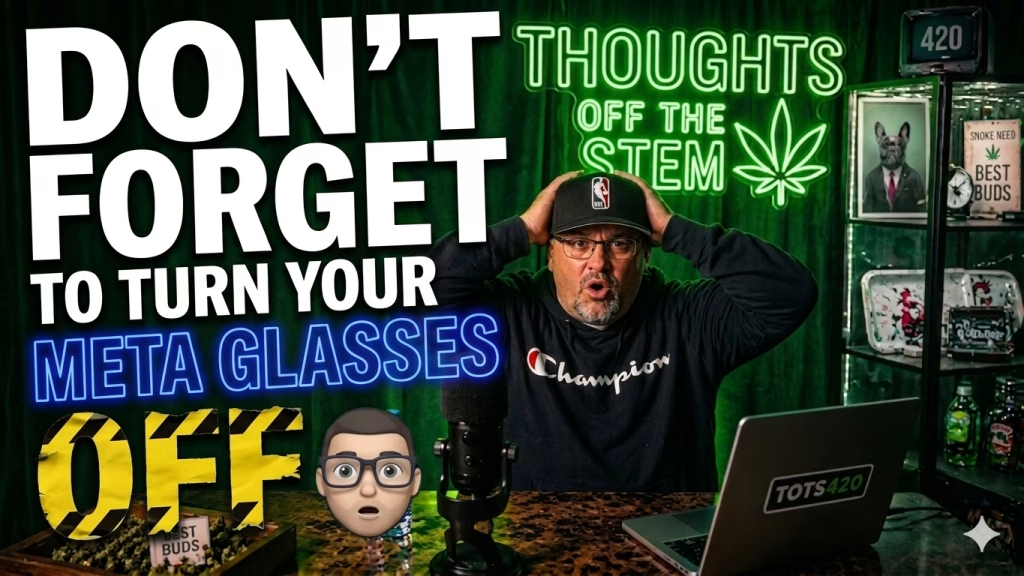
New tech is cool. I genuinely love it. That is, if you’re willing to give a big F**k you to privacy with gadgets like meta glasses. Don’t get me wrong innovation is amazing and the fact that we live in a world where you can walk around with a computer on your face like you’re in Minority Report swiping through files and checking your messages while you grab a coffee, is pretty cool.
But here’s the question nobody seems to be asking.
Do the people building this stuff actually think about what happens when real humans use it in the real world? And do we — the consumers — think about the potential consequences before we hand over our money and our data and apparently our most private moments?
I’m not so sure we do.
Welcome to Thoughts Off The Stem. I’m Justin Barone and this week we need to talk about Meta glasses, Tesla batteries, wearable tech privacy and the fundamental disconnect between building something cool and thinking it all the way through.
Meta Glasses: Cool Concept, Terrifying Reality
Meta glasses are genuinely impressive technology. Wearable, stylish, functional — the most recent incarnation of a concept that’s been trying to work for years. And now they actually kind of do work which is both exciting and deeply concerning.
Here’s what nobody thought about.
When they’re on, they’re on. And they see everything.
If you’re wearing them while shaving your balls — that’s on file. If you forget to take them off before you head off to handle some personal business — congratulations, you just made POV content and it’s sitting on Meta’s servers right now.
If you’re recording with your face, you’d think — you’d think about that.
Apparently not.
I’ll be honest — when I was a kid I had to wear a heart monitor from time to time as part of my yearly checkups for a heart condition. And even then, as a kid, I was worried about what it would tell the doctors. Like why is your heart rate spiking at 10:30 at night? That’s nobody’s business.
Now imagine that same energy but it’s a camera. On your face. Connected to Meta’s servers. Worn by millions of people who didn’t fully read the terms and conditions.
What Meta Workers Are Actually Seeing
Here’s where it stops being funny and starts being genuinely disturbing.
Meta workers — specifically Kenyan subcontractor employees — have blown the whistle on what they’ve actually seen while reviewing footage captured through users smart glasses. And the Dude For Real segment this week pulled directly from their accounts.
What Meta Workers Reported
The Reality
Users going to the toilet or getting undressed on camera
People wearing the glasses without realizing they’re recording
A man leaving glasses on a bedside table — wife undresses in frame
Accidental recording of private moments without consent
“We see everything — from living rooms to naked bodies”
Meta has this content in its databases right now
Workers told not to question what they see or they’ll be fired
No accountability for what’s being stored or reviewed
Two US citizens filed a lawsuit in San Francisco against Meta
False advertising and disregarding privacy laws
Meta being investigated by multiple governments
The pervert glasses problem is now an international issue
Two US citizens have filed a lawsuit in San Francisco accusing Meta of false advertising and disregarding privacy laws. Multiple governments are now investigating. And somewhere in Meta’s servers there is content that people recorded without having any idea they were recording it.
They’re calling them the pervert glasses now. Which honestly feels about right.
Tesla Batteries and the $25,000 Surprise
Meta glasses aren’t the only example of consumers not thinking things through. Let’s talk about Tesla for a second.
A few years ago first generation Tesla owners started showing up at dealerships and getting hit with a $25,000 repair bill for battery replacement. And a lot of them were genuinely shocked.
Here’s my take — that’s on the consumer.
When I buy a car there are a few things I want to know. What does the service maintenance plan look like? How long will this car last? Should I worry about mechanical issues including the engine?
When you buy a Tesla you are buying an electronic device. A very expensive, very large electronic device. And the most basic question you ask when buying any electronic device is — what happens when the battery dies?
People didn’t ask that question. And then they were blindsided by a bill the size of a used car.
The Disconnect: Developers vs Consumers
Here’s the pattern I keep seeing and it applies to Meta glasses, Tesla batteries, and honestly most technology that causes problems after launch.
What They’re Great At
What They Generally Suck At
Developers
Building cool innovative technology
Thinking about real world human use beyond the tech goal
Consumers
Fixating on new shiny things
Thinking about real world consequences before buying
Developers are brilliant at solving technical problems. They are generally not great at asking “but what happens when a regular person uses this in their bedroom at 11pm without thinking about it?”
Consumers are great at wanting the newest thing first. They are generally not great at asking “but what are the actual long term implications of this purchase?”
The result is Meta glasses on Meta servers and $25,000 battery bills and a lawsuit in San Francisco and a bunch of very uncomfortable Kenyan subcontractors who have seen things they cannot unsee.
Weed Facts: Can Technology Actually Detect Cannabis Impairment?
Since we’re talking about tech this week the Weed Facts segment goes there too — because there’s actually some genuinely impressive new technology being developed specifically to detect cannabis impairment. And it’s more accurate than you might think.
The challenge with cannabis impairment testing has always been that THC doesn’t work like alcohol. The amount of THC in your body is not directly correlated with impairment — THC and its metabolites can stay in your system for an extended period, making it impossible to tell from a blood test whether someone is currently impaired or just consumed cannabis days ago.
Enter Gaize.
The Problem
The Gaize Solution
THC levels in blood don’t indicate current impairment
Eye movement tests detect real time impairment regardless of when cannabis was consumed
Human drug recognition officers are subjective — 60-85% accuracy
Automated VR headset testing removes human error
Traditional tests can’t distinguish past use from current impairment
Pupillary reflex and ocular motion analysis detects active impairment only
No portable rapid testing solution existed
Gaize is rapid, portable and automated
Officers can be wrong
Gaize boasts 98% accuracy
Gaize runs the same eye tests that police officers use — high precision ocular motion and pupillary reflex analysis — through a VR headset using Tobii eye tracking technology. It measures subtle changes in eye movement that indicate impairment with 98% accuracy.
Your eyes tell on you every time. Apparently even when your glasses are recording things they shouldn’t be.
Think Before You Wear It
Here’s the bottom line.
Technology is going to keep advancing faster than our ability to think through all the consequences. That’s not going to change. But the gap between what developers build and what consumers actually do with it in the real world is a gap that’s causing real problems — privacy violations, lawsuits, $25,000 repair bills and a lot of footage on Meta’s servers that nobody consented to share.
Think before you buy. Read the terms and conditions. Ask what happens when the battery dies. And for the love of everything — if you’re going to wear a camera on your face, think about where that camera is pointing.
If you’re recording with your face you’d think — you’d think about that.
Those are my thoughts off the stem. 🍃
Subscribe to our newsletter!
🎙 Listen to the Full Episode
Give A Big F**k You to Privacy with Meta Glasses is out now on Spotify and YouTube.
We go deeper on the Meta privacy lawsuit, the Tesla battery disaster, Gaize impairment technology and the full Dude For Real breakdown of what Meta workers have actually seen through users smart glasses.
New episodes drop every Friday at 4:20PM. Subscribe so the sesh comes straight to you — we’re pushing to 1,000 followers on Spotify and every follow counts.
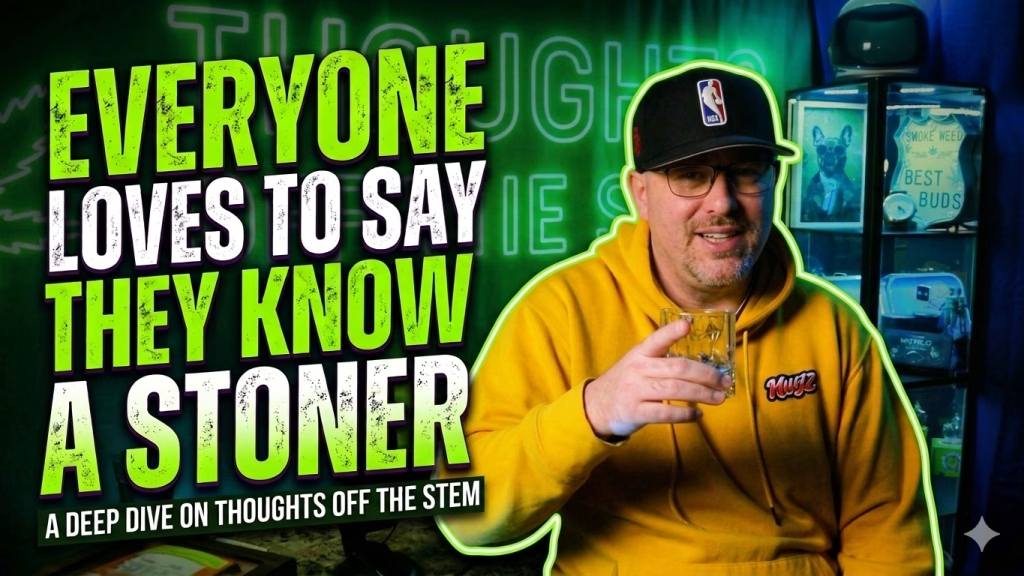
They Love to Say They Know a Stoner: Cannabis Stigma Normalization
Let me paint you a picture.
You’re sitting across from someone in a suit. Nice office. Firm handshake. The kind of person who irons their shirt collar and says “synergy” without irony. You’re there for a job interview, you’re trying your best to look like you definitely did not just hotbox your car in the parking garage, and everything is going fine.
And then it happens.
The interview wraps up, they walk you to the door, and just before you shake hands and part ways — they lean in. They lower their voice. They glance over their shoulder like they’re about to tell you where the bodies are buried.
“You know… I actually know someone who smokes weed.”
And then they look at you. Waiting. Expecting you to react like they just told you they know Jesus.
“Oh my GOD. YOU know a stoner?!”
I have been in more interviews and business meetings than I can count over the last year and I promise you — it happens every single time.
Level up your sesh with our hand picked essentials at Tots420.com/sesh
The Cannabis Stigma Is Alive and Well. Sort Of.
Here’s the thing about cannabis stigma in 2026 — it’s not dead, but it’s definitely on life support and arguing with the doctor about whether it really needs to be there.
Cannabis is legal in Canada. Dispensaries are on every corner. Your coworker, your boss, your accountant and probably your dentist are all quietly passing through those slightly obscured dispensary entrances on a Friday afternoon. And yet somehow the stigma persists — mostly in boardrooms and interview rooms where people who partake feel the need to hide it, and people who don’t partake feel the need to whisper about it like it’s still 1987.
I left the cannabis industry recently after working at a pot shop — genuinely one of my favourite jobs. I love the industry. It’s chaotic and weird and the people are fascinating. But I got my project management certification and spent the last year trying to break into a new field.
Which means suits. A lot of suits.
And every single one of them, at some point, pulled me aside to let me know they know a guy.
The Hushed Tones Confession
I cannot explain to you the energy of the cannabis confession in a professional setting. It is unlike anything else.
They lean in. The voice drops two octaves. The eyes scan the room for witnesses. And then they deliver this information — that they know someone who consumes a legal substance that is sold openly in stores across the country — like it is classified intelligence.
Like they’re giving you access to a secret society.
Here’s what kills me. I’ve walked into interviews and recognized faces — not because I’m great at networking, but because I sold those people weed. The person interviewing me, the receptionist who handed me the visitor badge, the guy I passed in the elevator on the way up — familiar faces everywhere.
Not because the cannabis community is small. Because it isn’t. It’s enormous and it’s everywhere and it always has been.
The suits just haven’t caught up to that reality yet.
Cannabis Normalization: Where We Actually Are
Let’s be real about where cannabis normalization actually stands right now because I think both sides of this debate are getting it wrong.
closing the gap
The Reality
Legal status
Fully legal in Canada, legal in many US states
Social acceptance
Growing rapidly but still stigmatized in professional settings
Workplace policies
Most still treat cannabis differently than alcohol despite similar effects
Public perception
Majority of people either consume or know someone who does
Cannabis is not alcohol. It’s not there yet in terms of social normalization. But it’s making its mark and the gap is closing faster than most people realize — especially the people whispering about it in hallways.
The Part Nobody in the Cannabis Community Wants to Hear
Okay. Here’s where I’m going to say something that might ruffle a few leaves.
We as the cannabis community need to do better too.
We love to declare cannabis as a completely safe alternative to other substances. And in many ways it is. But that doesn’t mean it comes without its own downsides. And right now we are not being honest enough about that.
The reality is that edibles are most likely the safest way to consume cannabis. The moment you introduce any inhalant into your lungs you are introducing foreign substances into your body and your lungs are taking the brunt of that exposure. We don’t have enough long term scientific data to say with confidence that all forms of cannabis consumption are completely safe — because the research simply hasn’t been done yet. The industry, the cultivation methods and the processes are still evolving and some of the long term effects are genuinely unknown.
As a cannabis enthusiast and advocate I believe we need to recognize that. Anything in excess can cause negative health effects. Pretending otherwise doesn’t help our credibility — it undermines it.
Where Both Sides Need to Land
Here’s my take and it’s pretty simple.
The naysayers — the suits, the whisper confessors, the people who treat a legal substance like a dirty secret — need to make a concerted effort toward acceptance and normalization. Cannabis is here. It’s legal. It’s not going anywhere. The stigma serves nobody.
And the cannabis community needs to recognize that progress is actually happening and we don’t need to push as hard as we used to. We’ve won a lot of ground. Celebrating that honestly — including being honest about what we don’t know yet — is how we win the rest of it.
Meet in the middle. Normalize the conversation. Clean your bong.
Those are my thoughts off the stem. 🍃
Join the Sesh and Subscribe
🎙 Listen to the Full Episode
They Love to Say They Know a Stoner is out now — just a straight up sesh, no segments, real talk about cannabis stigma, normalization and why both sides of this debate need to take a breath.
New episodes drop every Friday at 4:20PM. Subscribe so the sesh comes straight to you — we’re pushing to 1,000 followers on Spotify and every follow counts.
Someone slid into my DMs last week and asked me to have a guest on the podcast.
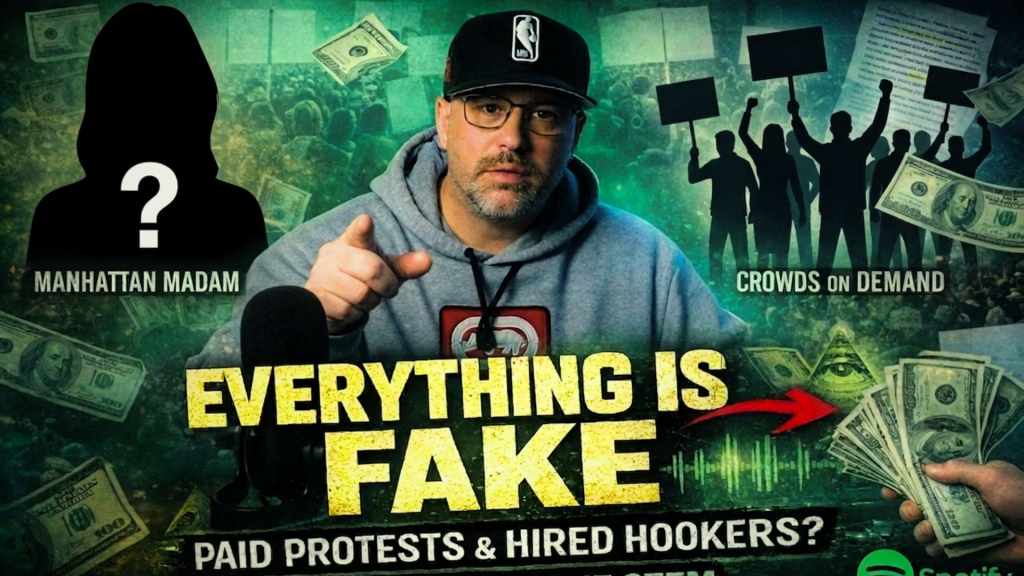
Now I get approached from time to time and most of the time it’s pretty straightforward. But this one stopped me cold. Because the person reaching out was Kristin M. Davis — better known as the Manhattan Madam — and she wanted me to interview the CEO of a company called Crowds on Demand.
So I did what any self respecting pothead would do. I went down the rabbit hole.
What I found was way more interesting than any interview would have been. And honestly? Way more disturbing.
What Is Astroturfing and Why Should You Care?
Before we get into the Manhattan Madam and the fake protest guy, let’s talk about astroturfing — because if you don’t know what it is, you need to.
Astroturfing is the practice of manufacturing the appearance of grassroots public support where none actually exists. The name comes from AstroTurf — the fake grass — because that’s exactly what it is. Fake grass roots.
Paid protests and astroturfing go hand in hand and in 2026 the industry is booming. According to public reporting, Crowds on Demand saw a 400% surge in paid protest requests in 2025 alone. That’s not a niche service anymore. That’s an industry.
And somebody is buying it.
Listen to the sesh:
Thoughts Off The Stem | Cannabis Infused Comedy
Conned By Cuteness: Kids Are Shapeshifters, Hear Me Out
Let’s start with who reached out to me because this is where it gets immediately weird.
Kristin M. Davis — the Manhattan Madam — ran a high end prostitution ring in New York City that allegedly serviced some very prominent clients including Eliot Spitzer, Alex Rodriguez and David Beckham. She served time at Rikers Island, ran for Governor of New York in 2010, was contacted by Robert Mueller’s office in 2018 in connection with Russian election interference, and was later convicted for distributing drugs.
She has since founded Hope House to help women in need — and I’ll give her credit for that because second chances are real and people do change.
But now she runs a PR firm called Think Right PR that specializes in rebranding people and companies with — let’s call it complicated public histories. And she reached out to me to have Adam Swart, the CEO of Crowds on Demand, on my show to talk about the mechanics of fake protests and manufactured reality.
I’ll be honest. My first thought was — why would the Manhattan Madam be repping the fake protest guy?
My second thought was — actually that makes perfect sense.
Crowds on Demand: Your Reality Has a Price Tag
Here’s what Crowds on Demand actually is.
Adam Swart founded the company in 2012. It started with “celebrity experience” services — fake paparazzi, hired fans, that kind of thing. Over time it expanded into organized protests, political demonstrations, and publicity stunts using paid actors posing as members of the public.
In plain English — you can buy a crowd. Right now. Today.
Service
What They Say
What It Actually Is
Celebrity Arrival Service
Professional crowd for your event
Hired fans to make you look important
Advocacy Group Creation
We create and staff advocacy groups with suitable leadership
Inventing fake grassroots organizations from scratch with hired actors as “leaders”
Protest Organization
Amplifying your message through demonstrations
Paid protesters starting at $39.99 per activist
Mergers & Acquisitions Support
Shaping public company deals
Manufacturing protests to tank a competitor’s stock price
Message Amplification
When other strategies have failed
When the truth isn’t working — buy a fake consensus instead
A Washington Post columnist described receiving a marketing email from the company offering their “Celebrity Arrival Service” to politicians — promising to stuff events with paid actors to make candidates look popular.
John Oliver dedicated a segment on Last Week Tonight to them. They’ve been sued for alleged extortion. They’ve been accused of creating a fake Black Lives Matter organization in Dallas called Dallas Justice Now that sent letters urging wealthy white families not to send their kids to Ivy League universities. The same Republican marketing firm was also behind a pro-police group called Keep Dallas Safe.
Both sides. Same company. Same fake grass.
And demand is up 400%.
The Whistleblower Who Won’t Blow the Whistle
Here’s where it gets really rich.
Swart is now positioning himself as a whistleblower. He wants to come clean about the fake protest industry. Says he wants transparency. And to expose the manufactured outrage machine.
Except — he won’t name his clients. He won’t name his sources. And his company bio still openly boasts about creating fake advocacy groups from scratch.
Let me say that again. The guy who wants to blow the whistle on astroturfing still sells astroturfing.
Here’s a breakdown of what his own bio says versus what it actually means:
What His Bio Says
What It Actually Means
“We create advocacy groups and staff them with suitable leadership”
We invent fake organizations and hire actors to pretend to be their leaders
“We shaped large public company mergers and acquisitions”
We manufactured protests to pressure companies into deals
“We amplify messages when other strategies have failed”
When the truth isn’t working we manufacture a fake consensus
“I want transparency in the protest industry”
I want to be the regulated gatekeeper of the very deception I pioneered
When you’re whistleblowing you’re supposed to do it for the better of society — not for the better of your bank account.
He isn’t blowing the whistle because he grew a conscience. He’s blowing the whistle to become the “legitimate” face of an industry he built. It’s the same hustle with a press release attached.
The Inversion of Truth: Two Peas in a Very Shady Pod
Here’s what struck me most when I put these two together.
Davis uses her criminal past to create trust as an expert on corruption. Swart uses fake crowds to create the appearance of truth through manufactured consensus.
They are both selling the same thing — the idea that nothing is real, so you might as well buy their version of reality.
The People
Kristin M. Davis
Adam Swart
Background
Manhattan Madam, convicted felon, Mueller witness
Former journalist turned fake protest entrepreneur
Current pitch
Reformed criminal turned PR expert on scandal
Fake protest pioneer turned whistleblower
What they’re selling
Trust through criminal credibility
Truth through manufactured consensus
The hustle
My past makes me an expert on deception
My deception makes me qualified to expose deception
What they won’t reveal
The full client list from her past
Current client list and protest contracts
It’s not a reformation. It’s an expansion of the same hustle with better branding.
So Should I Have Him On The Show?
I asked my audience this at the end of the episode and I’m asking you here too — because I genuinely don’t know.
On one hand I don’t think I’ll get an honest conversation. He won’t name clients. He won’t name sources. And everything about the way this pitch landed in my DMs feels like exactly the kind of manufactured narrative his company specializes in.
On the other hand — sometimes the most interesting interviews are the ones where you already know the guy is full of it.
What do you think? Drop it in the comments. Should I have Adam Swart on Thoughts Off The Stem?
The Real Issue Nobody Wants to Talk About
Here’s the thing that actually bothers me most about all of this.
Most people can’t be bothered to protest. Real grassroots movements are hard. They require time, energy, belief and sacrifice. The fact that there’s a booming market for fake protests tells you something really important — the people with money have figured out that they can skip all of that and just buy the appearance of public support instead.
Your outrage is for sale. Your reality is manufactured. And most people scrolling their feed have no idea whether the protest they just watched was organic or ordered off a menu at $39.99 per head.
I basically assume at this point that anything I watch or read is at least partially bullshit. And honestly? That’s a really exhausting way to live.
So smoke one, think critically, and maybe — just maybe — question the next “spontaneous” protest you see trending on your feed.
Those are my thoughts off the stem. 🍃
🎙 Listen to the Full Episode
Everything Is Fake: Your Reality Is for Sale is out now on Spotify and YouTube.
I go deeper on both Davis and Swart, break down exactly how the fake protest machine works, and ask you directly — should I have him on the show?
New episodes drop every Friday at 4:20PM. Subscribe so the sesh comes straight to you — we’re pushing to 1,000 followers on Spotify and every follow counts.
The world is full of BS, King Palm isn’t – just like Thoughts Off The Stem. Relax and enjoy a longer smoother, full flavored sesh.
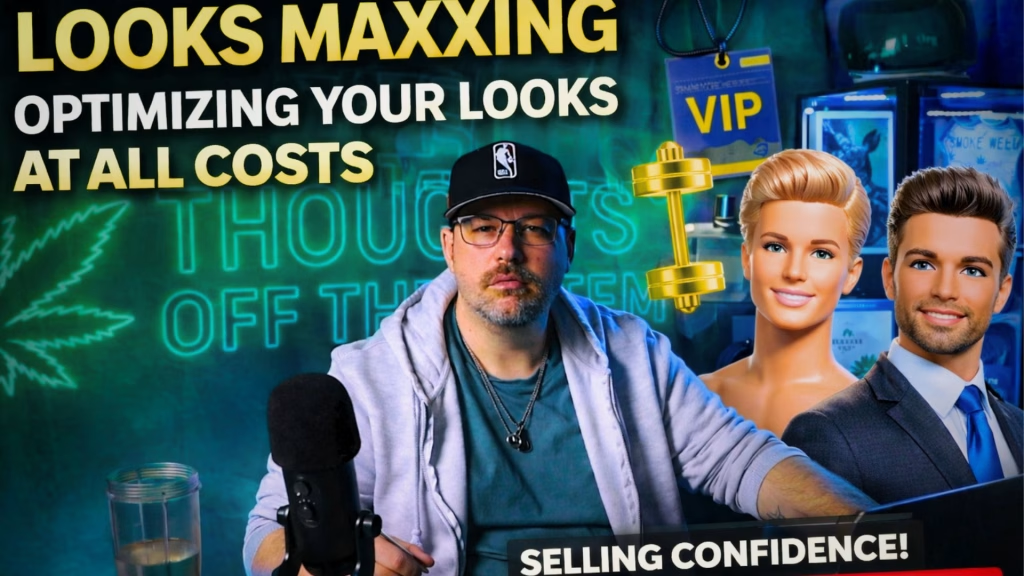
Looksmaxxing and incel culture have produced some truly unhinged ideas over the years — but hitting yourself in the face with a hammer to get dates might be the one that finally broke me. There are grown men doing this. On purpose. With an actual hammer. And they have hundreds of thousands of followers cheering them on.
I’ll let that sink in for a second.
Welcome to the world of looksmaxxing — the incel community’s full-send obsession with optimizing your physical appearance at all costs. And I mean ALL costs. We’re talking steroids at 14, crystal meth to hollow your cheeks, and a daily hammer session to your jaw because apparently that’s a thing people do now.
I’m Justin Barone. I’m 44 years old, I’m 260 lbs, and I used to be fit back in my 30s when I was about 185. Somewhere between Doritos and laziness I became what these kids would probably classify as some kind of ogre. But you know what? I still figured out that personality is the move. These kids apparently haven’t gotten that memo yet.
Let’s get into it.
What Is Looksmaxxing and Incel Culture?
Looksmaxxing is the practice of maximizing your physical attractiveness — and it started in incel culture. Incel, if you don’t know, stands for involuntarily celibate. These are dudes who can’t get a date and have decided that the reason is entirely their bone structure.
Looksmaxxing and incel culture are more connected than most people realize — the whole movement was born on incel message boards before it jumped to TikTok.
The movement got a massive boost from a 19-year-old content creator named Clavicular — and yes, that’s his actual name, or at least his online name. Braden. His name is Braden. I don’t know what we expected.
At 14 years old this kid started taking testosterone, using steroids, and by his own admission on camera — meth. Why meth? Because he thought it was basically just street Adderall. One derivative away, he says. He also took a hammer to his face every single day.
Not to bits and pieces. Just until it got red and puffy. Because he believed it would create micro fractures in his jaw that would heal into a sharper, more square jawline.
You know what else gives you a sharper jawline? Puberty. Which he was going through at the time. But he couldn’t wait.
This guy is now 19, has hundreds of thousands of followers, and allegedly earns over $100,000 a month teaching other young men how to do what he did. And somehow we as a society have decided this is acceptable.
I take partial blame. Not personally. But as a generation? Yeah. We dropped the ball.
Where Did We Go Wrong?
The looksmaxxing community and incel culture didn’t create these insecurities in young men — but it weaponized them.
When I was a teenager and I wasn’t getting invited to parties — and I wasn’t always, I was a chunky kid with a belly from eating too many Doritos — I didn’t smash my face with a hammer. Instead I went outside. Mingling with actual humans and correcting my personality in real time through real interaction was how you figured things out back then.
These kids don’t have to do that anymore. They can find a corner of the internet that validates whatever insane thing they’re thinking, and that corner will attach itself to them and grow. Before you know it you’ve got a 19-year-old doing meth for his skincare routine and an audience of young boys watching him do it.
I asked my kids about looksmaxxing. You know what they did? They rolled their eyes. Both of them. “Can you believe it, dad?” No. No I cannot. But I went deep on this one so you don’t have to.
The Weed Facts: Does Cannabis Actually Affect How You Look?
Since we’re talking about looks this week I figured we’d pivot to something actually relevant — what does weed do to your skin? Because if you’re going to take a hammer to your face you should probably know what your edibles are doing to your collagen first.
This segment’s facts come from Cosmopolitan, who spoke with dermatologist Dr. Karan Lal, MD. Here’s the breakdown:
Factor
What Cannabis Does
The Verdict
Testosterone & Acne
THC may slightly increase testosterone, which spikes oil production
Could cause breakouts in some people
Appetite & Glycemic Index
Munchies + carbs = higher glycemic index
Associated with increased acne
Anti-inflammatory Effects
THC is anti-inflammatory, may calm inflammatory pimples
Could actually help some skin issues
Stress & Cortisol
Weed can reduce anxiety, lowering cortisol
Less stress = less oil = less acne
Skin Picking
THC may reduce itch and irritation
Could help chronic skin pickers relax
Edibles & Sugar
Gummies contain sugar that causes glycation — stiffening collagen and elastin
Could contribute to sagging and wrinkles
Smoking & Skin
Smoke sits on your skin and can irritate it
External irritant regardless of strain
Dirty Equipment
Unwashed pipes and bongs spread bacteria
Can cause acne around your mouth
The honest takeaway? It’s not really the weed. It’s what you put in your body and how you take care of yourself. Clean your bong. Watch the sugar in your gummies. Manage your stress. That’s basically your cannabis skincare routine right there.
Oh, and I’ll say this — I’ve been smoking pretty regularly for years and I still get the occasional pimple along my hat line. I think it has more to do with cleaning your skin than anything else.
Dude For Real: The Looksmaxxing Terminology You Need to Know
This stuff comes straight from the looksmaxxing community and I genuinely couldn’t believe some of these are real terms that people use with a straight face. This week’s Dude For Real comes from Buzzfeed’s looksmaxxing explainer and dude — for real.
Term
What It Means
Mogging
Displaying physical superiority over someone nearby
Softmaxxing
Improving looks through skincare, diet, exercise, grooming
Hardmaxxing
Extreme methods — surgery, steroids, bone smashing
Bone Smashing
Hitting your face with a hammer to create micro fractures that reshape your jaw
Ascending
Significantly improving your physical attractiveness. The looksmaxxing version of a glow up
Mewing
Resting your tongue on the roof of your mouth to sharpen your jawline
The PSL Scale
A scoring system for facial attractiveness based on harmony, symmetry, and sexual dimorphism
Chad / Stacey
Highly attractive man or woman. Top of the PSL scale
Subhuman
The lowest PSL score. The most unattractive. Literally called subhuman
Sub 5
Anyone ranking below a 5 on the PSL scale — considered unattractive
Lookism
The belief that your value and place in the world are determined entirely by your looks
Gesture Maxxing
Using humor to attract women rather than appearance
Femoid / Foid
A dehumanizing term for women. Short for female humanoid
Hunter Eyes
Almond-shaped, deep-set eyes with low brows — considered highly attractive
The system literally calls people subhuman based on their face. That’s not self improvement. That’s a cult with better lighting.
Looksmaxxing, Incel Culture and Why Personality Is the Real Move
If you’re not getting invited to parties — and I say this with love — it’s probably not your jawline. It’s probably your personality.
You can change everything about how you look. Get the surgery. Smash your face. Chew the gum. But when the mask comes off — and it always does — if your personality is garbage, people are going to figure that out. As a result they’re going to walk away every single time.
I’ve seen the ugliest people with the most friends because most people genuinely do not care what you look like. Instead they care whether you’re fun to be around, whether you make them laugh, and whether you’re loyal. That’s it. That’s the whole list.
Be that person. That’s the move. Not the hammer.
That’s the real problem with looksmaxxing and incel culture — it sells young men the idea that their value is their face, and there’s nothing they can do about it except suffer or smash.
As for Clavicular — I watched a bunch of his content researching this episode. He’s shallow, uninformed, and has a massive platform teaching young boys that their value is their face. That’s a failure. And it’s on us as the older generation to push back on that wherever we can.
If your kid is watching this stuff, talk to them. Ask questions and be present. Because we can’t leave them to figure this out on the internet.
Use a hammer if you want.
Those are my thoughts off the stem.
🎙 Listen to the Full Episode
This week’s full seshisode — Looks Maxxing: Guys Who Smash Their Face With Hammers to Get Dates — is live now.
We go deeper on Clavicular, the full Dude For Real terminology breakdown, and the complete weed facts science on cannabis and your skin.
New episodes drop every Friday at 4:20PM. So subscribe now so the sesh comes straight to you — because we’re pushing to 1,000 followers on Spotify and every single follow counts.
From The Manosphere to Marijuana: Comparing Tactics and Ideologies
From the Manosphere to Marijuana, what do a 1930s paper tycoon, the DuPont family, the first commissioner of the Federal Bureau of Narcotics and a modern-day “Alpha” influencer have in common? They are all fueled by the same thing: A massive, fragile ego, an overabundance of pride, and a scorned inner child who runs the show. In our latest Seshisode of Thoughts Off The Stem, we’re exploring the link between the Manosphere and Marijuana. We’re talking about Louis Theroux’s Inside the Manosphere documentary and connecting the dots to the “Great Hemp Wars” of 1937. It turns out, the history of cannabis prohibition and the rise of the “Taint”—sorry, the Tate brothers—are fueled by the exact same playbook: fear, gaslighting, and overcompensation.
The People
tHEIR BACKGROUND
William Randolph Hearst
was an American newspaper publisher and politician who developed the nation’s largest newspaper chain and media company, Hearst Communications.
The DuPonts
Du Ponts have been one of the country’s richest families since the mid-19th century, when they founded their fortune in the gunpowder business. In the late 19th and early 20th centuries, they expanded their wealth through the chemical industry and the automotive industry
Inside The Manosphere: Ultra Masculine and Ultra Fragile
I recently watched the Louis Theroux doc, and like everyone else, I’m familiar with the ultra-masculine “women are only here to serve men” schtick. But honestly, It’s exhausting. These dudes are basically frat bros in the wild, uttering the stupidest collection of words I’ve ever heard while contradicting their own ideologies.
Take HSTikkyTokky—a name that sounds like a five-year-old’s favorite toy. Seriously it sounds like something that lights up and play sounds when you push it’s keys. Definitely not very masculine if you ask me. He preaches “masculinity” and says he doesn’t hate anyone, yet his content is a factory for hate speech and chaos. It’s all for the stream, all for the money. Young men following this movement need to wake up and see the parallel between the Manosphere and Marijuana prohibition: both rely on selling a false “authority” based on fear.
New Age Street-Corner Prophets: How the Manosphere Sells Insecurity
Their logic claims women are “born with value” (purely physical), while men must “create value” through financial wealth, supercar collections and a haram of women if they want. If you think a woman’s value is limited to anatomy, and men have no value, you’re a lunatic. Character is what gives us value. It’s what separates men, from boys, women, from girls and good people from losers.
When Andrew Tate brags about throwing a fight to bet on himself and triple his money, he isn’t being “manly”—he’s being a snake. These guys are nothing more than street-corner prophets in shiny suits, funding their lifestyles through the pockets of easily manipulated young men. Let’s call the Tate brothers what they are: The Taint Brothers. They are that smooth, untouched part of the male anatomy between the balls and the a**-hole.
They aren’t men; they’re boys starved for attention, protecting their fragile egos by degrading others because they never got enough hugs.
The ORIGINAL Manosphere
In keeping with this high level of self-absorbed nonsense, let’s look at how a group of old rich white guys successfully lobbied to criminalize marijuana. They didn’t want to make life better; they just wanted to protect their wallets. So instead of revolutionizing their industries and using or switching to more natural products, they lobbied congress to institute the Marihuana Tax Act of 1937. Instead of trying to make life better for the human collective they decided they needed the most money so, they said screw society, our profits are more important, and they launched a what would be the beginning of the war on weed.
William Randolph Hearst:
A pulp and paper giant worth $200 million in the early 1900s—the equivalent of owning the moon today. He didn’t want hemp competing with his timber. He couldn’t be bothered to retrofit or even change some of his pulp and paper mills to hemp textile factories, because as you know, white rich guys don’t want to give away a penny unless they get back 6. A little short sighted. Hemp is much more durable than paper.
The DuPonts:
In 1935, they released Nylon. Hemp was a direct threat to this new petroleum-based technology, so DuPont decided it had to go. Cause why use an eco friendly substitute, when you can use sinthetics to create what the natural world already did. Sure, hemp is a little more itchy but we’d have a lot less plastic in the ocean.
Harry J. Anslinger:
The first commissioner of the Federal Bureau of Narcotics. He was the original “talking head” bully, using gaslighting and fear to make a name for himself. Just like the Tate brothers, he needed to be the authority on something. He was probably just following the lead of the other two, but he bought their lies, hook, line and sinker.
The Manosphere and Marijuana: Gaslighting and Fear Mongering
When you compare the Manosphere and Marijuana history, you see the Anslinger Tactic in full effect:
Create Fear: Print articles claiming cannabis makes you a killer.
Divide the Public: Spew hate and lies to make something harmless look like the “worst evil imaginable.”
Target for Assassination: Use lobbyists (the 1930s version of “bot farms”) to kill the competition.
From the Manosphere to Marijuana we Need a Beginners Guide
If you want to learn more about cannabis and how it works. Check out our Cannabis 101 guide. Educate yourself before you make snap judgements. Do the opposite, of the hyper masculine dopes in this post.
Chapter 5: Using Cannabis Responsibly – Staying Safe and Enjoying the Experience
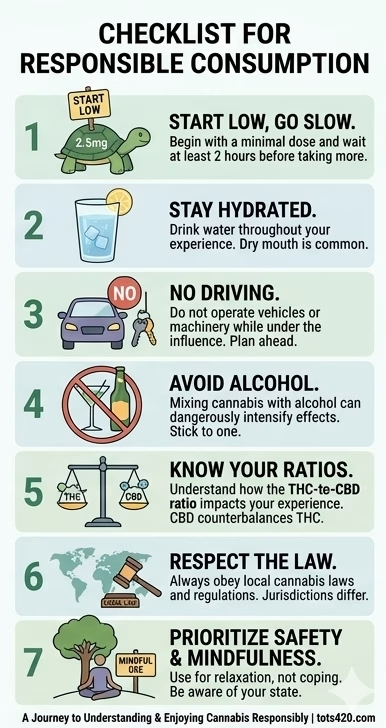
5 Essential Tips for Responsible Cannabis Use for Beginners
What is responsible cannabis use for beginners? Just like any other substance, the plant requires a level of mindfulness to ensure a positive experience. In this final chapter, we provide practical safety tips to help you minimize risks and maximize enjoyment.
Your essential safety checklist for a positive cannabis experience at tots420.com.
Know Your Limits: Proper Dosage for Beginners
Whether you’re a beginner or an experienced user, it’s essential to know your limits. Start with a small dose and wait to see how it affects you before consuming more. Edibles, in particular, can be potent, so be patient and allow time for the effects to kick in before deciding to take more.
Why Responsible Cannabis Use Means Avoiding Alcohol
Mixing cannabis with alcohol or other substances can amplify the effects, which might lead to a more intense high than you’re prepared for. It can also impair your judgment and motor coordination, increasing the risk of accidents. It’s safer to consume cannabis on its own, especially when you’re just starting.
Don’t Drive or Operate Heavy Machinery
Cannabis can impair your ability to drive or use machinery safely. Always wait until the effects wear off before getting behind the wheel or operating any equipment. If you need to travel, consider taking public transportation, using a rideshare service, or having a sober friend drive.
Legal Safety: How Beginners Can Respect the Law
Cannabis laws vary by region, and it’s important to be aware of the legal status of cannabis in your area. Always follow local laws regarding possession, consumption, and distribution. If you’re traveling, make sure you’re informed about cannabis laws in the places you visit.
Physical Well-being: Staying Hydrated and Eating Well
Cannabis can cause dry mouth and dehydration, so it’s important to drink water throughout your experience. Eating a balanced meal beforehand can help mitigate any uncomfortable effects like dizziness or nausea.
Conclusion: Your Final Steps Toward Responsible Cannabis Use
Cannabis can be a great tool for relaxation, creativity, and socializing, but it’s important to use it responsibly. By understanding your limits, respecting the law, and prioritizing safety, you can ensure a positive experience every time. With this knowledge, you’re now ready to dive into the world of cannabis with confidence and awareness.
Final Thoughts
This guide provides a solid foundation for beginners looking to understand and enjoy cannabis responsibly. As you continue your journey, remember to stay informed, be mindful of your choices, and always prioritize safety. Happy exploring!
Congratulations! You’ve finished the Ultimate Beginner’s Guide.
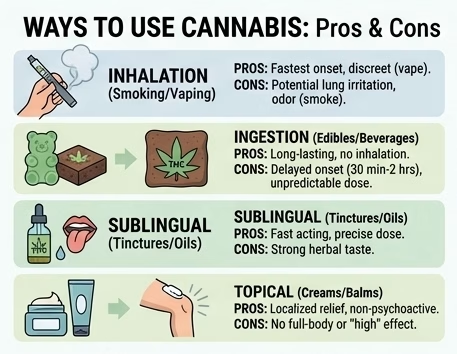
Popular Methods of How to Use Cannabis for Beginners
How to use cannabis for beginners? There are many ways to consume the plant, and the method you choose significantly affects the onset and duration of your experience. In this chapter, we’ll look at the most common THC delivery methods, along with their pros and cons.
Smoking is one of the most traditional ways to consume cannabis. It involves inhaling the smoke produced by burning cannabis flower. Smoking can be done using joints, pipes, bongs, or blunts.
Pros:
Fast onset of effects
Simple and familiar for many users
Cons:
Can be harsh on the lungs
Smell can be strong and lingering
Not ideal for those with respiratory issues
Vaporizing: A Modern Method for Beginners
Vaporizing is a healthier alternative to smoking. It involves heating the cannabis at a lower temperature to release cannabinoids in the form of
vapor, rather than smoke.
Pros:
Smoother on the lungs than smoking
More discreet with less odor
Retains more of the flavor profile of the cannabis
Cons:
Requires a vaporizer device, which can be an investment
Some devices can be bulky or complicated to use
Edibles: A Discreet Way to Use Cannabis for Beginners
Edibles are food products infused with cannabis extracts, typically in the form of THC or CBD. Common edibles include gummies, chocolates, cookies, and beverages.
Pros:
Long-lasting effects
Discreet and easy to consume
No lung irritation
Cons:
Slow onset (30 minutes to 2 hours)
Easy to overconsume if not careful
Effects can be unpredictable due to metabolism
Tinctures: How to Use Cannabis Sublingually
Tinctures are liquid extracts of cannabis that can be taken sublingually (under the tongue) or added to food and beverages. They are absorbed quickly into the bloodstream.
Pros:
Fast acting when taken sublingually
Precise dosage control
Discreet and portable
Cons:
Can have a strong, herbal taste
Effects may vary depending on the individual’s metabolism
Topicals: How to Use Cannabis for Localized Relief
Cannabis-infused lotions, balms, and creams are applied directly to the skin for localized pain relief or skin conditions. Topicals do not produce a psychoactive effect, as they do not enter the bloodstream.
Pros:
Provides targeted relief for pain or inflammation
Non-psychoactive
Cons:
Does not provide a high or full-body effect
Limited to localized use
Safety Tips: How to Use Cannabis for Beginners Responsibly
Start Low and Go Slow!
Each method of cannabis consumption has its benefits and trade-offs. By understanding your preferences and needs, you can choose the method that works best for your lifestyle. In the final chapter, we’ll cover how to use cannabis responsibly, ensuring you have a safe and enjoyable experience.
Chapter 3: The Effects of Cannabis – What to Expect
Introduction
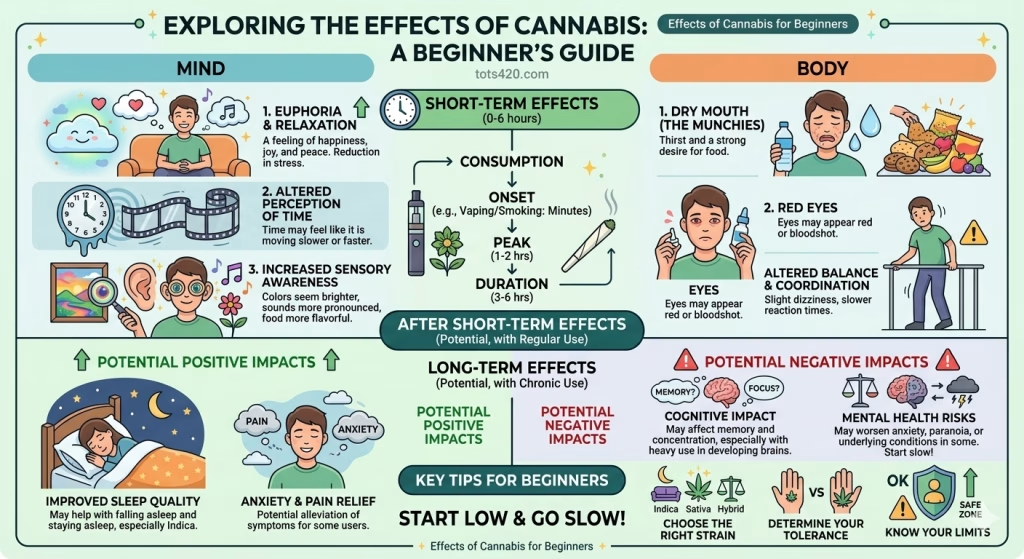
What are the effects of cannabis for beginners? While the experience varies based on THC/CBD content and your individual tolerance, understanding the primary short-term and long-term effects will help you know exactly what to expect during your first session.
The short-term effects of cannabis are felt relatively quickly after consumption, particularly when smoked or vaporized. These effects can last anywhere from a few hours to several hours, depending on the dose and your tolerance level. Here are the most common effects:
Euphoria: A feeling of happiness, relaxation, or intense joy. Often accompanied by laughter, heightened sensory perception, and an overall sense of well-being.
Altered Perception of Time: Time may feel like it is moving slower or faster than usual.
Increased Sensory Awareness: Colors may seem brighter, sounds more pronounced, and food more flavorful.
Dry Mouth and Red Eyes: These are common side effects of cannabis use and usually subside as the effects wear off.
Increased Appetite (The “Munchies”): Many people experience an increased desire for food, especially snacks.
Potential Long-Term Effects of Cannabis for Beginners
While the long-term effects of cannabis use are still being researched, we do know that chronic use can have both positive and negative consequences. Some potential long-term effects include:
Improved Sleep: Many regular cannabis users report better sleep quality, particularly with Indica strains.
Cognitive Impact: Frequent cannabis use, especially in high doses, may affect memory and cognitive function, particularly in younger users whose brains are still developing.
Mental Health: Some studies suggest that cannabis may alleviate symptoms of anxiety, depression, and PTSD, while excessive use can contribute to anxiety or paranoia, especially in people with a predisposition to mental health disorders.
Different Strains, Different Effects
As discussed in the previous chapter, the effects of cannabis can vary significantly depending on whether you choose an Indica, Sativa, or Hybrid strain. Indicas tend to produce more relaxing effects, Sativas provide more energy and euphoria, and Hybrids offer a balanced experience.
Managing Tolerance and Overconsumption Safety
Your tolerance level plays a big role in how cannabis affects you. Beginners should start with low doses and gradually increase them to find their optimal level. Overconsumption, especially with high-THC strains or edibles, can lead to anxiety, dizziness, or even panic attacks. It’s important to know your limits and start slow.
Conclusion
Cannabis can offer a wide range of effects, from relaxation and euphoria to increased creativity and focus. Understanding how cannabis works in your body, including the role of different cannabinoids and strains, will help you make more informed decisions about your consumption. In the next chapter, we’ll explore the various methods of using cannabis, so you can find the one that works best for you.
Chapter 2: Indica, Sativa, and Hybrids – What’s the Difference?
Introduction
What is the difference between indica sativa and hybrid? Cannabis is often categorized into these three main types, each offering distinct effects, flavors, and uses. Understanding these differences helps you choose the right strain for your goals, whether you’re seeking deep relaxation, an energy boost, or a balanced experience.
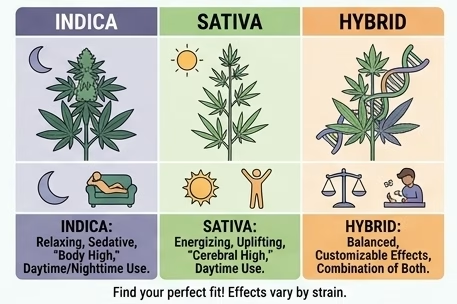
Visualizing the Difference Between Indica, Sativa, and Hybrid Strains
Understanding the Difference Between Indica, Sativa, and Hybrid Strains
Indica – The Difference in Relaxing Effects
Indica strains are known for their relaxing and sedative effects. They typically have higher levels of CBD and lower levels of THC, though this can vary depending on the specific strain. Indicas are often recommended for nighttime use, as they help ease stress, promote relaxation, and can even aid with sleep disorders. The physical effects of Indica are often felt in the body, leading to feelings of heaviness or sedation.
Common effects:
Deep relaxation
Pain relief
Increased appetite (the “munchies”)
Sedation and sleepiness
Sativa – The Difference in Energy and Focus
Sativa strains, in contrast, are typically more energizing and cerebral. They have higher levels of THC relative to CBD, and they often produce a more uplifting, euphoric high. Sativas are great for daytime use, as they can improve mood, creativity, and focus. Many people choose Sativa strains to enhance social interactions, exercise, or engage in creative projects.
Common effects:
Increased energy and focus
Enhanced creativity
Euphoria and mood boost
Increased heart rate (for some people)
Hybrids – The Best of Both Indica and Sativa Worlds
Hybrid strains are crosses between Indica and Sativa plants, combining characteristics of both. Hybrids can be Indica-dominant, Sativa-dominant, or perfectly balanced, allowing users to tailor their experience based on the strain’s specific effects. These strains are particularly popular for their versatility, as they offer a balance of relaxation and euphoria. The effects of a hybrid can vary depending on its lineage and the balance of cannabinoids.
Common effects:
A blend of relaxation and energy
Customizable based on Indica or Sativa dominance
A more controlled experience
Relief from pain and anxiety, with uplifting effects
How to Choose the Right Strain
When selecting a strain, consider your desired outcome. If you’re looking to unwind and relax at night, an Indica might be best. For daytime use or when you need an energy boost, a Sativa could be the better option. Hybrids can offer a balanced experience that works well in both scenarios.
Conclusion
Now that you understand the basic differences between Indica, Sativa, and Hybrid strains, you can choose the right one based on your personal preferences and the experience you seek. Next, we’ll explore the effects of cannabis to help you better understand how different strains and doses can impact your body and mind.
Ready to take the next step? Now that you know how to choose your strain, it’s time to learn the best way to use it. [Read Chapter 3: Cannabis Effects for Beginners] to discover the difference between smoking, vaping, and edibles.
Used by Google Analytics to determine which links on a page are being clicked
30 seconds
_ga_
ID used to identify users
2 years
_gid
ID used to identify users for 24 hours after last activity
24 hours
_gat
Used to monitor number of Google Analytics server requests when using Google Tag Manager
1 minute
__utmt
Used to monitor number of Google Analytics server requests
10 minutes
__utmb
Used to distinguish new sessions and visits. This cookie is set when the GA.js javascript library is loaded and there is no existing __utmb cookie. The cookie is updated every time data is sent to the Google Analytics server.
30 minutes after last activity
__utmc
Used only with old Urchin versions of Google Analytics and not with GA.js. Was used to distinguish between new sessions and visits at the end of a session.
End of session (browser)
__utmz
Contains information about the traffic source or campaign that directed user to the website. The cookie is set when the GA.js javascript is loaded and updated when data is sent to the Google Anaytics server
6 months after last activity
__utmv
Contains custom information set by the web developer via the _setCustomVar method in Google Analytics. This cookie is updated every time new data is sent to the Google Analytics server.
2 years after last activity
__utmx
Used to determine whether a user is included in an A / B or Multivariate test.
18 months
_gac_
Contains information related to marketing campaigns of the user. These are shared with Google AdWords / Google Ads when the Google Ads and Google Analytics accounts are linked together.
90 days
__utma
ID used to identify users and sessions
2 years after last activity
Marketing cookies are used to follow visitors to websites. The intention is to show ads that are relevant and engaging to the individual user.
A video-sharing platform for users to upload, view, and share videos across various genres and topics.
This cookie stores your preferences and other information, in particular preferred language, how many search results you wish to be shown on your page, and whether or not you wish to have Google’s SafeSearch filter turned on.
10 years from set/ update
YSC
Registers a unique ID to keep statistics of what videos from YouTube the user has seen.
Session
DEVICE_INFO
Used to detect if the visitor has accepted the marketing category in the cookie banner. This cookie is necessary for GDPR-compliance of the website.
179 days
LOGIN_INFO
This cookie is used to play YouTube videos embedded on the website.
2 years
VISITOR_PRIVACY_METADATA
Youtube visitor privacy metadata cookie
180 days
GPS
Registers a unique ID on mobile devices to enable tracking based on geographical GPS location.
1 day
VISITOR_INFO1_LIVE
Tries to estimate the users' bandwidth on pages with integrated YouTube videos. Also used for marketing